Bylaws For 501c3 In Maryland
Description

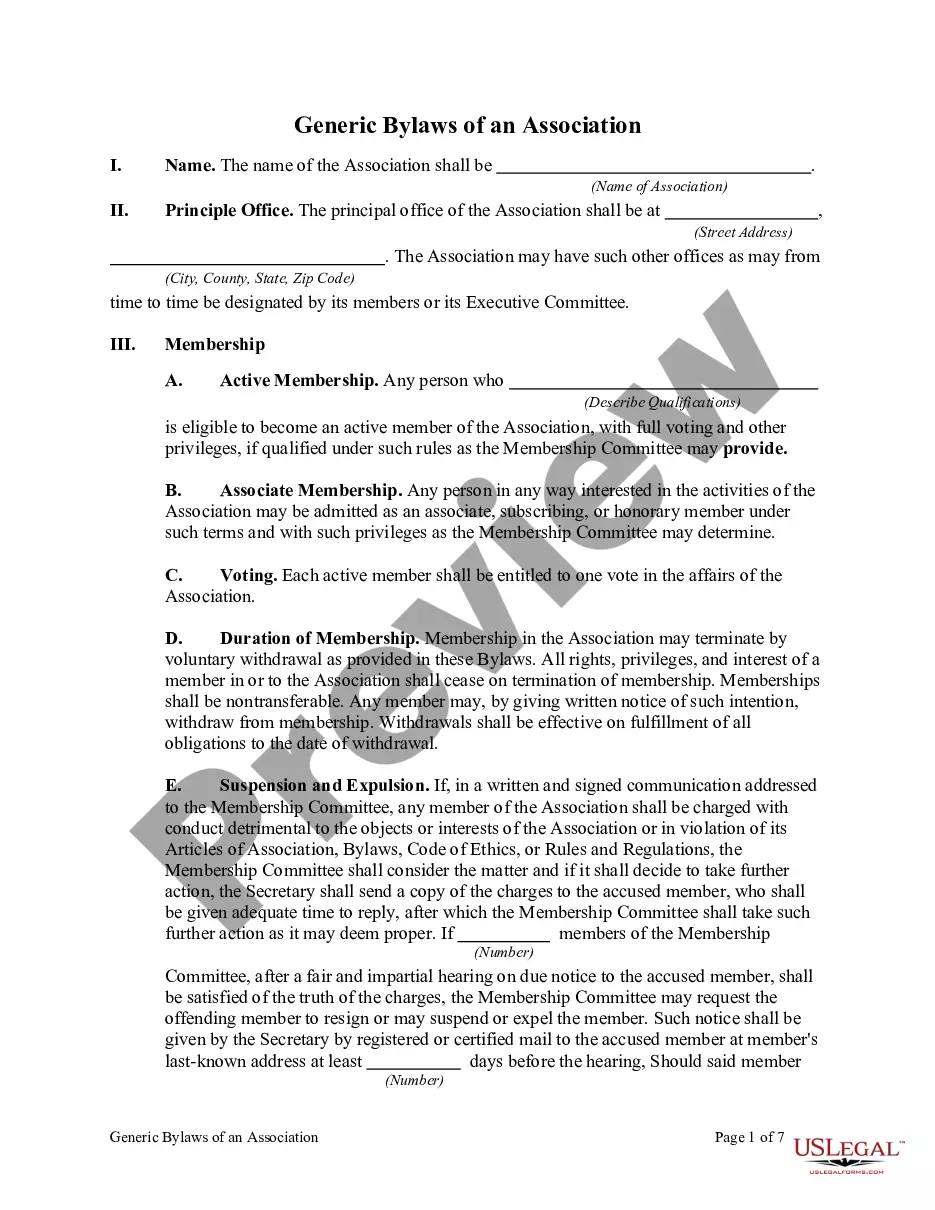
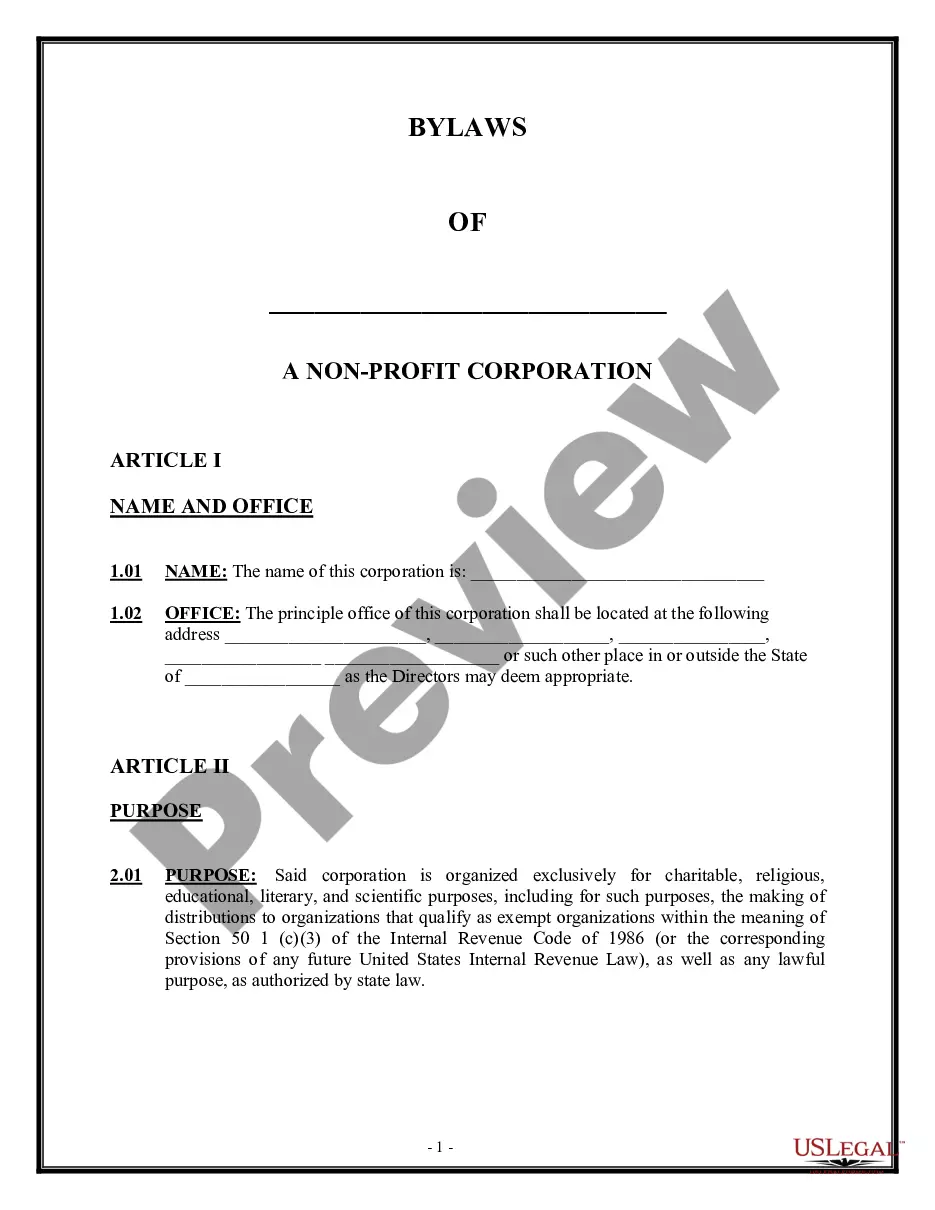
Get your form ready online
Our built-in tools help you complete, sign, share, and store your documents in one place.
Make edits, fill in missing information, and update formatting in US Legal Forms—just like you would in MS Word.
Download a copy, print it, send it by email, or mail it via USPS—whatever works best for your next step.
Sign and collect signatures with our SignNow integration. Send to multiple recipients, set reminders, and more. Go Premium to unlock E-Sign.
If this form requires notarization, complete it online through a secure video call—no need to meet a notary in person or wait for an appointment.
We protect your documents and personal data by following strict security and privacy standards.

Make edits, fill in missing information, and update formatting in US Legal Forms—just like you would in MS Word.

Download a copy, print it, send it by email, or mail it via USPS—whatever works best for your next step.

Sign and collect signatures with our SignNow integration. Send to multiple recipients, set reminders, and more. Go Premium to unlock E-Sign.

If this form requires notarization, complete it online through a secure video call—no need to meet a notary in person or wait for an appointment.

We protect your documents and personal data by following strict security and privacy standards.
Looking for another form?









Form popularity
FAQ
The IRS generally requires a minimum of three board members for every nonprofit, but does not dictate board term length. What is important to remember is that board service terms aren't intended to be perpetual, and are typically one to five years.
The Attorney General represents the public interest in the protection of charitable assets. Together with the Secretary of State, the Attorney General works to shut down sham charities and other unlawful fundraising schemes to ensure charitable contributions are used for their intended charitable purpose.
5 501c3 Board of Director Requirements Fiduciary Responsibility. Governance and Compliance. Mission and Strategic Oversight. Transparency and Accountability. Conflict of Interest Management.
You may be asking, "Can I start a nonprofit myself?" and the answer is a resounding yes - anyone can start a nonprofit! The journey to start a nonprofit alone is undeniably ambitious. As we've explored, it comes with its challenges, from financial hurdles to operational intricacies.
Maryland requires at least three officers who are not related to each other (President, Secretary, and Treasurer) and a minimum of five members of the board of directors. In the state of Maryland, the board must include at least three directors who are unrelated to each other.
Maryland requires at least three officers who are not related to each other (President, Secretary, and Treasurer) and a minimum of five members of the board of directors. In the state of Maryland, the board must include at least three directors who are unrelated to each other.
I have researched the IRS regulations on 501C3's and the answer is no, your board members do not have to be us citizens. A foreign citizen may be an officer or director for a non-profit organization so long as they do not receive a salary or compensation for the services provided in the United States.
In general, most private companies have between three and nine directors. But a young startup might have just one or two board members, and a more mature company might have 10 or more. Most companies have an odd number of board members to avoid voting ties.
Nonprofit charities are under the jurisdiction of state and national laws, so they must comply with both legal systems. With that in mind, the federal government requires a minimum of three board members to acquire coveted 501c3 tax-exempt status.
