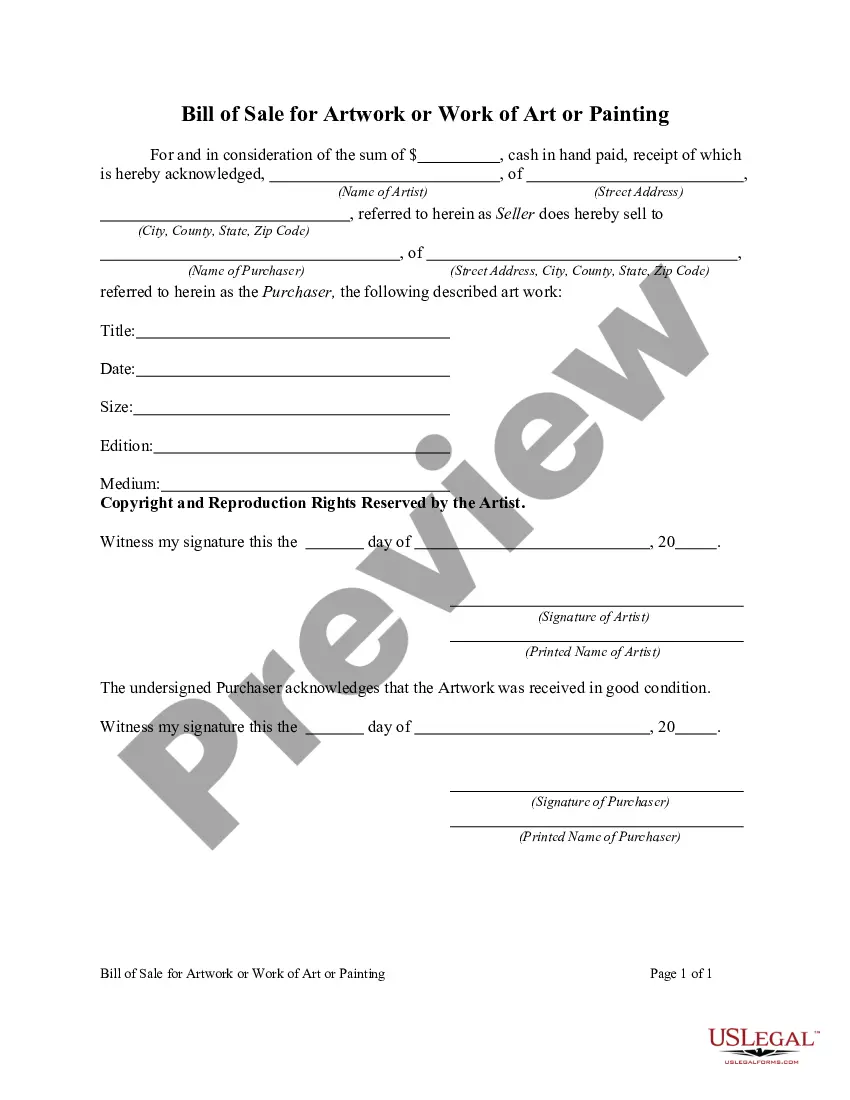
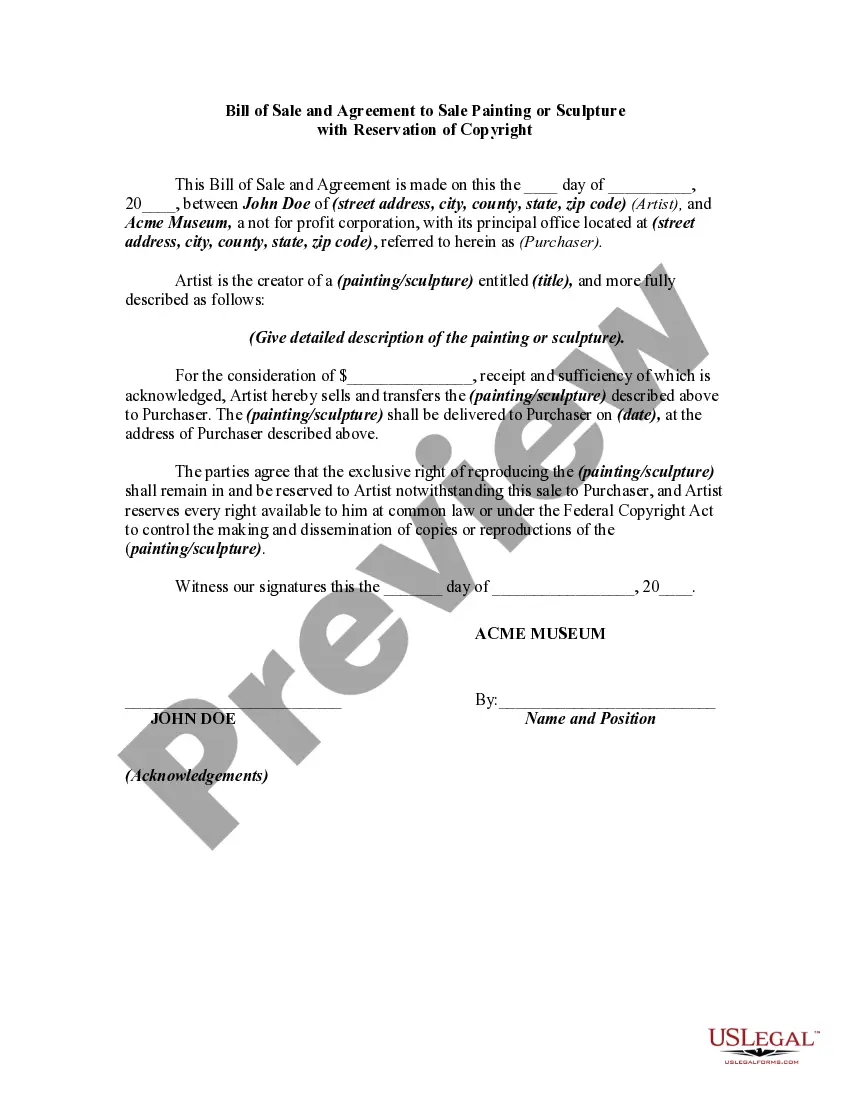
Bill Sale Art Sample Without Permission In Travis
Description
Get your form ready online
Our built-in tools help you complete, sign, share, and store your documents in one place.
Make edits, fill in missing information, and update formatting in US Legal Forms—just like you would in MS Word.
Download a copy, print it, send it by email, or mail it via USPS—whatever works best for your next step.
Sign and collect signatures with our SignNow integration. Send to multiple recipients, set reminders, and more. Go Premium to unlock E-Sign.
If this form requires notarization, complete it online through a secure video call—no need to meet a notary in person or wait for an appointment.
We protect your documents and personal data by following strict security and privacy standards.

Make edits, fill in missing information, and update formatting in US Legal Forms—just like you would in MS Word.

Download a copy, print it, send it by email, or mail it via USPS—whatever works best for your next step.

Sign and collect signatures with our SignNow integration. Send to multiple recipients, set reminders, and more. Go Premium to unlock E-Sign.

If this form requires notarization, complete it online through a secure video call—no need to meet a notary in person or wait for an appointment.

We protect your documents and personal data by following strict security and privacy standards.
Looking for another form?










Form popularity
FAQ
If you are selling any artwork yourself, it is a legal requirement to have a business license.
It is your right to pursue legal action if your work is used unlawfully without your permission and not under a statutory exception or limitation like fair use. However, if your work is a U.S. work, you do need to register it with the Copyright Office before bringing an infringement lawsuit in federal court.
Artist's Bill of Sale Date of sale and invoice number. Invoice numbers can be used as a unique reference ID and will prove very helpful should you need to quickly find the documentation later. Artist's contact information. Buyer's contact information. Artwork sold. Subtotal. Taxes. Other charges. Total.
Additionally, it is important to find out if another person is profiting off of your work or not. If the work is clearly plagiarized and they are using it to their advantage, it is highly recommended you pursue legal action for art theft.
Contact the Infringing Parties: Reach out to the individuals or businesses selling your artwork without permission. Be professional and clear in your communication, explaining the infringement, providing your copyright registration number if applicable, and requesting the immediate removal of the infringing listings.
You may just speak to the person directly and it gets resolved. It may end up with some legal aid to help solve the issue and anything in between. But have the peace of mind that it will get sorted and you will always own that copyright of your art.
The rule of thirds is a guideline commonly used in painting, photography, and design. The rule of thirds means that the subject isn't centered; rather, the main focal point can be to one side or at the top or bottom of the image.
Any attempt to publish (for profit or otherwise) or sell your fan art without the express permission of the owner will usually be against the law as it infringes on the copyright and intellectual property of those owners.
Copyright law is a form of intellectual property that protects the unique expression of ideas, empowering artists to control how their work is used. If you're looking to reproduce an artist's work, you'll need permission from the copyright owner in the form of a license.