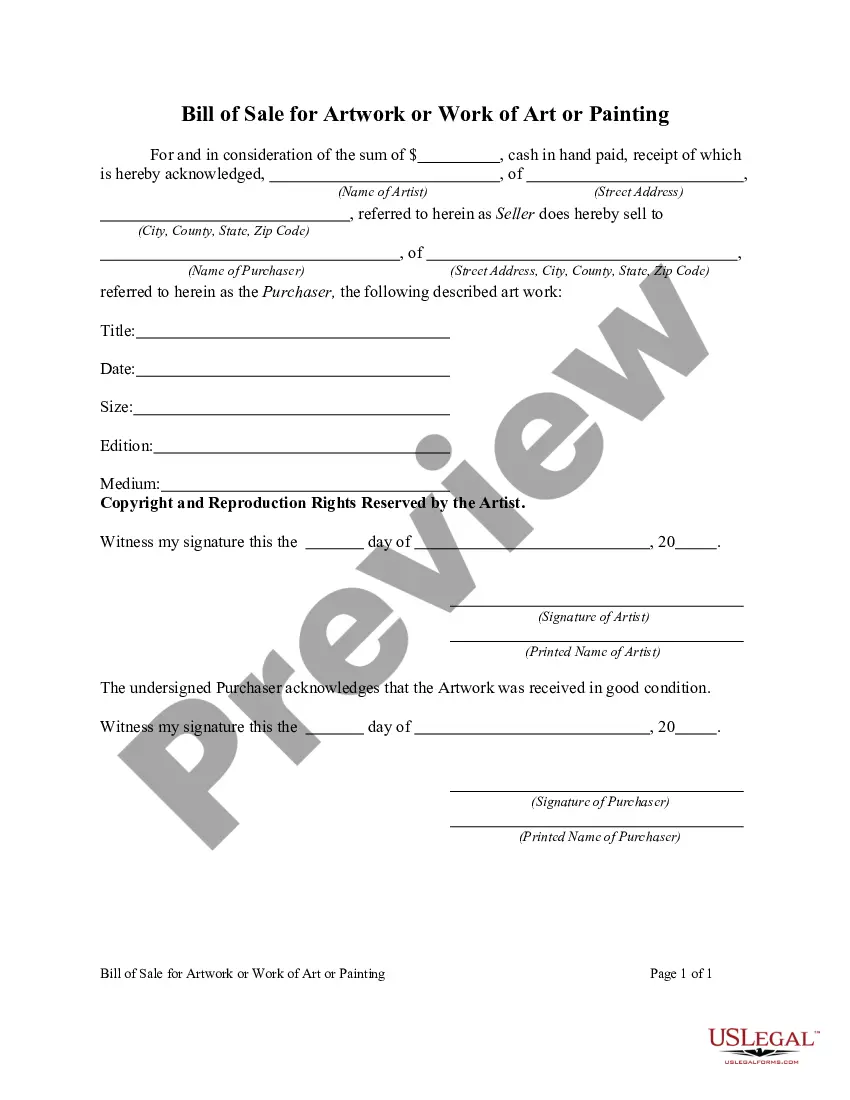
Bill Sale Art Sample For Job Application In Pima
Description
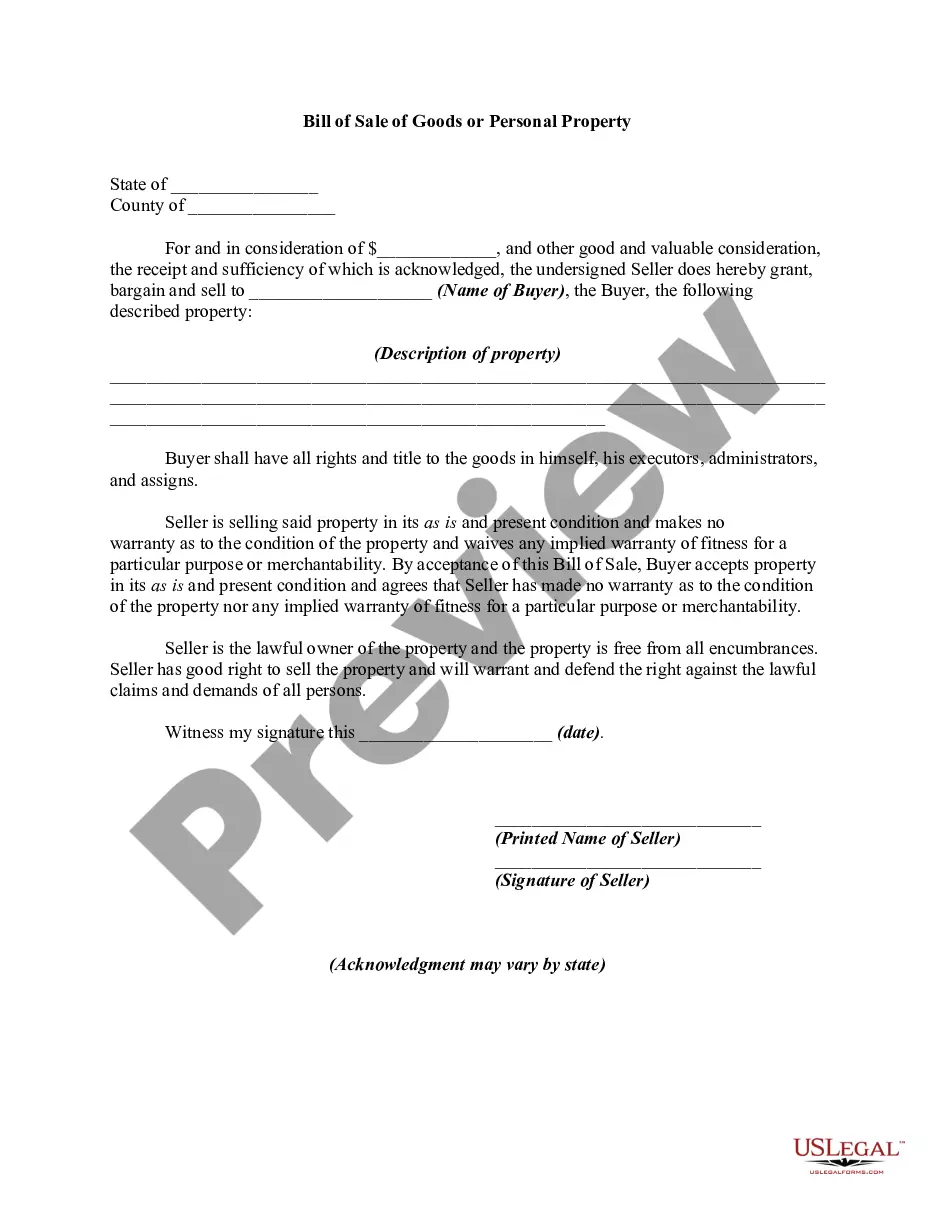
Get your form ready online
Our built-in tools help you complete, sign, share, and store your documents in one place.
Make edits, fill in missing information, and update formatting in US Legal Forms—just like you would in MS Word.
Download a copy, print it, send it by email, or mail it via USPS—whatever works best for your next step.
Sign and collect signatures with our SignNow integration. Send to multiple recipients, set reminders, and more. Go Premium to unlock E-Sign.
If this form requires notarization, complete it online through a secure video call—no need to meet a notary in person or wait for an appointment.
We protect your documents and personal data by following strict security and privacy standards.

Make edits, fill in missing information, and update formatting in US Legal Forms—just like you would in MS Word.

Download a copy, print it, send it by email, or mail it via USPS—whatever works best for your next step.

Sign and collect signatures with our SignNow integration. Send to multiple recipients, set reminders, and more. Go Premium to unlock E-Sign.

If this form requires notarization, complete it online through a secure video call—no need to meet a notary in person or wait for an appointment.

We protect your documents and personal data by following strict security and privacy standards.
Looking for another form?




Form popularity
FAQ
How to write a sales cover letter Do your research. Before you start writing the actual cover letter, do some research on the company you're applying to. Address the recipient by name. Talk about why you want the job. Talk about why you're an ideal candidate. Thank them for their time. Re-read and assess your cover letter.
When writing a cover letter, you should: introduce yourself. mention the job (or type of job) you're applying for (or looking for) show that your skills and experience match the skills and experience needed to do the job. encourage the reader to read your resume.
A cover letter is a document sent alongside your CV when applying for jobs. It acts as a personal introduction and helps to sell your application. Cover letters are necessary as they give you the chance to explain to an employer why you're the best candidate for the job.
How to start a cover letter Convey enthusiasm for the company. Highlight a mutual connection. Lead with an impressive accomplishment. Mention something newsworthy. Express passion for what you do. Tell a creative story. Start with a belief statement.
I am a conscientious person who works hard and pays attention to detail. I'm flexible, quick to pick up new skills and eager to learn from others. I also have lots of ideas and enthusiasm. I'm keen to work for a company with a great reputation and high profile like insert company name.
How to write a cover letter for an internal position Explain your goals. For an internal cover letter, you usually don't need to start with a formal introduction. Align your experience with the role. Share your achievements. Highlight your company knowledge. Provide a reference. Express gratitude.
Aim to cover: Your artistic style and practices. Describe your unique style and creative process. Relevant achievements and experiences. Understanding of the prospective employer. Specific skills and qualifications. Portfolio details. Be concise. Use industry-specific language. Personalise your letter.
Here are some examples to help you craft an engaging introduction that highlights your genuine interest in the position and the company. Assert your interest in the role or company. Emphasize your skills and experience. Demonstrate your research. Highlight measurable accomplishments. Tell your professional story.