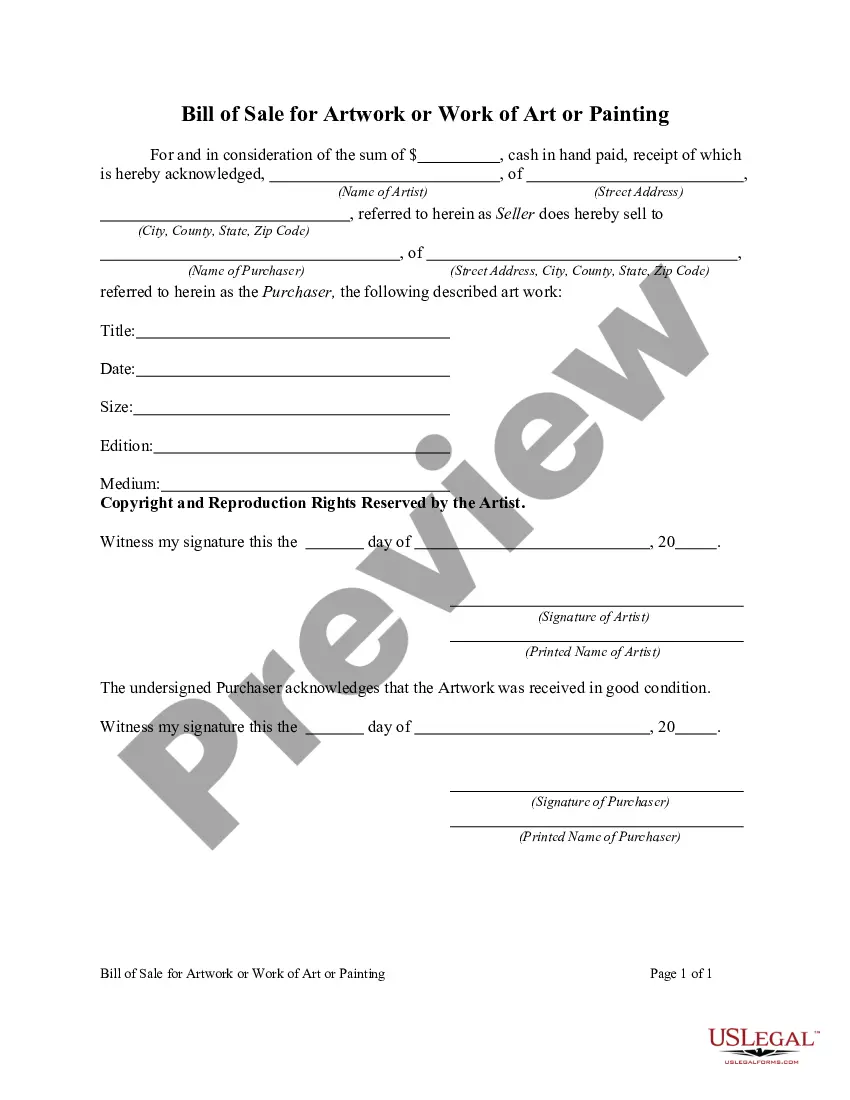
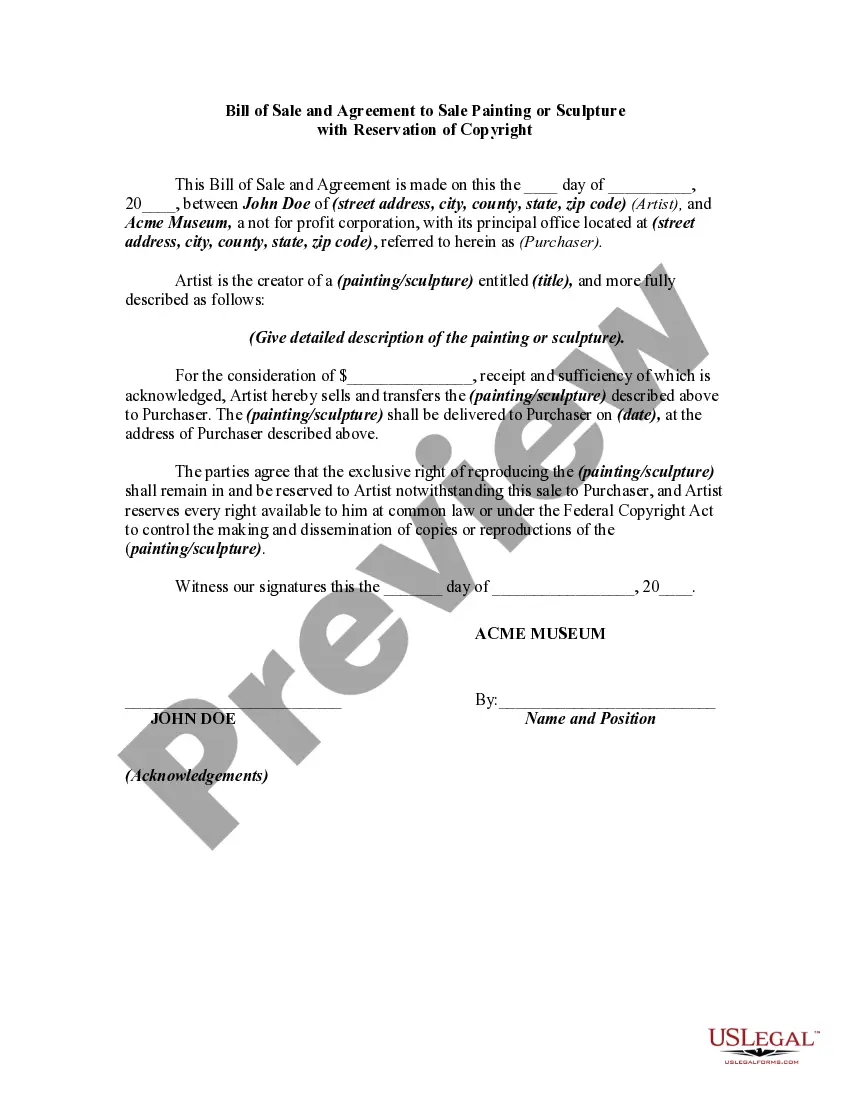
Bill Sale Art Sample Format In Palm Beach
Description
Get your form ready online
Our built-in tools help you complete, sign, share, and store your documents in one place.
Make edits, fill in missing information, and update formatting in US Legal Forms—just like you would in MS Word.
Download a copy, print it, send it by email, or mail it via USPS—whatever works best for your next step.
Sign and collect signatures with our SignNow integration. Send to multiple recipients, set reminders, and more. Go Premium to unlock E-Sign.
If this form requires notarization, complete it online through a secure video call—no need to meet a notary in person or wait for an appointment.
We protect your documents and personal data by following strict security and privacy standards.

Make edits, fill in missing information, and update formatting in US Legal Forms—just like you would in MS Word.

Download a copy, print it, send it by email, or mail it via USPS—whatever works best for your next step.

Sign and collect signatures with our SignNow integration. Send to multiple recipients, set reminders, and more. Go Premium to unlock E-Sign.

If this form requires notarization, complete it online through a secure video call—no need to meet a notary in person or wait for an appointment.

We protect your documents and personal data by following strict security and privacy standards.
Looking for another form?









Form popularity
FAQ
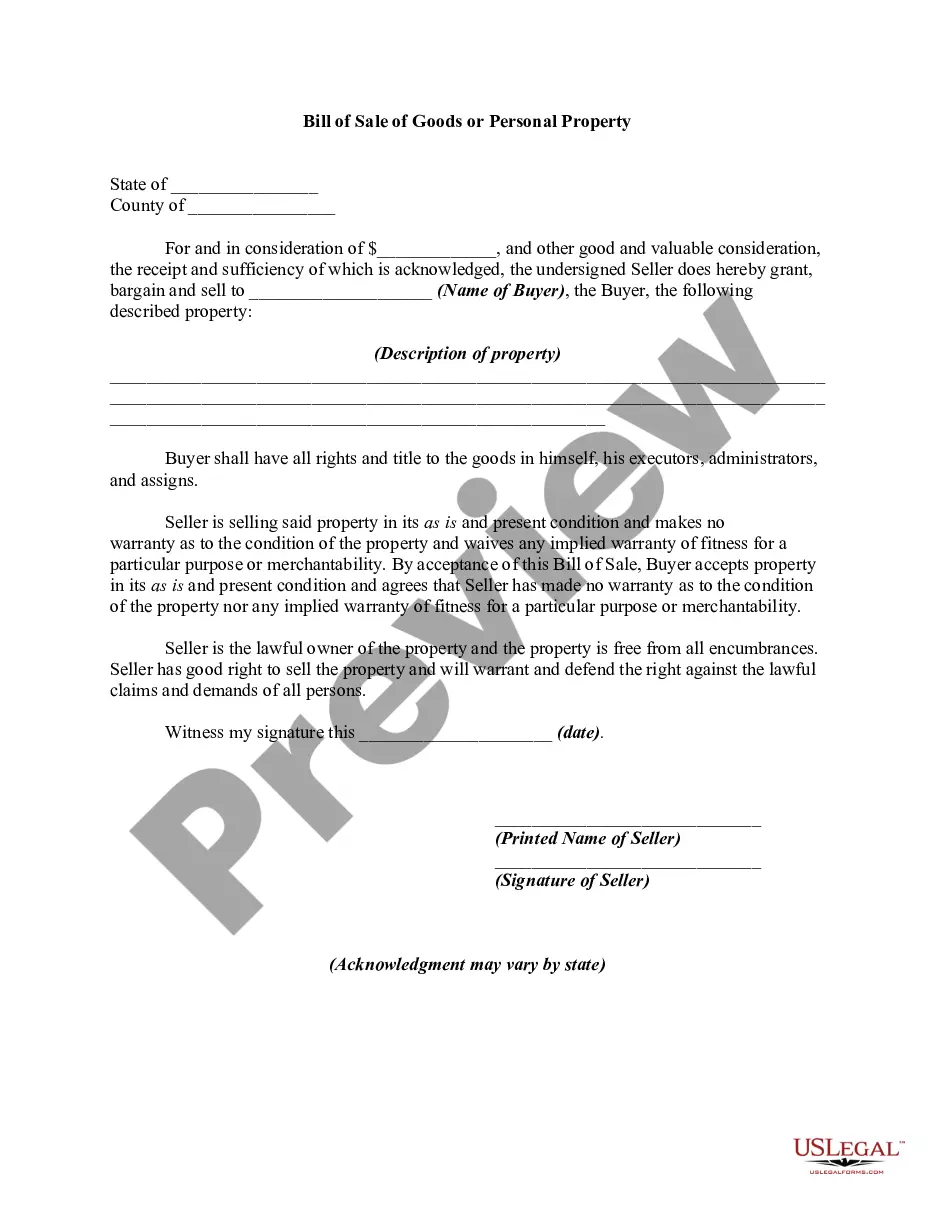
Different Types of Florida Bill of Sale Forms A bill of sale is a legal document that serves as proof of transfer of ownership from the seller to the buyer. It is commonly used when buying or selling a vehicle, boat, firearm, technology, or even a horse.
Florida Statute defines TPP as “all goods, chattels, and other articles of value (but does not include vehicular items) capable of manual possession and whose chief value is intrinsic to the article itself.”
It is important to make sure all the requirements for the respected state law are included in the bill of sale. As, with any legal written document a bill of sale can be handwritten.
While it is common to present a bill of sale in a digital format, you can also create this type of contractual agreement as a handwritten document on paper. What's most important is to include all of the pertinent details in the bill of sale in order to protect both parties.
States Not Requiring Notarization In Florida, a bill of sale doesn't require notarization but still needs essential details like signatures from both parties to be accepted legally.
You can write your own last will and testament in Florida. Whether typed or handwritten, all wills must meet the legal requirements of Florida Statute 732.502. Every will must be in writing and contain the following: The testator's signature at the end of the will, or.
Include the new owner's name, seller's name, addresses, and contact information of both the buyer and the seller. Provide a detailed description of the item being sold. Include relevant information such as the make, model, year, VIN, serial number, any distinguishing features, or disclaimers.
States Not Requiring Notarization Most states, including California, Texas, and Florida, do not require notarization for a bill of sale to be valid. In California, a bill of sale serves as proof of ownership transfer without the need for notarization.