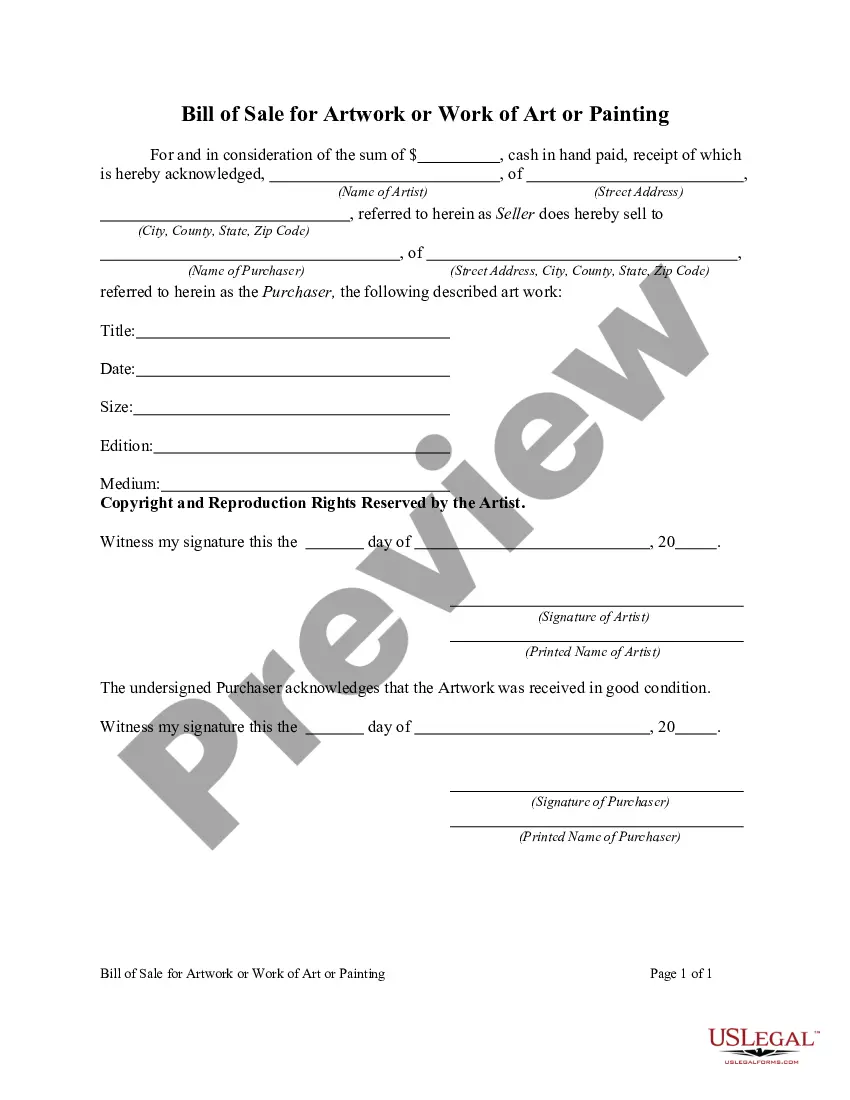
Bill Sale Art Sample Without Payment In Orange
Description
Get your form ready online
Our built-in tools help you complete, sign, share, and store your documents in one place.
Make edits, fill in missing information, and update formatting in US Legal Forms—just like you would in MS Word.
Download a copy, print it, send it by email, or mail it via USPS—whatever works best for your next step.
Sign and collect signatures with our SignNow integration. Send to multiple recipients, set reminders, and more. Go Premium to unlock E-Sign.
If this form requires notarization, complete it online through a secure video call—no need to meet a notary in person or wait for an appointment.
We protect your documents and personal data by following strict security and privacy standards.

Make edits, fill in missing information, and update formatting in US Legal Forms—just like you would in MS Word.

Download a copy, print it, send it by email, or mail it via USPS—whatever works best for your next step.

Sign and collect signatures with our SignNow integration. Send to multiple recipients, set reminders, and more. Go Premium to unlock E-Sign.

If this form requires notarization, complete it online through a secure video call—no need to meet a notary in person or wait for an appointment.

We protect your documents and personal data by following strict security and privacy standards.
Looking for another form?









Form popularity
FAQ
Some of the most common methods for making an income with your art may include commissions, Patreon, in-person sales, online sales, grants or community collaborations, and teaching.
Ready to Exhibit Your Art? Here Are Steps You Can Take Try a home show and invite your friends. Connect with a local business and see if they might be interested in hanging your work in their establishment. Get together with a few other artists and rent a space for your exhibition. Enter juried exhibitions.
Copying a painting for personal use is typically legal, as long as you do not intend to sell or distribute the reproduction. Personal use implies that the copy is for private enjoyment and not for profit. However, public display or sale could breach copyright laws, even for personal reproductions.
When filling out an artist invoice, include your business name and contact information, the client's details, a description of the artwork or service provided, and the associated costs. Make sure to specify payment terms, due dates, and any additional charges such as taxes or shipping, if applicable.
How to invoice as a freelancer: What should go on an invoice? Your name (and company name, if applicable) Address Phone number Invoice number Date of the invoice (the date you send it) An itemized list of the work you did The associated costs for the work A tally of all costs
The best way to sell art online is by building your own branded ecommerce site with a platform like Shopify. You can also sell your work on a crafts and art marketplace like Etsy or on social media platforms like Instagram and Facebook Shops.
What Needs To Be Included in Your Painting Invoice? Business Name and Address. This shows who you are and how to reach you. Client Name and Address. Invoice Number. Invoice Date. Line-Item Description. Hours Worked. Amount Due. Taxes.
Invoices should contain information about: you the artist. your billing address. your client or customer. their taxable address. your tax reference code (UTR - unique tax reference code if in the UK) the tax date for the product or service rendered. description of the artwork provided or artistic service rendered.