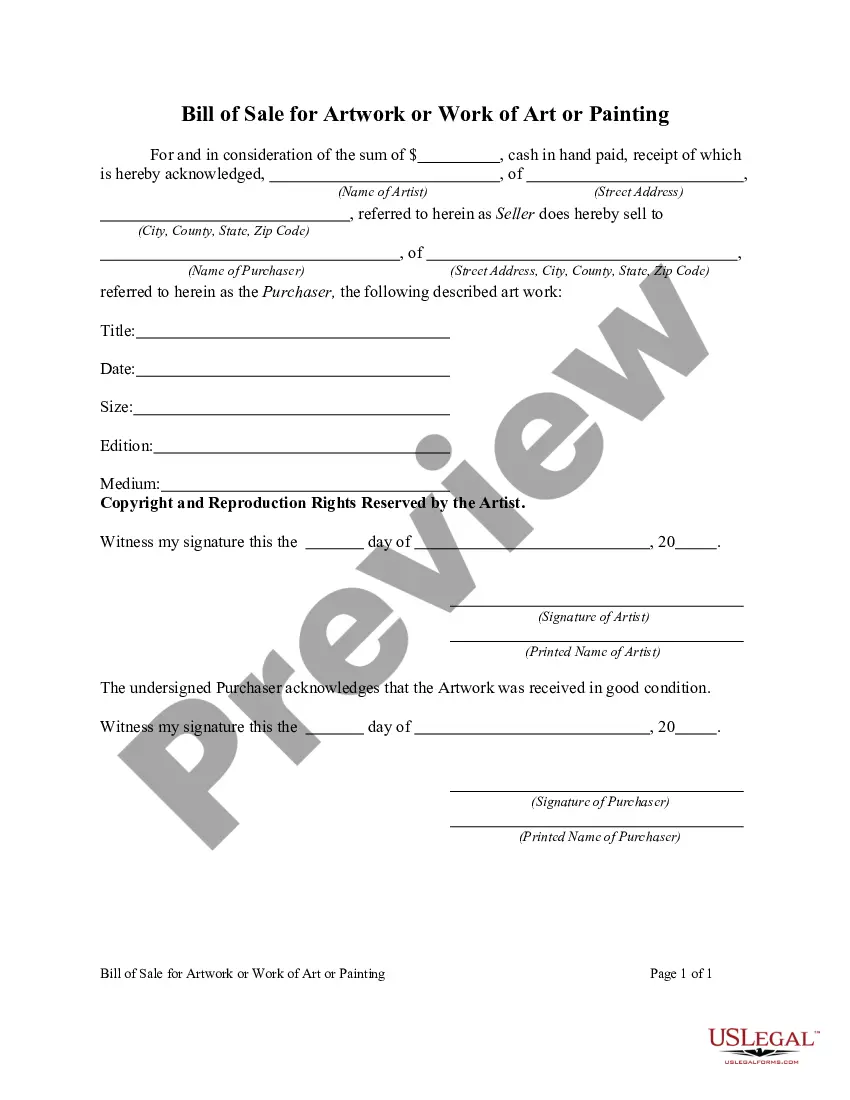
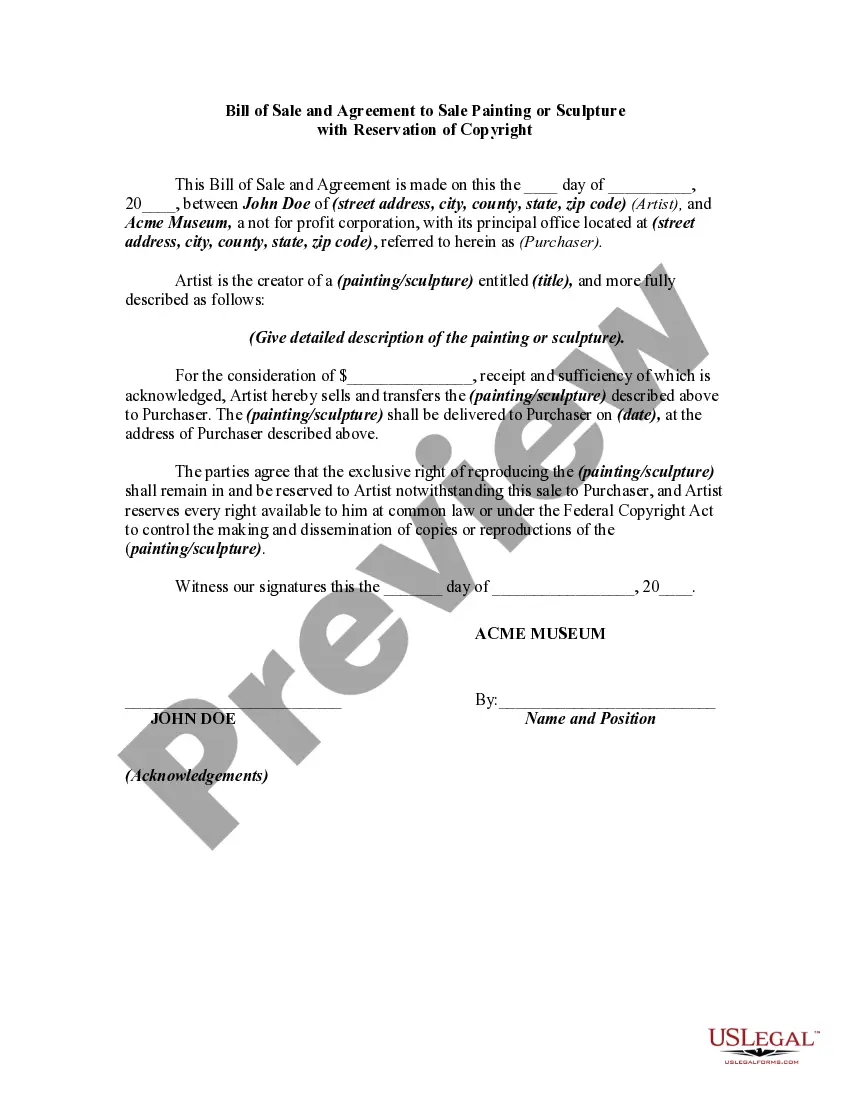
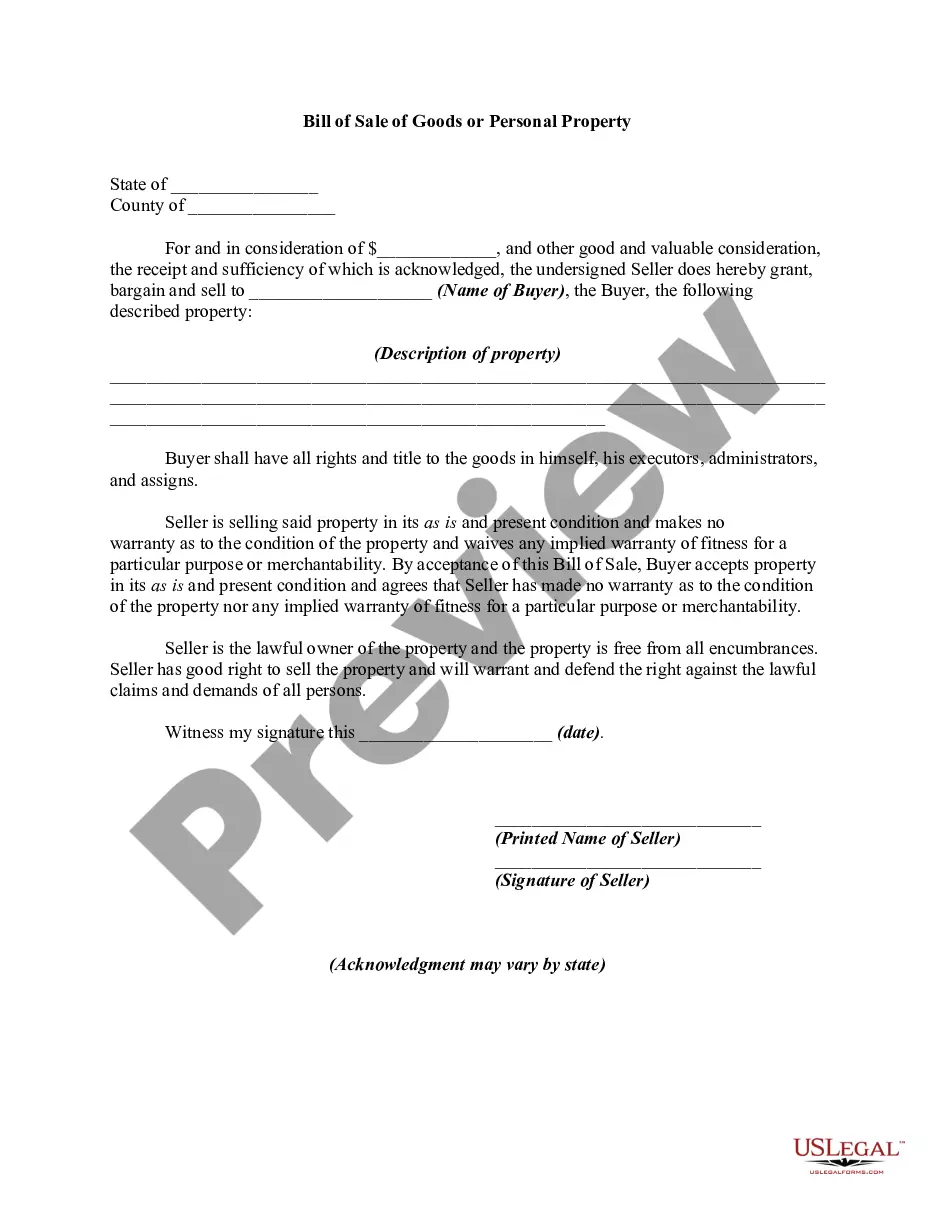
Bill Sale Art Sample Without Payment In Maricopa
Description
Get your form ready online
Our built-in tools help you complete, sign, share, and store your documents in one place.
Make edits, fill in missing information, and update formatting in US Legal Forms—just like you would in MS Word.
Download a copy, print it, send it by email, or mail it via USPS—whatever works best for your next step.
Sign and collect signatures with our SignNow integration. Send to multiple recipients, set reminders, and more. Go Premium to unlock E-Sign.
If this form requires notarization, complete it online through a secure video call—no need to meet a notary in person or wait for an appointment.
We protect your documents and personal data by following strict security and privacy standards.

Make edits, fill in missing information, and update formatting in US Legal Forms—just like you would in MS Word.

Download a copy, print it, send it by email, or mail it via USPS—whatever works best for your next step.

Sign and collect signatures with our SignNow integration. Send to multiple recipients, set reminders, and more. Go Premium to unlock E-Sign.

If this form requires notarization, complete it online through a secure video call—no need to meet a notary in person or wait for an appointment.

We protect your documents and personal data by following strict security and privacy standards.
Looking for another form?









Form popularity
FAQ
Currently, there is not a property tax exemption for veterans, except for honorably discharged veterans with a service or nonservice connected disability.
Pursuant to A.R.S. 42-11111, the property of Arizona residents who are honorably discharged veterans with a service or nonservice connected disability is exempt from property taxation up to a certain dollar amount (generally resulting in only a partial reduction of property taxes).
1. Property owner (applicant) must be 65 years of age or older. 2. The property must be the primary residence of the property owner and must have lived there for at least 2 years.
Arizona allows a $4,748 Assessed Value property exemption to Arizona resident property owners qualifying as a widow/widower, or a person with total and permanent disability, or a veteran with a service or non-service connected disability.
This does not freeze your property tax bill, but it does freeze the property valuation. To qualify, you must meet the following criteria: Property owner must be 65 years of age or older. Property must be the primary residence and the owner(s) must have resided at the residence for at least 2 years.
Today, we discuss the best states for disabled veterans to live in, including Texas, Florida, and Alaska, which offer extensive benefits like significant property tax exemptions and no state income tax. Other states like Virginia, California, and Nevada also provide great opportunities.
Arizona now allows a limited property tax exemption for qualified disabled veterans. To apply for the exemptions, veterans will need to submit their VA Disability Letter along with other documentation to the Assessor's Office in person.
Arizona allows a $4,748 Assessed Value property exemption to Arizona resident property owners qualifying as a widow/widower, or a person with total and permanent disability, or a veteran with a service or non-service connected disability.
Age: At least one property owner must be the minimum qualifying age of 65 at the time of application. Residence: The property must be the owner(s) primary residence.
Age 65 or older Single or HOH gets an additional $1,950 standard deduction ($1,850 for 2023); $1,550 each age 65 for MFJ, MFS or QW ($1,500 for 2023).