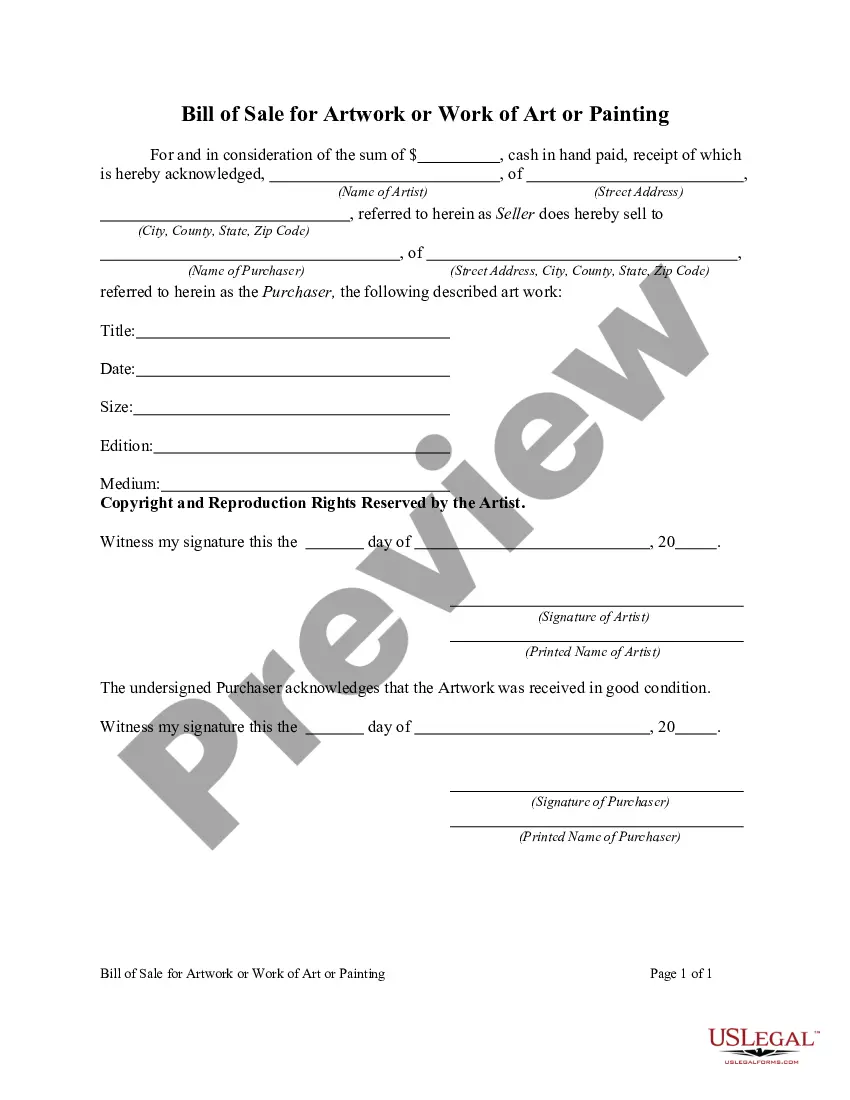
Bill Sale Art Sample Without Signature In Fulton
Description
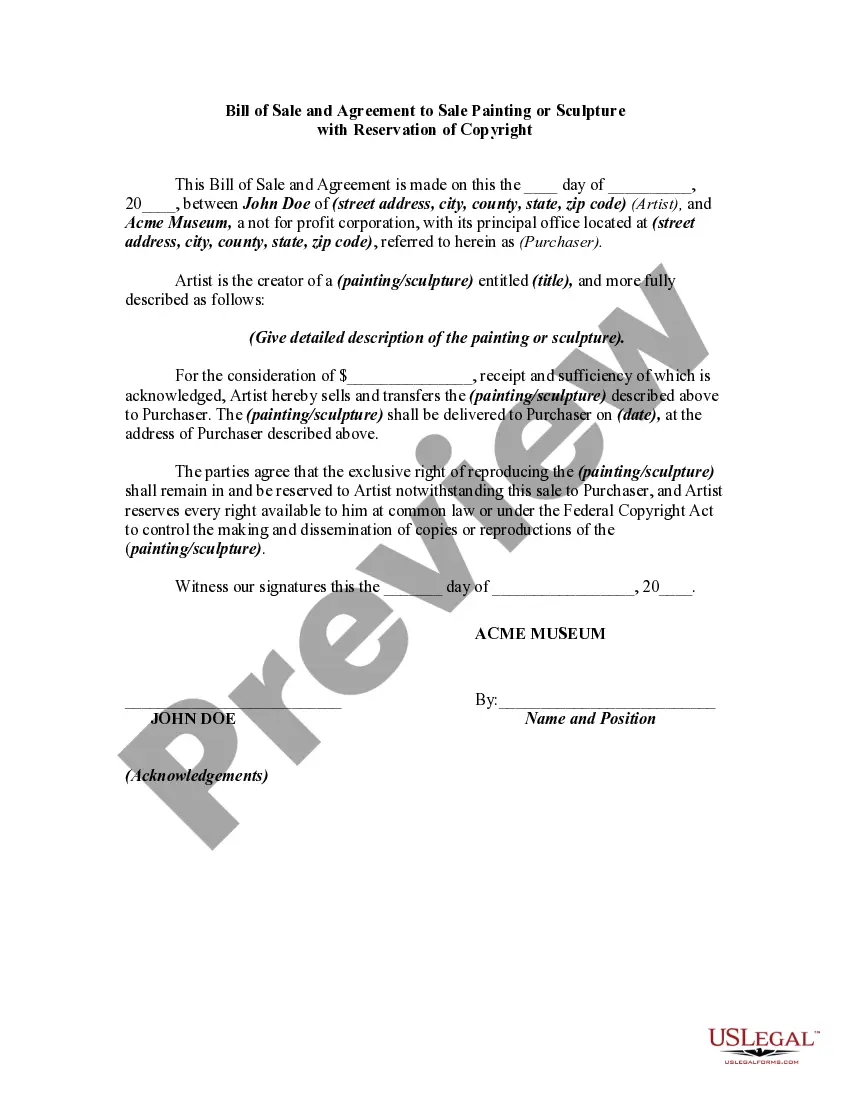
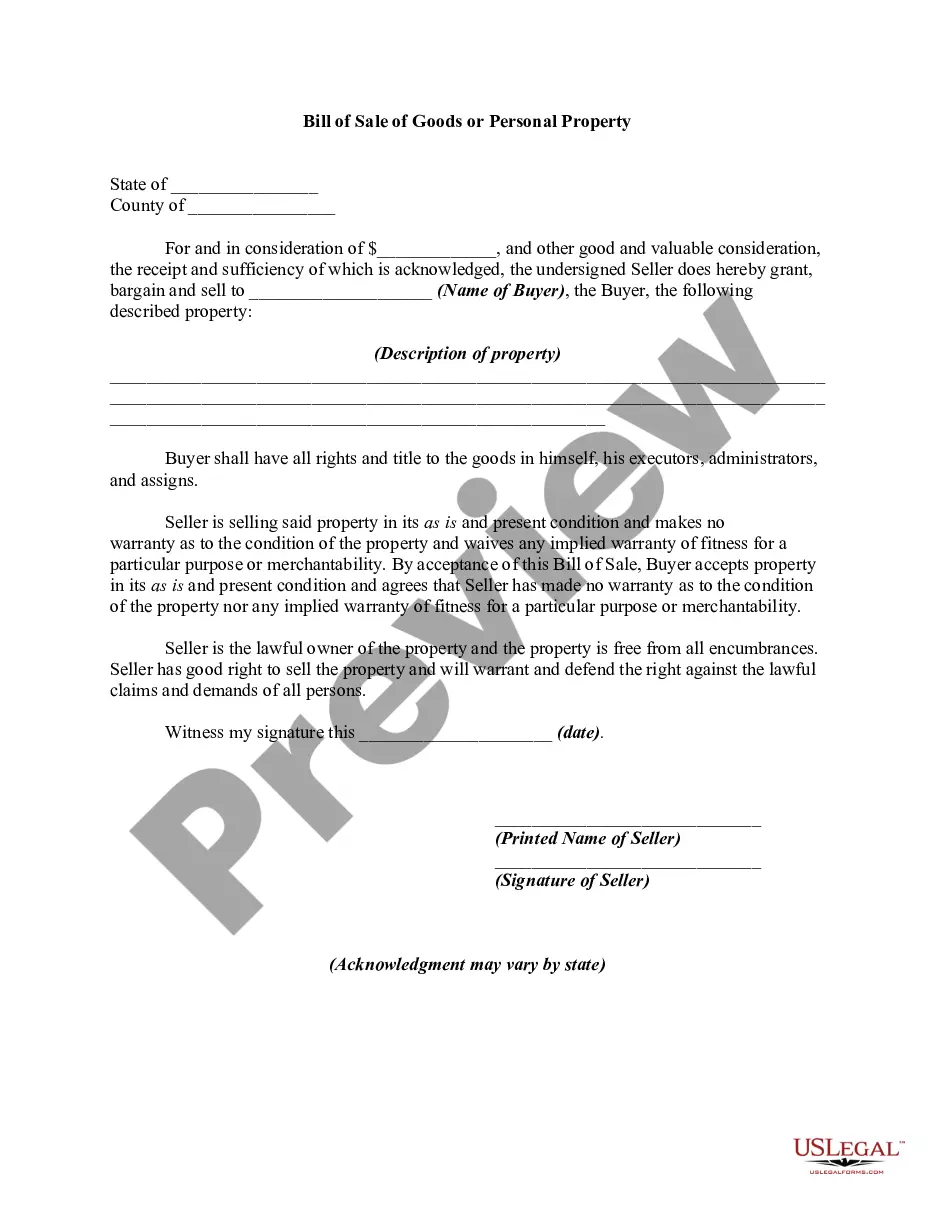
Get your form ready online
Our built-in tools help you complete, sign, share, and store your documents in one place.
Make edits, fill in missing information, and update formatting in US Legal Forms—just like you would in MS Word.
Download a copy, print it, send it by email, or mail it via USPS—whatever works best for your next step.
Sign and collect signatures with our SignNow integration. Send to multiple recipients, set reminders, and more. Go Premium to unlock E-Sign.
If this form requires notarization, complete it online through a secure video call—no need to meet a notary in person or wait for an appointment.
We protect your documents and personal data by following strict security and privacy standards.

Make edits, fill in missing information, and update formatting in US Legal Forms—just like you would in MS Word.

Download a copy, print it, send it by email, or mail it via USPS—whatever works best for your next step.

Sign and collect signatures with our SignNow integration. Send to multiple recipients, set reminders, and more. Go Premium to unlock E-Sign.

If this form requires notarization, complete it online through a secure video call—no need to meet a notary in person or wait for an appointment.

We protect your documents and personal data by following strict security and privacy standards.
Looking for another form?









Form popularity
FAQ
It is perfectly legal to sell your art without a license, provided that you aren't selling it on the street or operating a private gallery.
Local art fairs, shows and exhibits Art societies often organize local art fairs and shows, where you can rent a space to sell your work.
Copying a painting for personal use is typically legal, as long as you do not intend to sell or distribute the reproduction. Personal use implies that the copy is for private enjoyment and not for profit. However, public display or sale could breach copyright laws, even for personal reproductions.
Yes, artists can sell their paintings in auctions. Auctions are a common way for artists to sell their works, as they provide a platform for buyers and sellers to come together and bid on pieces.
Platforms like Etsy, Society6, Redbubble, and Fine Art America allow you to set up your own storefronts and sell prints, merchandise, and digital downloads of your artwork with ease.
7 Tips for creating unique artwork names Start thinking about your artwork's title while you're creating it. Tell a story of how your art came to be. Ask friends and family for suggestions. Using simple and descriptive words is best. Don't state the obvious if you can, but sometimes it's necessary. Avoid clichés.
The most common way to label closed edition prints is to put the edition number on the bottom left, and the artist's signature on the bottom right. The artist can also write the name of the work in the middle of the bottom margin.
Choosing Between Your Full Name and Initials for Signing You may choose to use your full name for a more formal and traditional approach or opt for your initials for a more contemporary and concise signature. Consider your artistic style and the image you want to convey when making this decision.
Here are tips and methods for packaging and shipping art in flat envelopes: Prepare the artwork. Before you ship artwork, make sure it's adequately protected. Select a sturdy envelope. Add protective padding. Secure the artwork. Add identification and instructions. Seal the envelope.