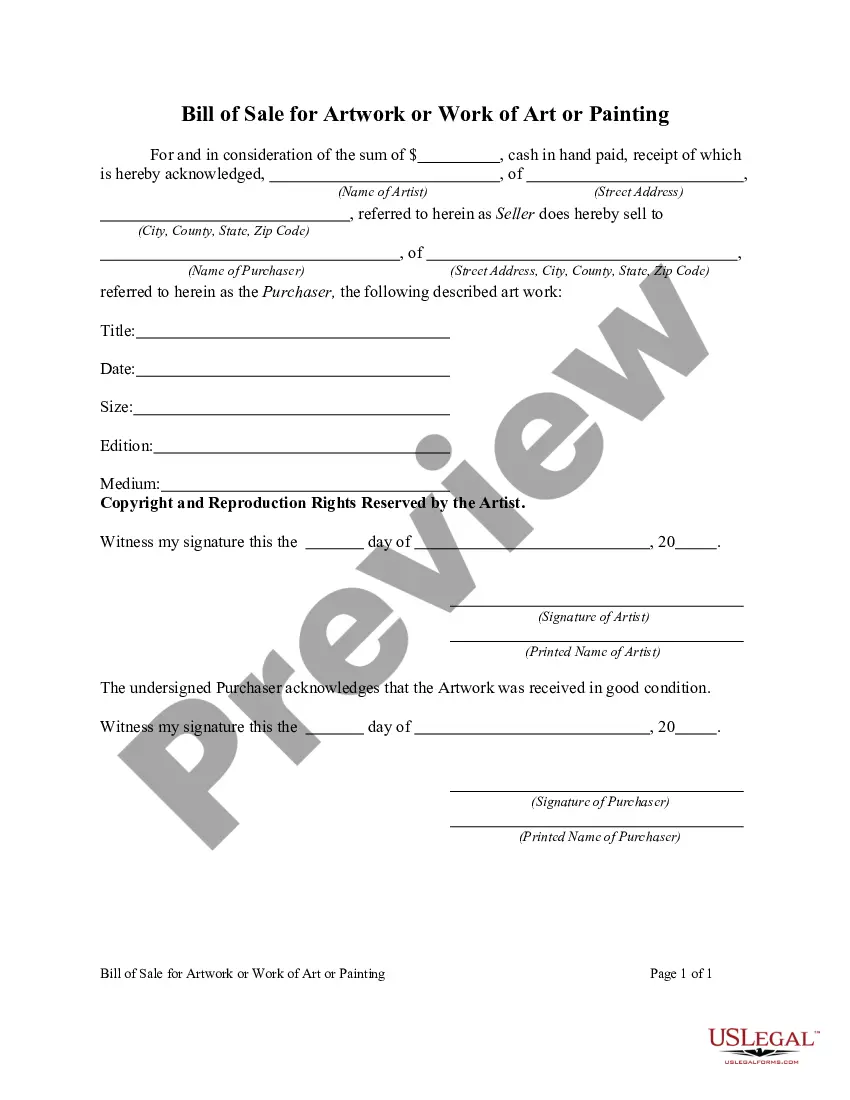
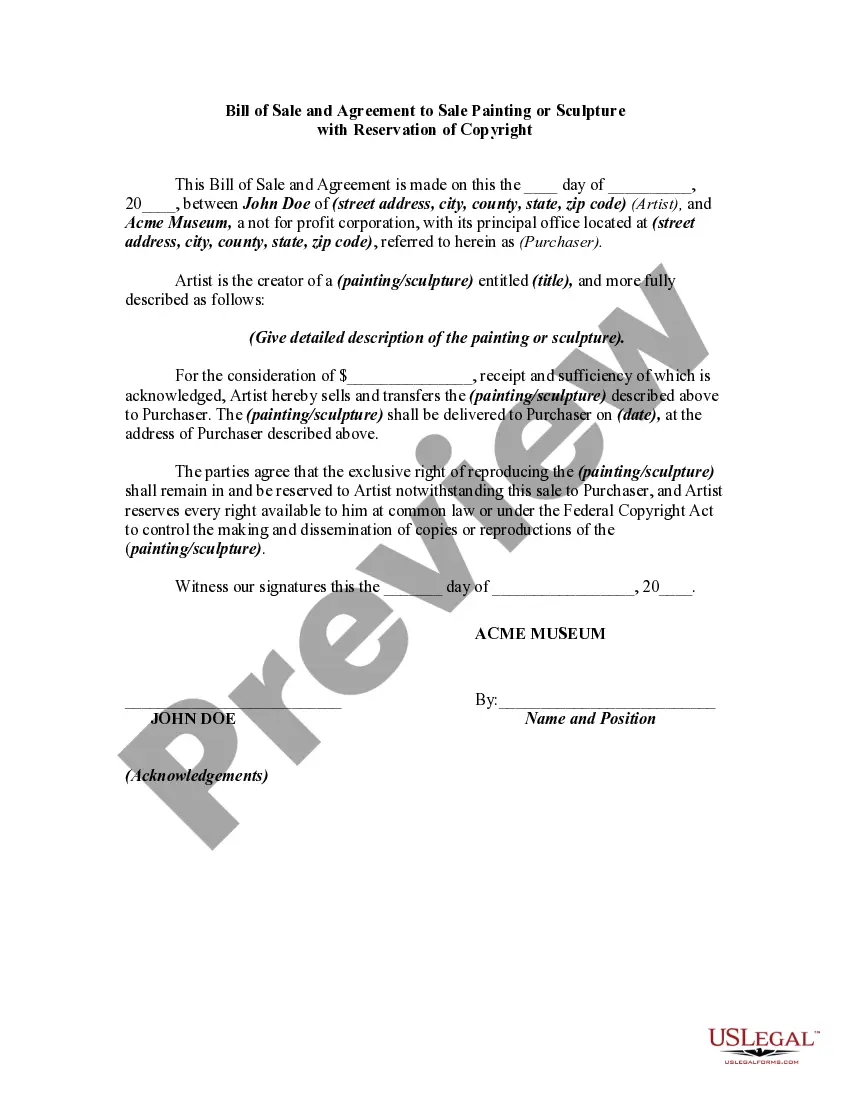
Bill Sale Art Sample Without Permission In Franklin
Description
Get your form ready online
Our built-in tools help you complete, sign, share, and store your documents in one place.
Make edits, fill in missing information, and update formatting in US Legal Forms—just like you would in MS Word.
Download a copy, print it, send it by email, or mail it via USPS—whatever works best for your next step.
Sign and collect signatures with our SignNow integration. Send to multiple recipients, set reminders, and more. Go Premium to unlock E-Sign.
If this form requires notarization, complete it online through a secure video call—no need to meet a notary in person or wait for an appointment.
We protect your documents and personal data by following strict security and privacy standards.

Make edits, fill in missing information, and update formatting in US Legal Forms—just like you would in MS Word.

Download a copy, print it, send it by email, or mail it via USPS—whatever works best for your next step.

Sign and collect signatures with our SignNow integration. Send to multiple recipients, set reminders, and more. Go Premium to unlock E-Sign.

If this form requires notarization, complete it online through a secure video call—no need to meet a notary in person or wait for an appointment.

We protect your documents and personal data by following strict security and privacy standards.
Looking for another form?




Form popularity
FAQ
The original artist owns his or her physical painting until it is sold, and the original artist retains the exclusive right to make reproductions of his artwork, even after the original is sold. This copyright covers recreations, duplications, reprintings, and any other form of “copying” you can think of.
In other words, although the client may “own” the work of art, the artist who created the work owns the copyright, including all ways in which that artwork is represented (photos, video, ads, logos, branding), other than in situ (on-site documentation photos).
For example, if you use an artwork and make a sculpture, snow globe, puzzle, bas-relief, scarf, tee-shirt, mouse pad, wine label, clock, box, knife handle, button, lunch box, greeting card, poster, fabric, CD cover, figurine, frame, etc. you are infringing by creating an unauthorized derivative work.
Copyright ownership is separate from ownership of an original artwork. If the work is uncommissioned, then the artist owns the copyright automatically even if the original is sold. The copyright may be sold or assigned as a separate undertaking. Only the copyright holder has the right to reproduce the work.
When an artist creates a painting, the artist owns both the copyright in the artwork, and the physical artwork. Ownership of the copyright is an intellectual property right. Ownership of the physical artwork is a personal property right. A sale of the physical artwork does not transfer the copyrights in the artwork.
Ready to Exhibit Your Art? Here Are Steps You Can Take Try a home show and invite your friends. Connect with a local business and see if they might be interested in hanging your work in their establishment. Get together with a few other artists and rent a space for your exhibition. Enter juried exhibitions.
The artist retains all rights under the Copyright Act of 1976 (17 USC Section 101) as the sole author of the work for the duration of the copyright. The duration of copyright in the United States is currently the life of the author, plus 70 years.
In an institution such as a museum or in a private collection, follow this format: Artist's Last Name, First Name. Title of Artwork. Year, medium, Name of Institution or Private Collection Housing Artwork, City Where Institution or Private Collection is Located.