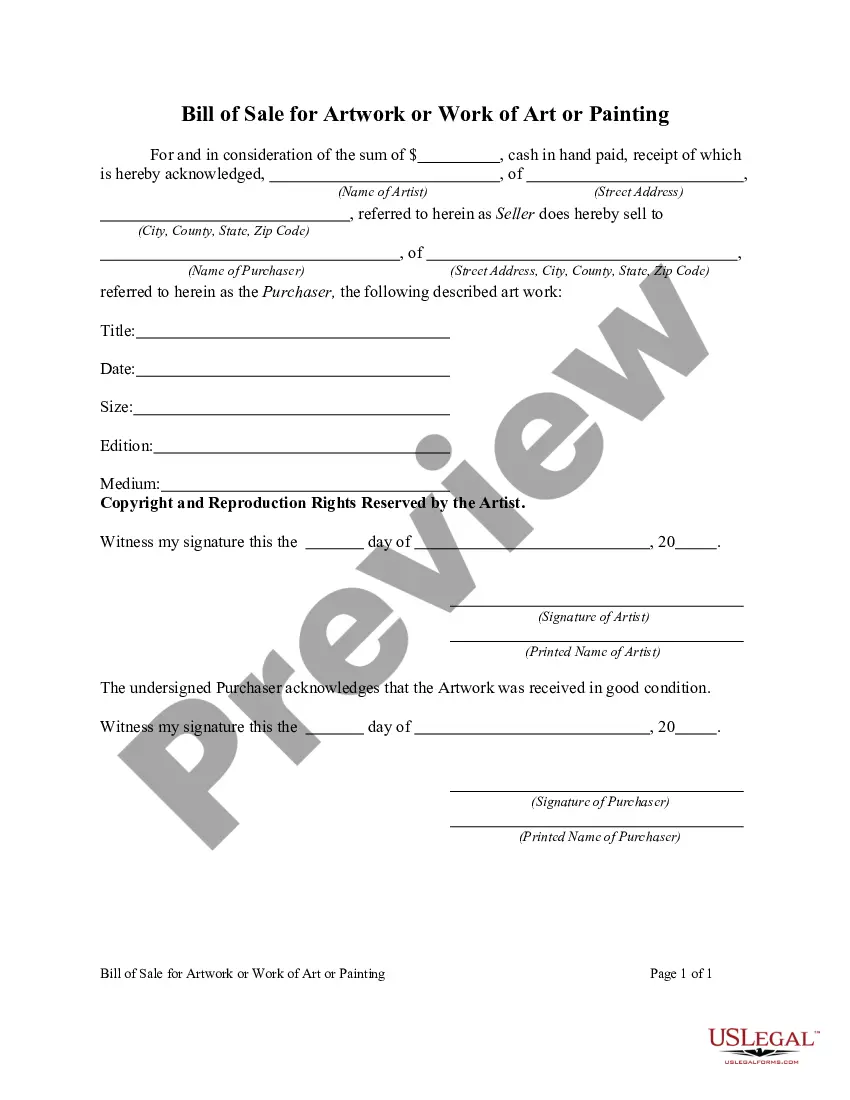
Bill Sale Art Sample Without Payment In Clark
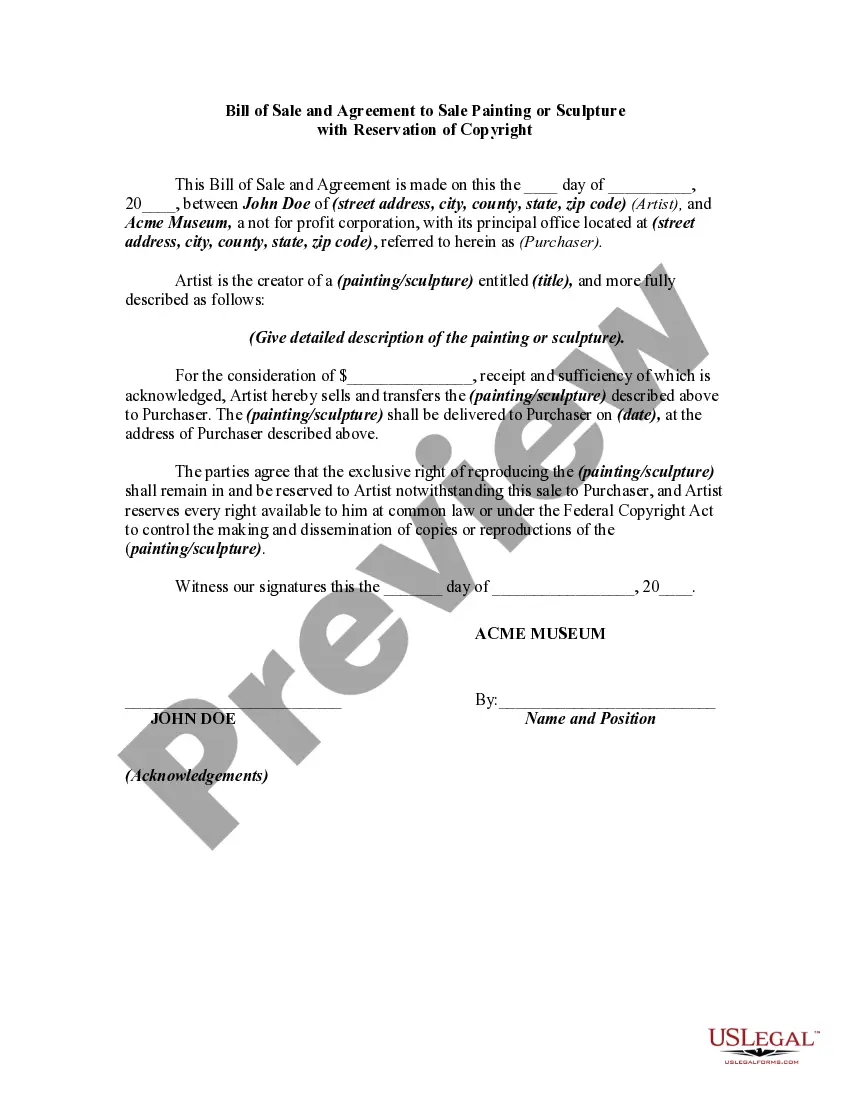
Description
Get your form ready online
Our built-in tools help you complete, sign, share, and store your documents in one place.
Make edits, fill in missing information, and update formatting in US Legal Forms—just like you would in MS Word.
Download a copy, print it, send it by email, or mail it via USPS—whatever works best for your next step.
Sign and collect signatures with our SignNow integration. Send to multiple recipients, set reminders, and more. Go Premium to unlock E-Sign.
If this form requires notarization, complete it online through a secure video call—no need to meet a notary in person or wait for an appointment.
We protect your documents and personal data by following strict security and privacy standards.

Make edits, fill in missing information, and update formatting in US Legal Forms—just like you would in MS Word.

Download a copy, print it, send it by email, or mail it via USPS—whatever works best for your next step.

Sign and collect signatures with our SignNow integration. Send to multiple recipients, set reminders, and more. Go Premium to unlock E-Sign.

If this form requires notarization, complete it online through a secure video call—no need to meet a notary in person or wait for an appointment.

We protect your documents and personal data by following strict security and privacy standards.
Looking for another form?



Form popularity
FAQ
How to accept payments from customers on a website Identify your business needs. Choose a payment processor. Create an account with the payment processor. Integrate the payment processor into your website. Configure your payment settings. Test your payment system. Launch your payment system. Manage your transactions.
Ready to Exhibit Your Art? Here Are Steps You Can Take Try a home show and invite your friends. Connect with a local business and see if they might be interested in hanging your work in their establishment. Get together with a few other artists and rent a space for your exhibition. Enter juried exhibitions.
The best way to sell art online is by building your own branded ecommerce site with a platform like Shopify. You can also sell your work on a crafts and art marketplace like Etsy or on social media platforms like Instagram and Facebook Shops.
Invoices should contain information about: you the artist. your billing address. your client or customer. their taxable address. your tax reference code (UTR - unique tax reference code if in the UK) the tax date for the product or service rendered. description of the artwork provided or artistic service rendered.
Based on these requirements, the best way to accept credit cards at a craft fair is with a mobile card terminal. The top payment processors offer a number of options: Standalone credit card machine. Tablet-based POS with card reader.
Use social media platforms like Instagram, Facebook, and Twitter to share your work and connect with other artists and potential buyers. Participate in art shows and exhibitions: Participate in local art shows, exhibitions, and fairs to showcase your work and connect with potential buyers and collectors.
Finding Corporate Prospects Contact companies that already own your work to find out if they are expanding in size or building new offices. Contact architects and interior designers who have new corporate clients. Ask your artist friends who have sold their art to corporations how they did it.
Liability for the tax is between the purchaser and seller.
In summary, while you can use a nom de plume for some of your works, and even build up a ``legend'' surrounding it, if you find yourself in a position where you seek to enforce copyright, you are very likely to have to disclose your real identity at some point anyway.
Of course, in the end, you always have the option to choose whether you reveal your identity or not. Remaining anonymous might be crucial to your journey as an artist. Do you want to learn more about the world of street art? Check out our Domestika street art courses and start designing your creations.