Agreement Between Partnership Without In San Bernardino
Description

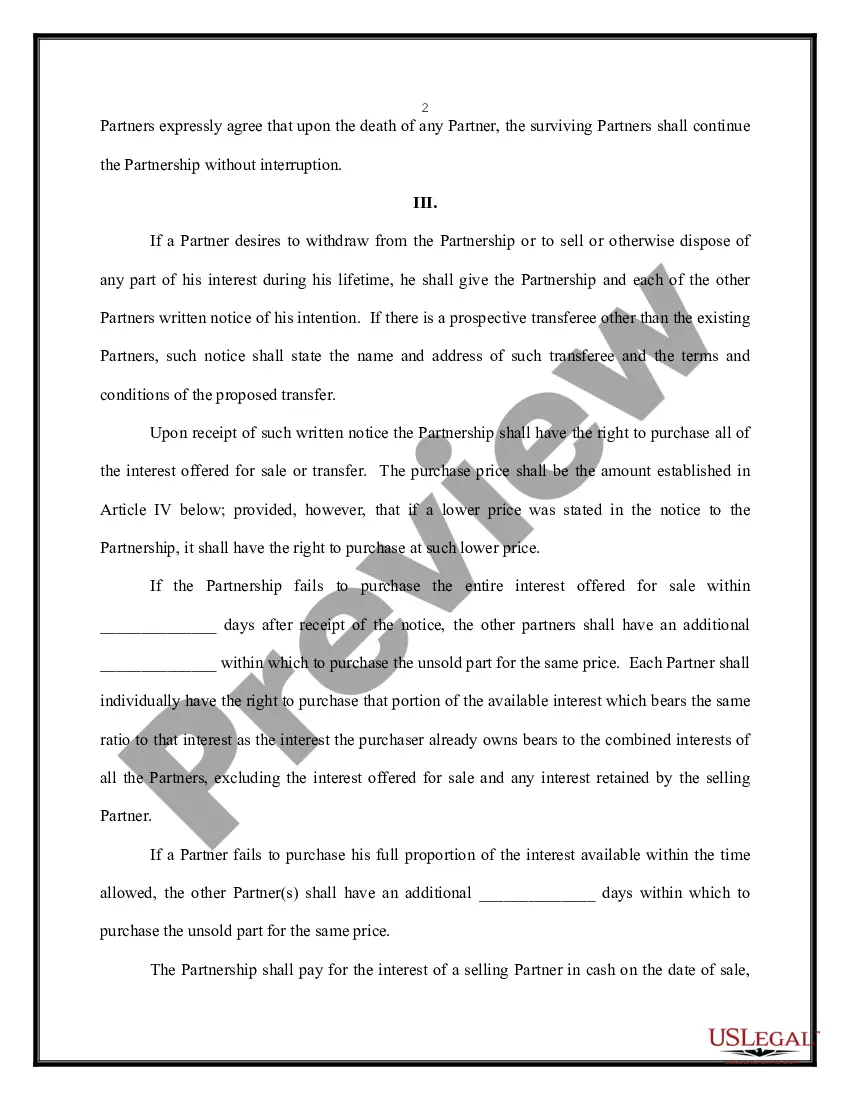
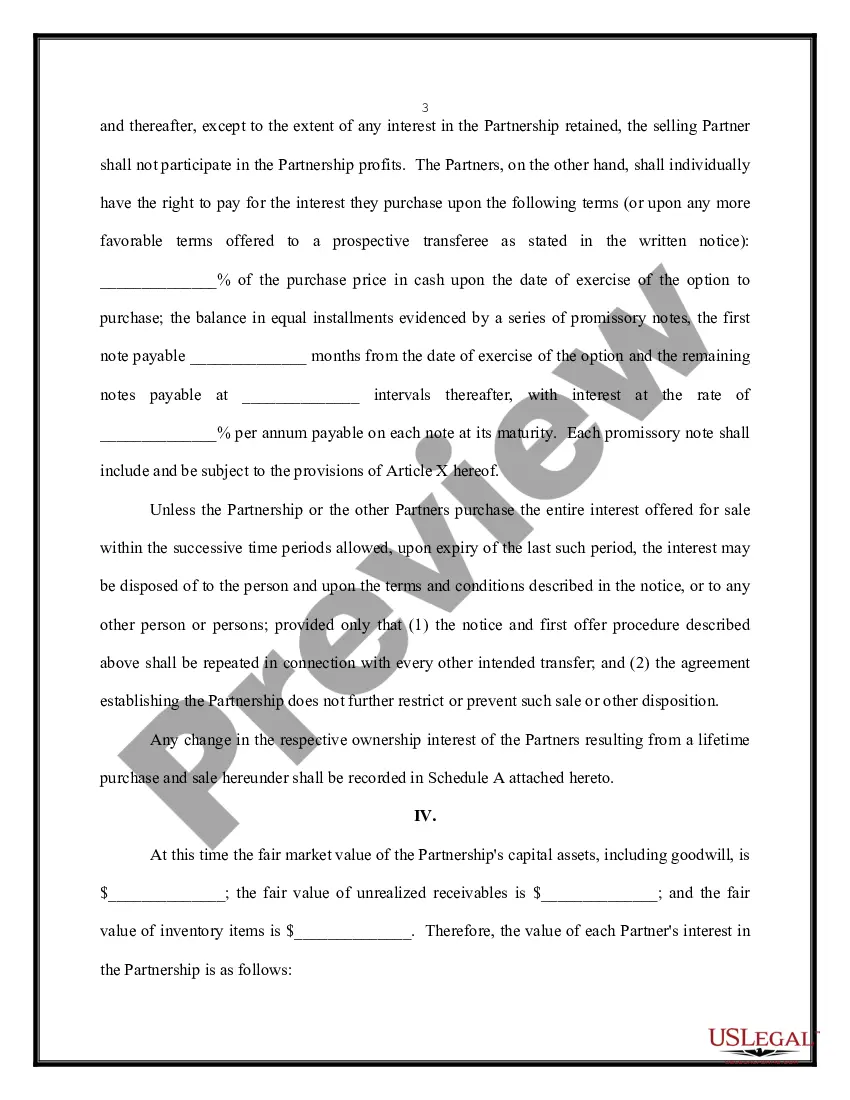
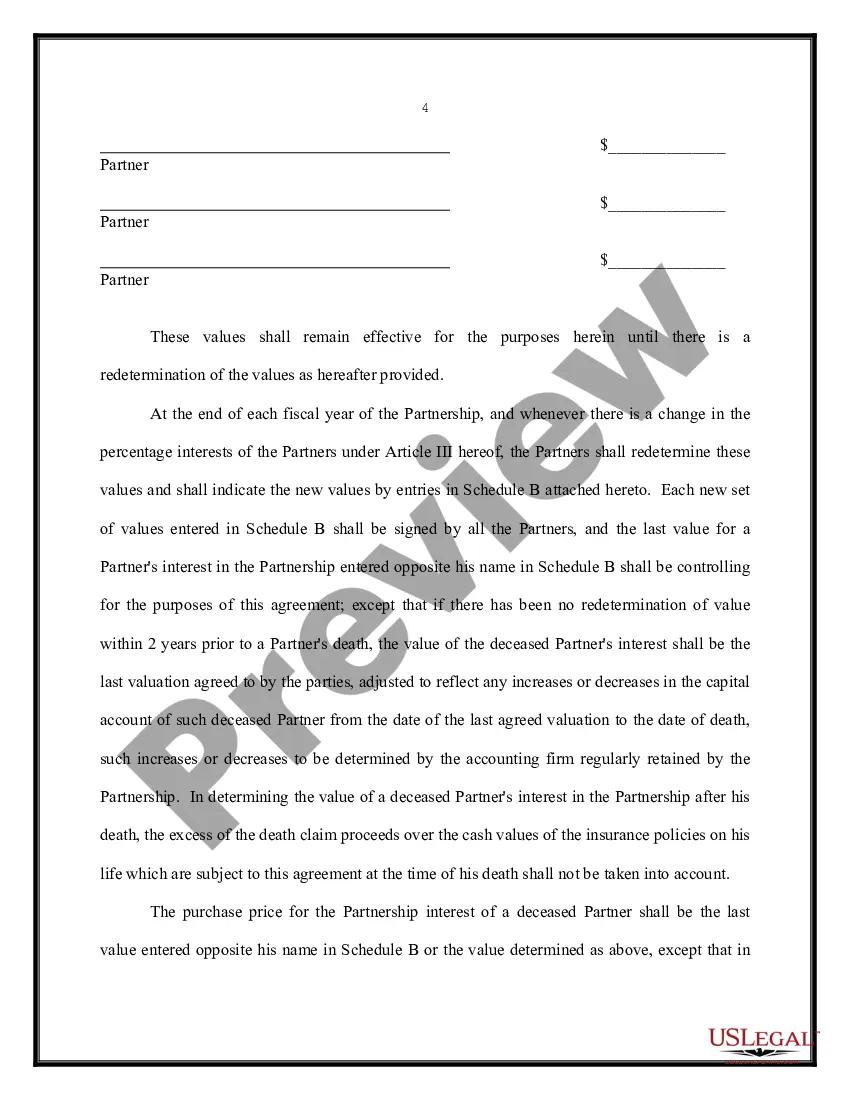
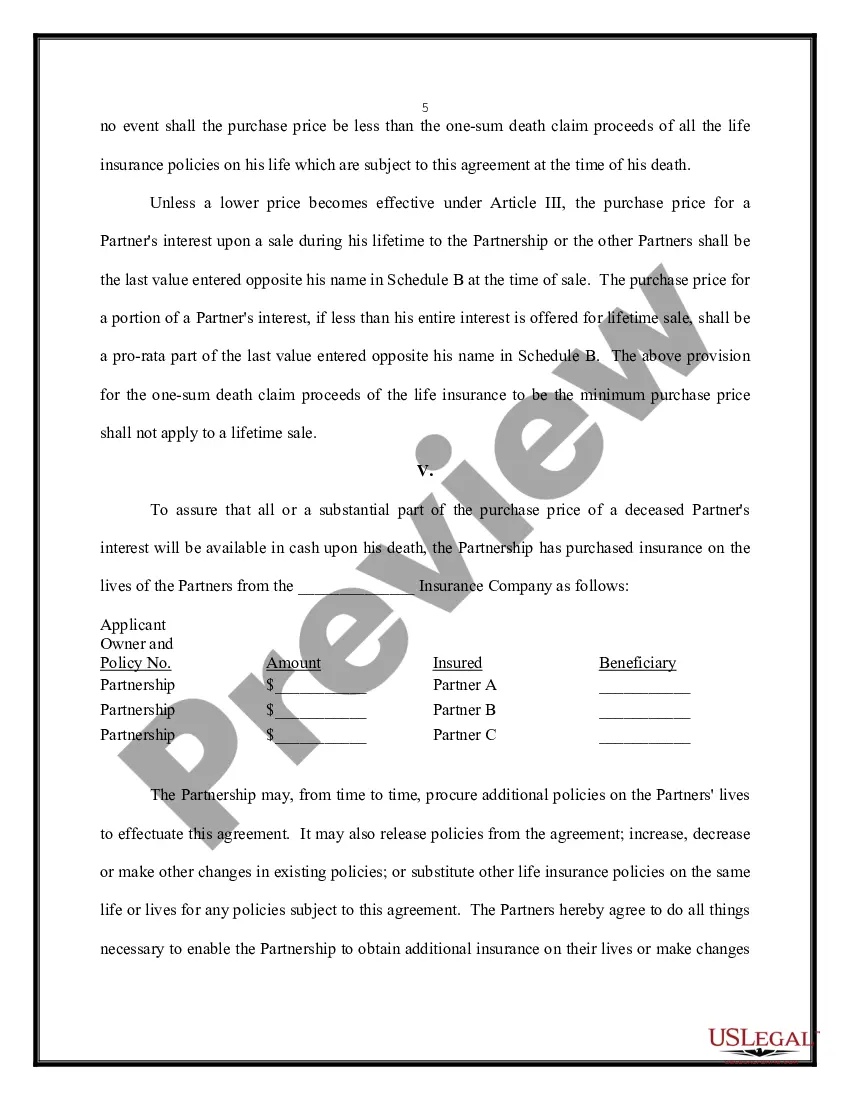


Get your form ready online
Our built-in tools help you complete, sign, share, and store your documents in one place.
Make edits, fill in missing information, and update formatting in US Legal Forms—just like you would in MS Word.
Download a copy, print it, send it by email, or mail it via USPS—whatever works best for your next step.
Sign and collect signatures with our SignNow integration. Send to multiple recipients, set reminders, and more. Go Premium to unlock E-Sign.
If this form requires notarization, complete it online through a secure video call—no need to meet a notary in person or wait for an appointment.
We protect your documents and personal data by following strict security and privacy standards.

Make edits, fill in missing information, and update formatting in US Legal Forms—just like you would in MS Word.

Download a copy, print it, send it by email, or mail it via USPS—whatever works best for your next step.

Sign and collect signatures with our SignNow integration. Send to multiple recipients, set reminders, and more. Go Premium to unlock E-Sign.

If this form requires notarization, complete it online through a secure video call—no need to meet a notary in person or wait for an appointment.

We protect your documents and personal data by following strict security and privacy standards.
Looking for another form?
Form popularity
FAQ
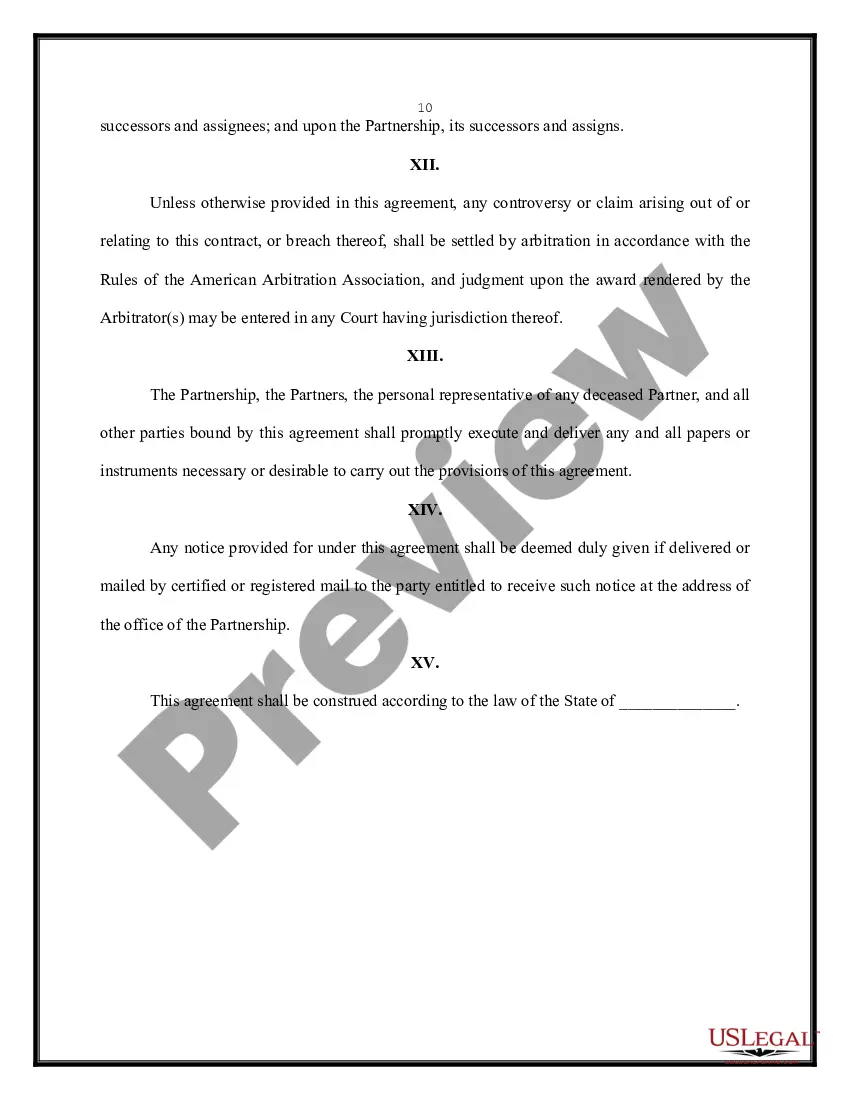
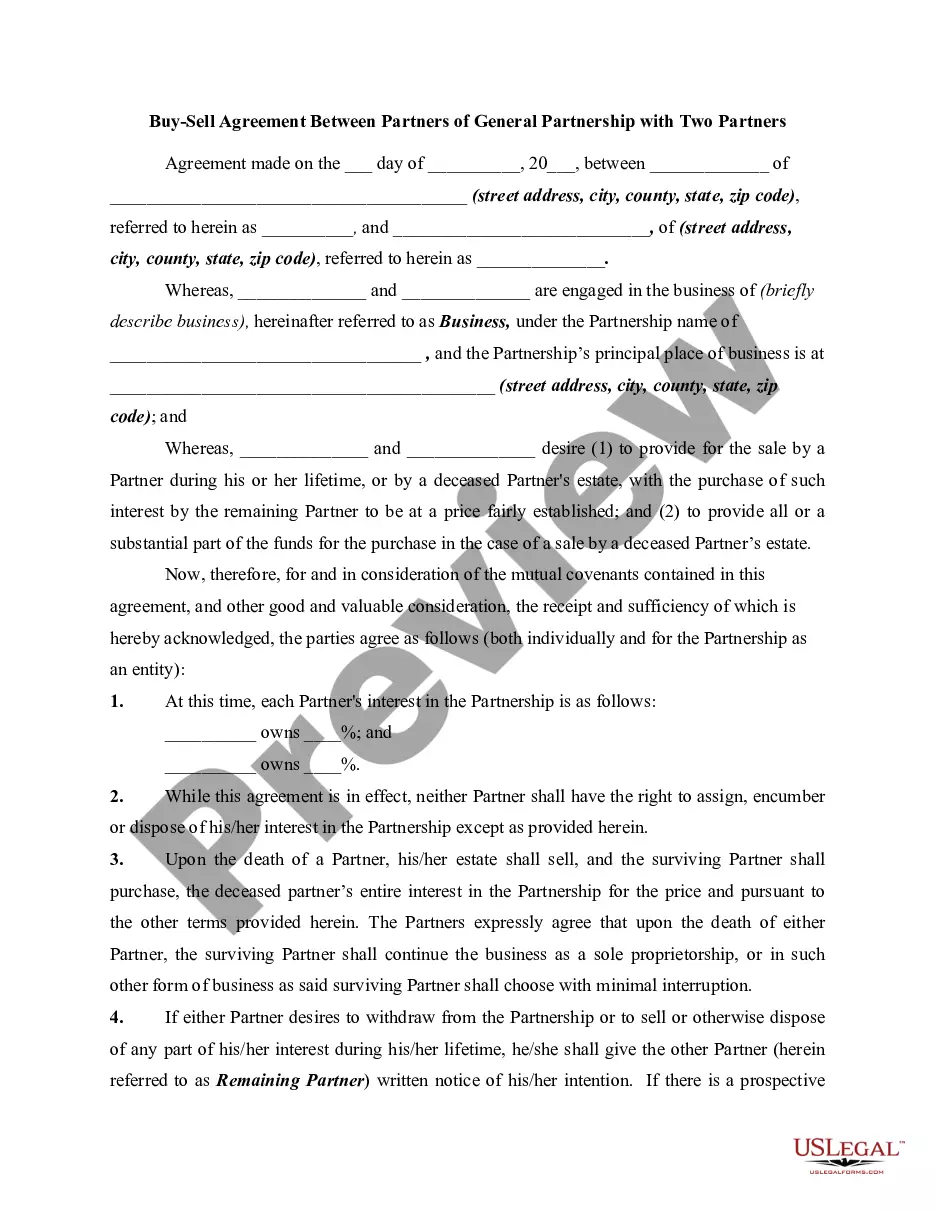
The parties hereto hereby form a Partnership under the name and style of _______________________________________________ (hereafter referred to as "the Partnership") to own real property, develop real property, and thereafter to manage, operate, develop, mortgage, lease or sell real property and do all other lawful ...
Written partnership agreements are not required by law, but whenever you and at least one other person decide to go into business together, you should draft one as soon as possible.
How to Write a Partnership Agreement Define Partnership Structure. Outline Capital Contributions and Ownership. Detail Profit, Loss, and Distribution Arrangements. Set Decision-Making and Management Protocols. Plan for Changes and Contingencies. Include Legal Provisions and Finalize the Agreement.
When there is no agreement among the partners, the profit or loss of the firm will be shared in their capital ratio.
It is not required by law to create a formal Partnership Agreement. However, if business owners enter into a partnership without one, their arrangement will be governed by the Partnership Act 1890 (the “1890 Act”).
The three different types of partnership are: General partnership. Limited partnership. Limited liability partnerships.
Kickstart your new business in minutes There are three relatively common partnership types: general partnership (GP), limited partnership (LP) and limited liability partnership (LLP). A fourth, the limited liability limited partnership (LLLP), is not recognized in all states.
The partnership agreement spells out who owns what portion of the firm, how profits and losses will be split, and the assignment of roles and duties. The partnership agreement will also typically spell out how disputes are to be adjudicated and what happens if one of the partners dies prematurely.
How to Submit Domestic Partnership Forms. Completed forms can be submitted three ways: Mailed to California Secretary of State, Domestic Partners Registry, P.O. Box 942870, Sacramento, CA 94277–2870; Submitted in person at the Sacramento office; or.
Do all business entities need to file a statement of information in California? Only corporations and limited liability companies need to file a statement of information in California. Partnerships and limited partnerships are exempt.
