Contingency Agreement Example In San Jose
Description





Get your form ready online
Our built-in tools help you complete, sign, share, and store your documents in one place.
Make edits, fill in missing information, and update formatting in US Legal Forms—just like you would in MS Word.
Download a copy, print it, send it by email, or mail it via USPS—whatever works best for your next step.
Sign and collect signatures with our SignNow integration. Send to multiple recipients, set reminders, and more. Go Premium to unlock E-Sign.
If this form requires notarization, complete it online through a secure video call—no need to meet a notary in person or wait for an appointment.
We protect your documents and personal data by following strict security and privacy standards.

Make edits, fill in missing information, and update formatting in US Legal Forms—just like you would in MS Word.

Download a copy, print it, send it by email, or mail it via USPS—whatever works best for your next step.

Sign and collect signatures with our SignNow integration. Send to multiple recipients, set reminders, and more. Go Premium to unlock E-Sign.

If this form requires notarization, complete it online through a secure video call—no need to meet a notary in person or wait for an appointment.

We protect your documents and personal data by following strict security and privacy standards.
Looking for another form?
Form popularity
FAQ
For instance, a home seller may agree to an offer with the contingency that they must find a new home before they sell. If they are unable to find another home within a specified time frame, they may cancel the deal without penalty — so long as this contingency is spelled out in the contract.
What Is a Contingency? A contingency is a potential occurrence of a negative event in the future, such as an economic recession, natural disaster, fraudulent activity, terrorist attack, or a pandemic.
The contract is characterized as "contingent" because the terms are not final and are based on certain events or conditions occurring. A contingent contract can also be viewed as protection against a future change of plans.
Best practices for drafting a contingent contract #1 Define the conditions clearly to activate the contract obligations. #2 Include detailed descriptions of all parties' obligations. #3 Keep the contract simple to avoid misunderstandings. #4 Regularly update your contracts to keep them relevant and enforceable.
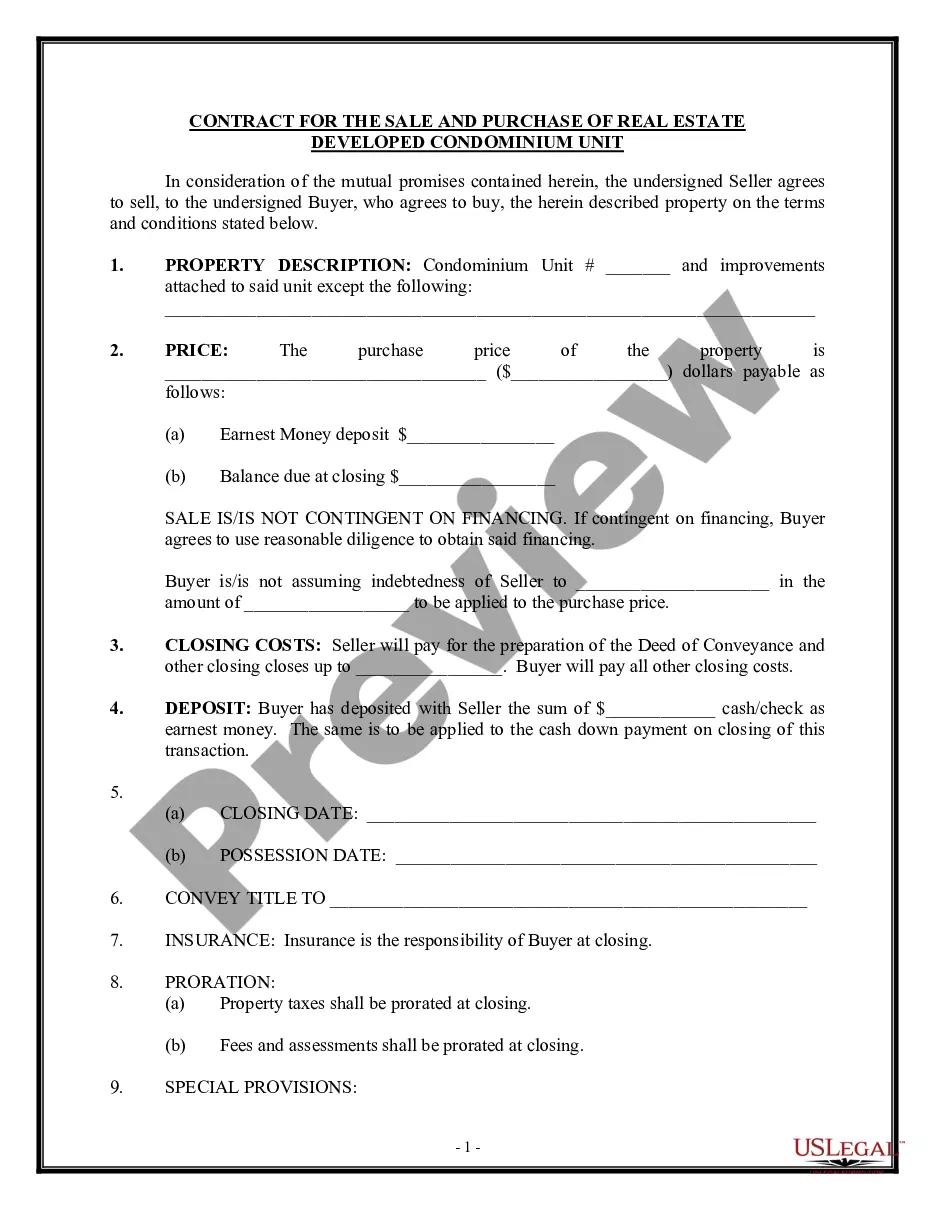
Even so, we'll concentrate on the top five most common contingencies: Financing Contingency. The most common contingency in real estate is the Financing Contingency. Inspection Contingency. Appraisal Contingency. Title Contingency. Home Sale Contingency.
Some of the most common real estate contingencies include appraisal, mortgage, title and home inspection contingencies. Many home buyers also include a sale of prior home contingency, which allows them to withdraw an offer if they are unable to sell their current home within a specified timeframe.
We want to help you prepare for the worst-case scenario, which is why we created this straightforward guide to three types of contingencies: Design contingencies. Bidding contingencies. Construction contingencies.
Example of a Contingency Contract One straightforward example might be a child who agrees with their parent that if they get an A in a particular class, they will get a new bicycle. Of course, the contract may be verbal, and it may be between family members.
A home inspection contingency is often the most common real estate contingency. The National Association of Realtors® estimates that about 80% of buyers include a home inspection contingency in their contract.