Contingency Contract In Texas In Illinois
Description







Get your form ready online
Our built-in tools help you complete, sign, share, and store your documents in one place.
Make edits, fill in missing information, and update formatting in US Legal Forms—just like you would in MS Word.
Download a copy, print it, send it by email, or mail it via USPS—whatever works best for your next step.
Sign and collect signatures with our SignNow integration. Send to multiple recipients, set reminders, and more. Go Premium to unlock E-Sign.
If this form requires notarization, complete it online through a secure video call—no need to meet a notary in person or wait for an appointment.
We protect your documents and personal data by following strict security and privacy standards.

Make edits, fill in missing information, and update formatting in US Legal Forms—just like you would in MS Word.

Download a copy, print it, send it by email, or mail it via USPS—whatever works best for your next step.

Sign and collect signatures with our SignNow integration. Send to multiple recipients, set reminders, and more. Go Premium to unlock E-Sign.

If this form requires notarization, complete it online through a secure video call—no need to meet a notary in person or wait for an appointment.

We protect your documents and personal data by following strict security and privacy standards.
Looking for another form?
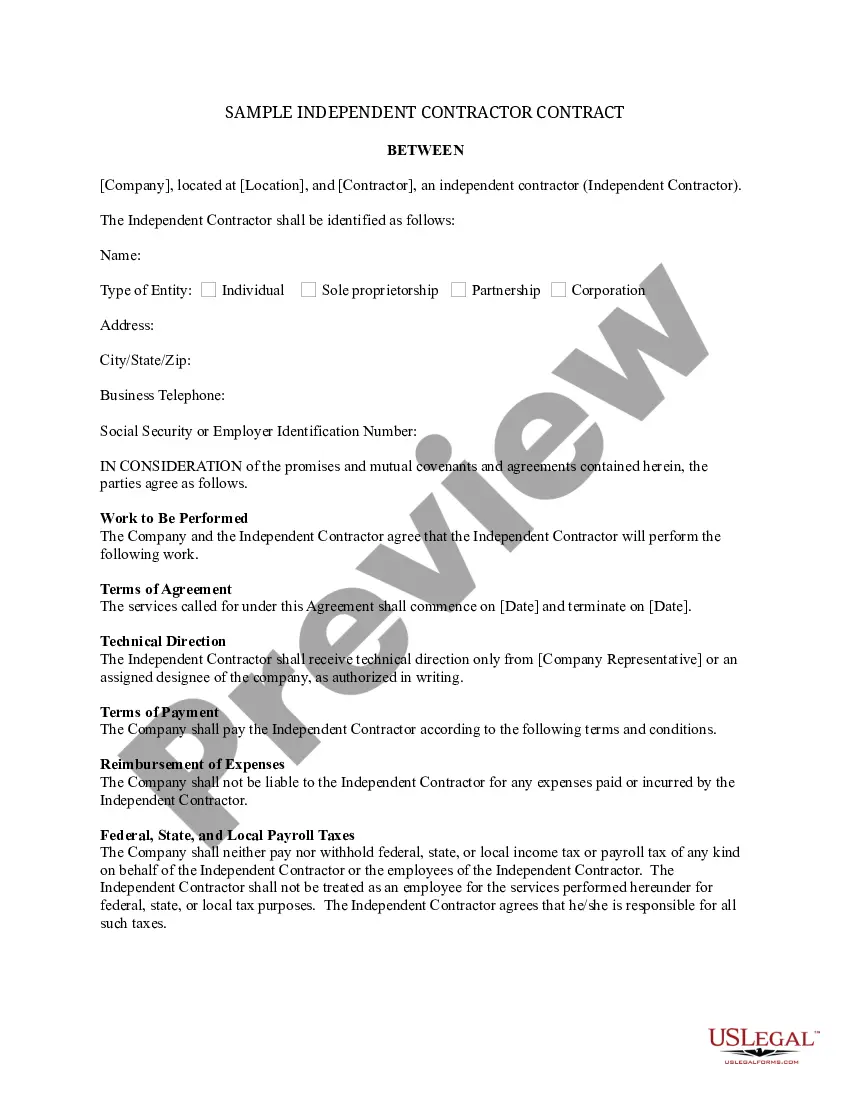



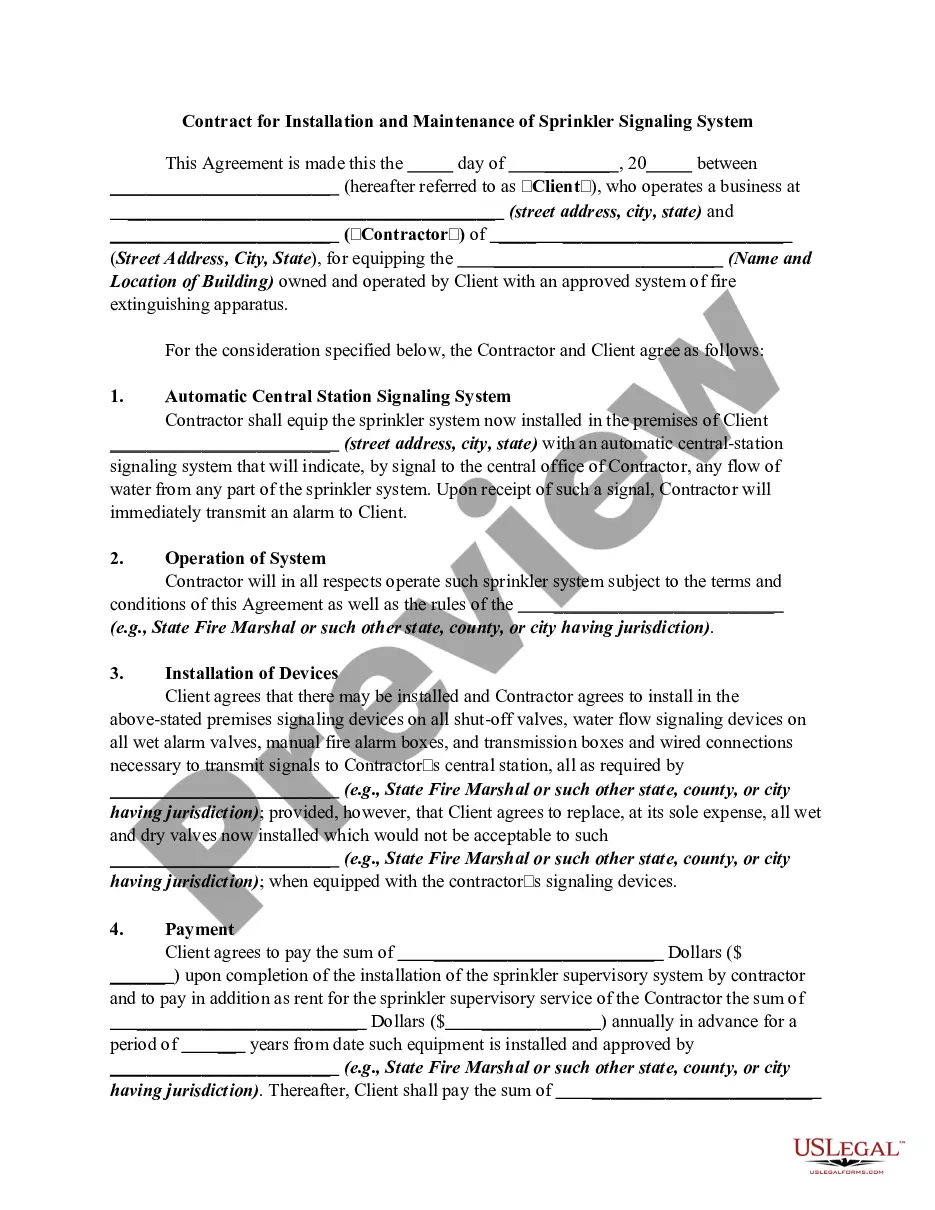





Form popularity
FAQ
Contingent contracts to do or not to do anything if an uncertain future event happens cannot be enforced by law unless and until that event has happened. If the event becomes impossible, such contracts become void.
Some cases may constitute exception. However, the event must not be of impossible character. In a contingent contract, there should be some event collateral to the contract. If the event consist in the performance of the contract itself by one party it is not a contingent contract.
Contingent means that an event may or may not occur in the future, depending on the fulfillment of some condition that is uncertain. This term is often used in contracts where the event will not take effect until the specified condition occurs.
A contingency clause is a contract provision that requires a specific event or action to take place in order for the contract to be considered valid. If the party that's required to satisfy the contingency clause is unable to do so, the other party is released from its obligations.
Contingent contracts to do or not to do anything if an uncertain future event happens cannot be enforced by law unless and until that event has happened. If the event becomes impossible, such contracts become void.
In Illinois, the elements necessary for a valid contract are: • An offer. An acceptance. Consideration. Ascertainable Material terms.
In Texas, it would not violate any law to adopt a policy such as the following: "XYZ Company prohibits any activity or exchange of goods, property, or services that significantly promotes, supports, or enables any business activity of a competitor, unless such activity or exchange has been discussed and approved in ...
A contingency clause should clearly outline the conditions, how the conditions are to be fulfilled, and which party is responsible for fulfilling them. The clause should also provide a timeframe for what happens if the condition is not met.
Absolutely. Texas businesses can and should continue to protect their interests through legally compliant nonsolicitation and nondisclosure agreements. The key is ensuring that these agreements are drafted to meet legal standards for reasonableness and necessity.
