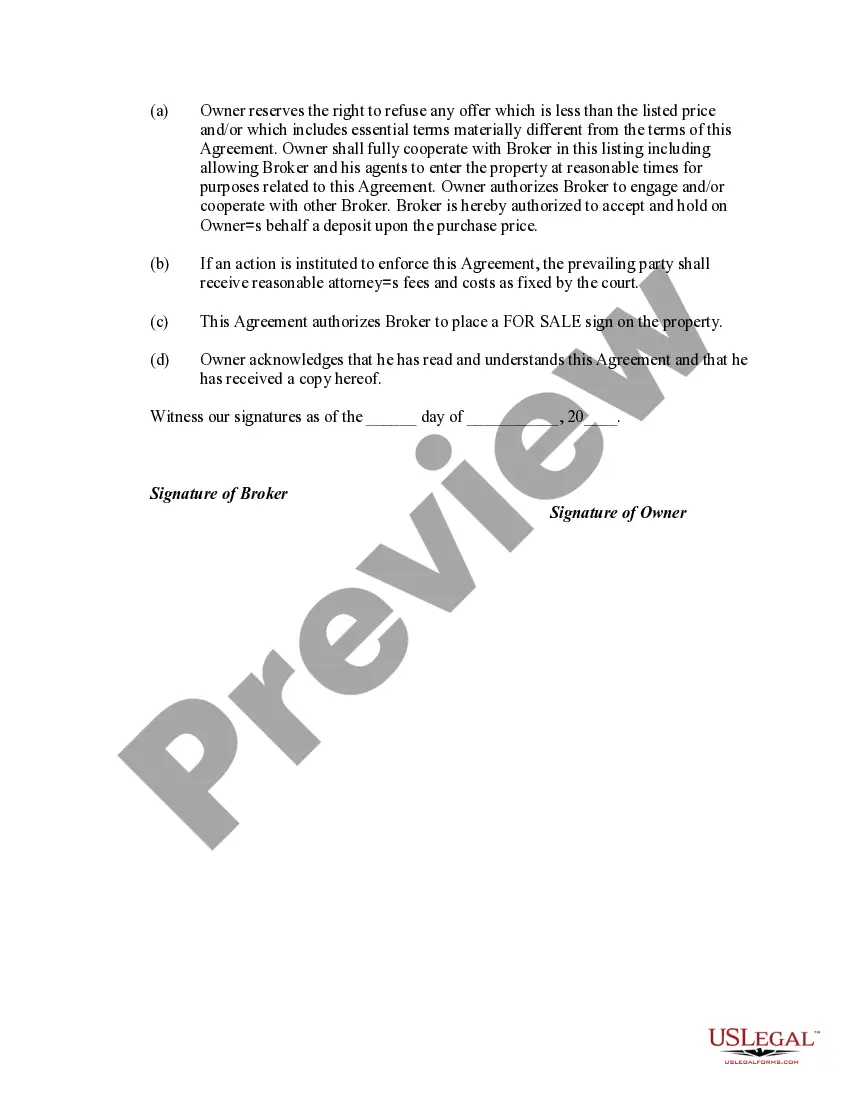
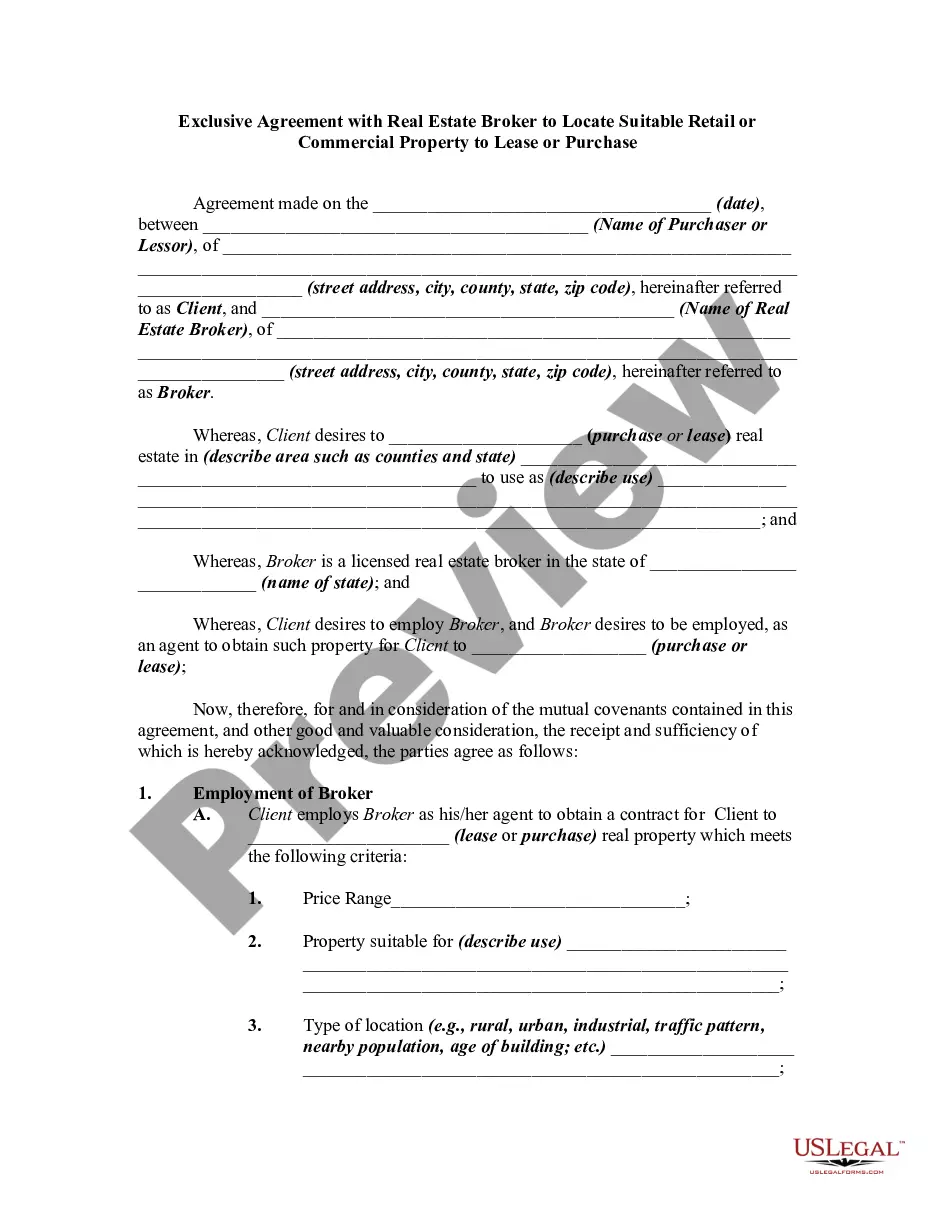
Listing Agreement Commercial Form With Two Points In Texas
Description


Get your form ready online
Our built-in tools help you complete, sign, share, and store your documents in one place.
Make edits, fill in missing information, and update formatting in US Legal Forms—just like you would in MS Word.
Download a copy, print it, send it by email, or mail it via USPS—whatever works best for your next step.
Sign and collect signatures with our SignNow integration. Send to multiple recipients, set reminders, and more. Go Premium to unlock E-Sign.
If this form requires notarization, complete it online through a secure video call—no need to meet a notary in person or wait for an appointment.
We protect your documents and personal data by following strict security and privacy standards.

Make edits, fill in missing information, and update formatting in US Legal Forms—just like you would in MS Word.

Download a copy, print it, send it by email, or mail it via USPS—whatever works best for your next step.

Sign and collect signatures with our SignNow integration. Send to multiple recipients, set reminders, and more. Go Premium to unlock E-Sign.

If this form requires notarization, complete it online through a secure video call—no need to meet a notary in person or wait for an appointment.

We protect your documents and personal data by following strict security and privacy standards.
Looking for another form?








Form popularity
FAQ
Exclusive Rights-to-Sell Listing This gives the real estate agent the exclusive rights to market your home and list it on MLS. They will receive the full commission as long the home is sold within the designated timeframe. This is the preferred agreement for most real estate agents.
The "Exclusive Right to Sell" is the most common, but there is the "open listing," the "exclusive agency listing," and the "one-time show." The "open listing" is mostly used by people trying to sell their home by owner who are also willing to work with real estate agents.
No. Texas law does not permit dual agency. A license holder may not represent both principals as a dual agent under the revisions to TRELA. Under the current law, a broker must agree to act as an intermediary in ance with the statute if the broker agrees to represent more than one party in a transaction.
A real estate contract in Texas must include several essential elements to be legally binding. First and foremost, the contract must identify the parties involved: the buyer and the seller. It should also clearly describe the property being sold, including its address and legal description.
Even if a written contract is not required, it is always a good idea to have a written agreement. A written agreement does not have to be a formal or complex contract, and it can be handwritten. It must contain the terms of the agreement and be signed by both parties.
The simple answer is yes – as a licensed agent, you can represent yourself in buying or selling real estate for yourself, so long as you disclose that you representing yourself upfront in the deal. But it's not as easy as just getting your real estate license!
While it's not legally required, hiring a real estate attorney to help draft and review the contract is highly recommended. Can I use a template for my Texas real estate contract? While many templates are available online, it's best to have an attorney review and customize the contract to ensure it meets your needs.
Yes you can and you will collect commission as the buyers agent. You can also represent yourself in selling your own property and save the listing agent commission.
