Listing Agreement For Debt Securities In San Jose
Description

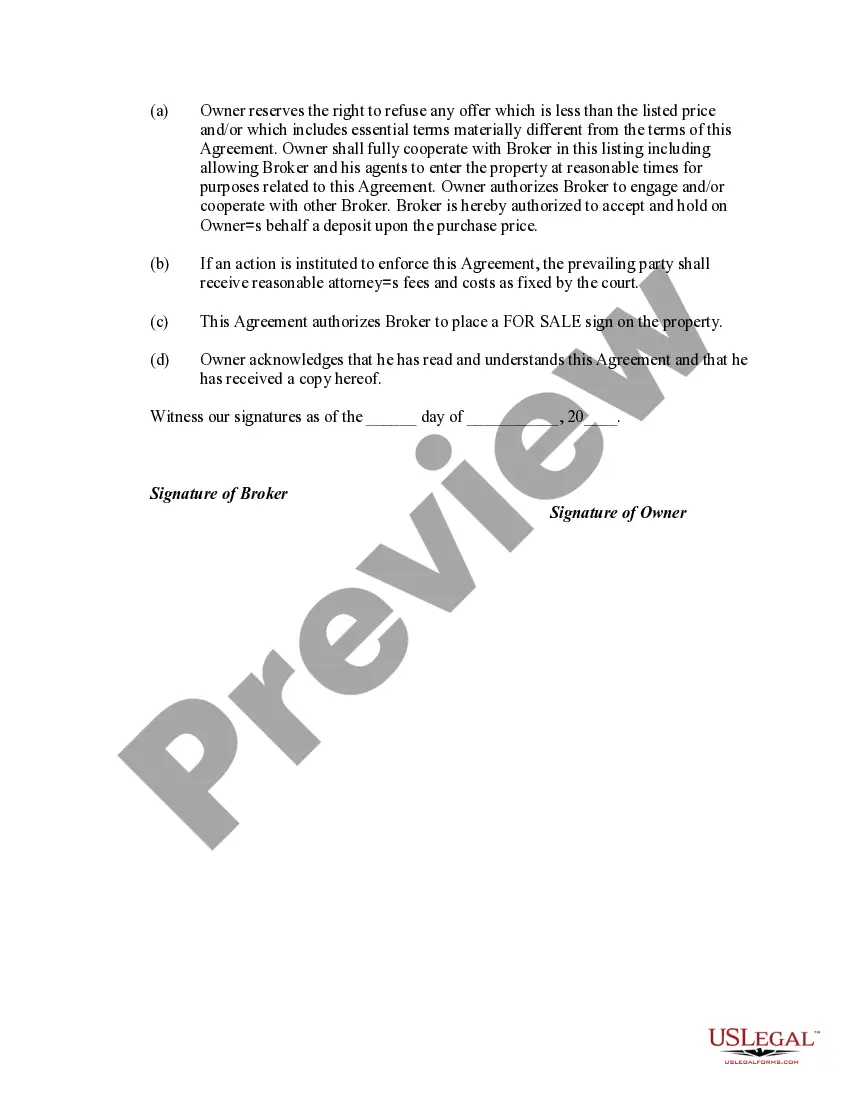

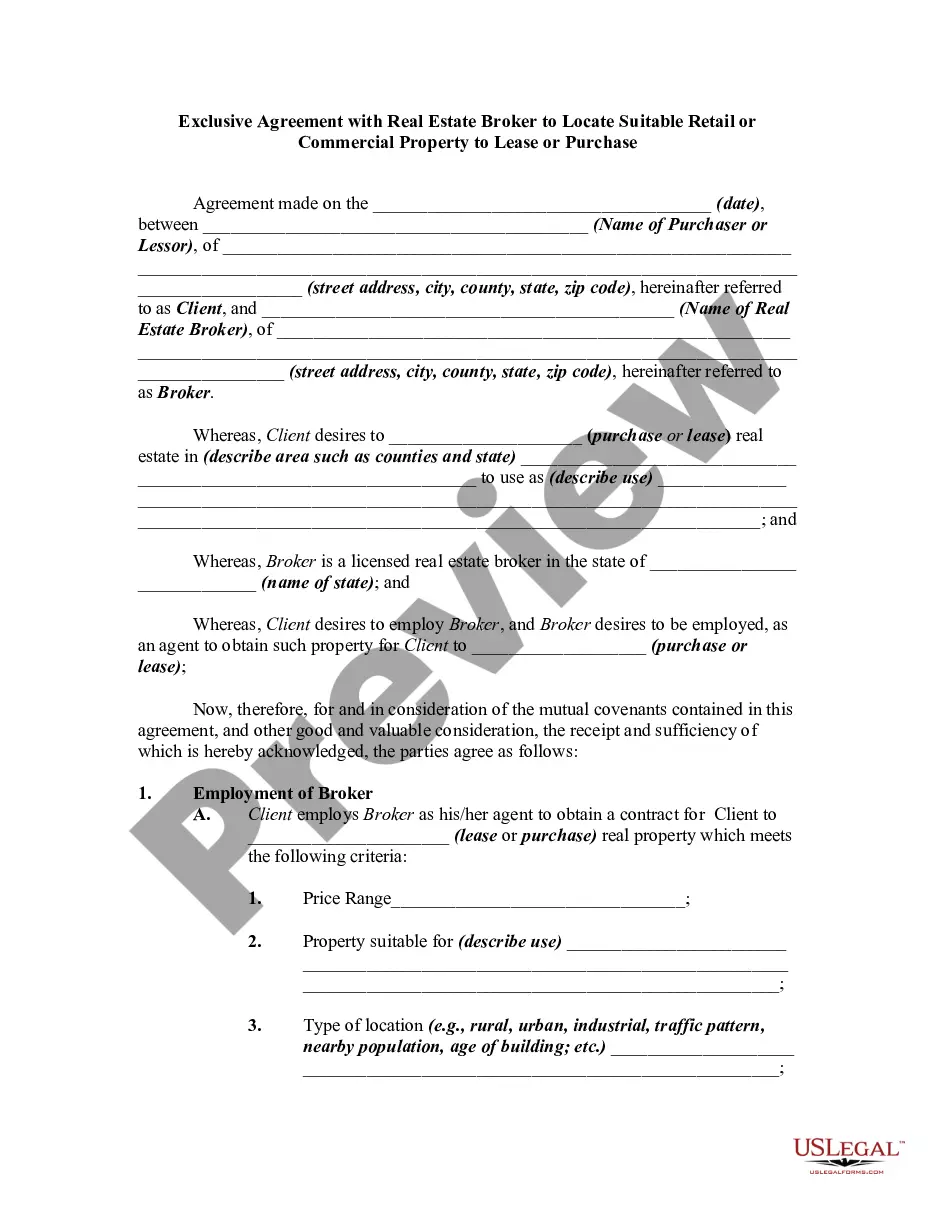
Get your form ready online
Our built-in tools help you complete, sign, share, and store your documents in one place.
Make edits, fill in missing information, and update formatting in US Legal Forms—just like you would in MS Word.
Download a copy, print it, send it by email, or mail it via USPS—whatever works best for your next step.
Sign and collect signatures with our SignNow integration. Send to multiple recipients, set reminders, and more. Go Premium to unlock E-Sign.
If this form requires notarization, complete it online through a secure video call—no need to meet a notary in person or wait for an appointment.
We protect your documents and personal data by following strict security and privacy standards.

Make edits, fill in missing information, and update formatting in US Legal Forms—just like you would in MS Word.

Download a copy, print it, send it by email, or mail it via USPS—whatever works best for your next step.

Sign and collect signatures with our SignNow integration. Send to multiple recipients, set reminders, and more. Go Premium to unlock E-Sign.

If this form requires notarization, complete it online through a secure video call—no need to meet a notary in person or wait for an appointment.

We protect your documents and personal data by following strict security and privacy standards.
Looking for another form?









Form popularity
FAQ
A listing agreement is a contract between a property owner and a real estate brokerage that authorizes the broker to represent the seller and act as their agent in the sale of the property.
The seller can back out for reasons written into the contract, including (but not limited to) contingencies. The buyer is in breach of the contract. If the buyer is “failing to perform” — a legal term meaning that they're not holding up their side of the contract — the seller can likely get out of the contract.
A listing agreement is “a legally binding contract that creates an agency relationship authorizing a broker to serve as the agent for a principal in a real estate transaction.” In other words, a listing agreement is an employment contract between a client and a broker that spells out what the broker is responsible for ...
In California's dynamic real estate market, the listing agreement stands as a cornerstone for home sellers, ensuring a seamless and legally sound transaction. This formal contract between a property owner and a real estate broker authorizes the broker to represent the seller in marketing and selling the property.
The concept of Listing Agreement was inserted in the Securities Contract (Regulation) Act, 1956 (“SCRA”) under Section 21 which provided that "where the securities are listed on the application of any person in any recognised stock exchange, such person shall comply with the conditions of the listing agreement with ...
A real estate listing agreement – also known as a seller's agent agreement – is a contract between a property owner and a real estate broker. It permits the broker to sell the home on the seller's terms, locating an appropriate buyer. The property owner pays the brokerage a commission for acting as the listing agent.
A debt security is a debt instrument that can be bought or sold between two parties and has basic terms defined, such as the notional amount (the amount borrowed), interest rate, and maturity and renewal date.
On a T+3 basis) specifies that the listing of debt securities and Non-convertible Redeemable Preference Shares (NCRPS) issued through public issue process shall be completed within T+6 working days from the date of closure of the issue.
Public debt securities are publicly traded fixed income securities that can be assigned different credit ratings based on the creditworthiness of the issuers. Investment grade securities: Bonds issued by stable companies with a low risk of default.
Just like shares are listed on the stock exchange, debt securities are also listed on a stock exchange.
