Listing Agreement For Commercial Lease In Queens
Description

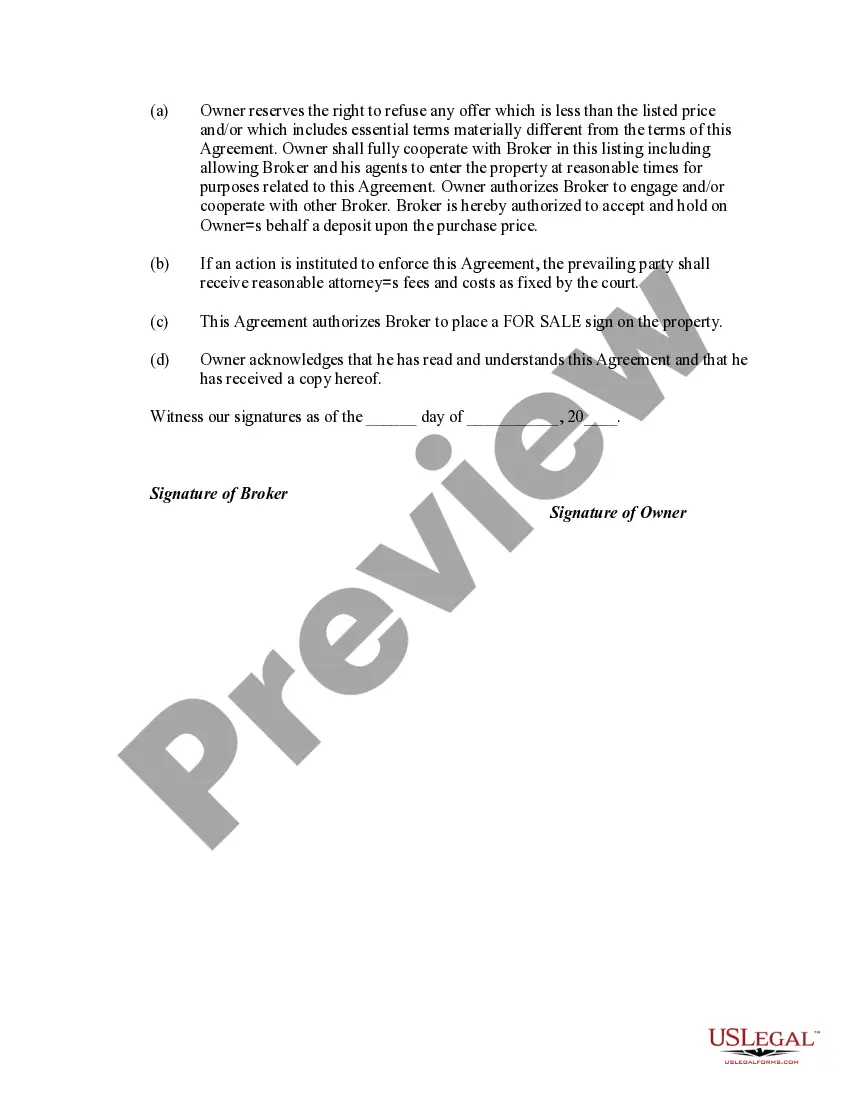

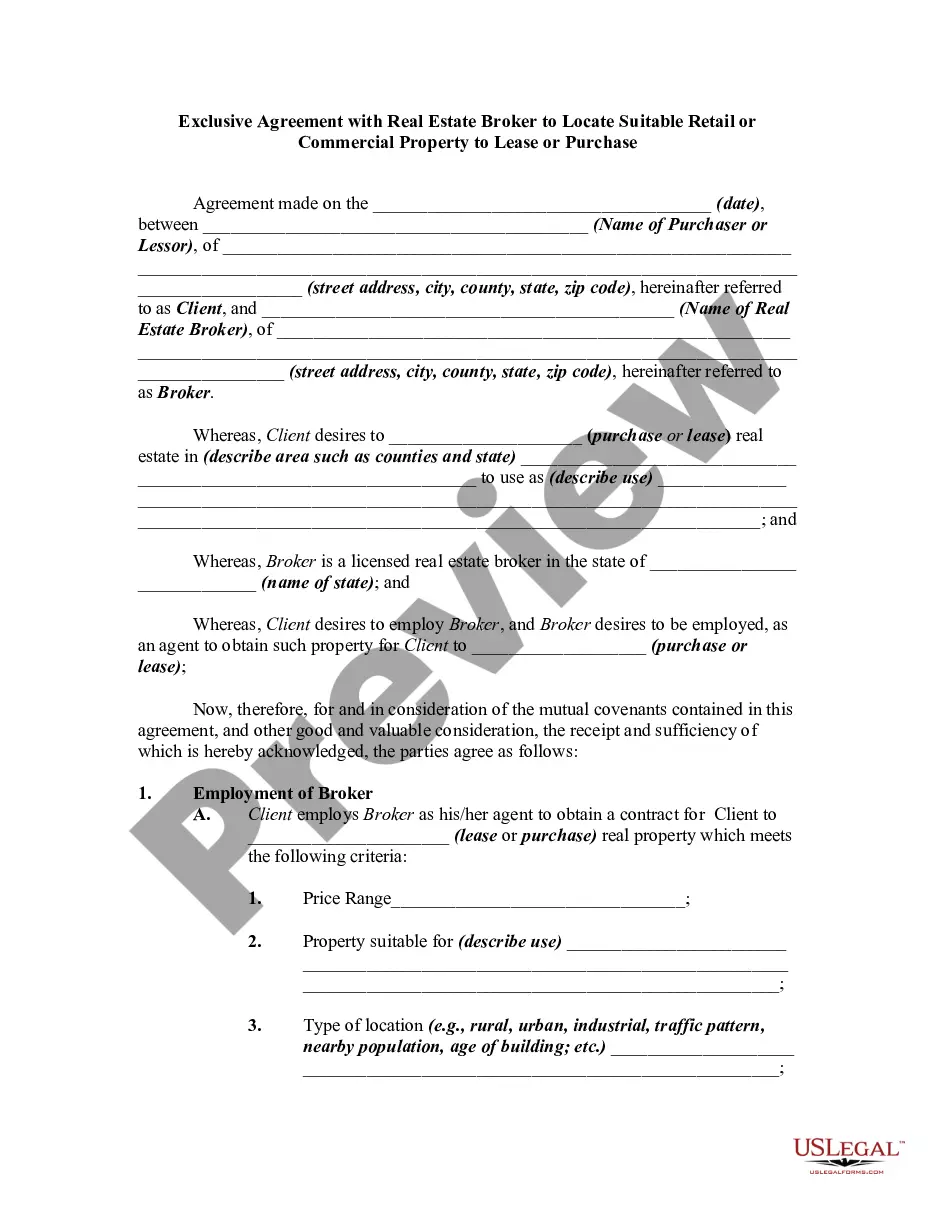
Get your form ready online
Our built-in tools help you complete, sign, share, and store your documents in one place.
Make edits, fill in missing information, and update formatting in US Legal Forms—just like you would in MS Word.
Download a copy, print it, send it by email, or mail it via USPS—whatever works best for your next step.
Sign and collect signatures with our SignNow integration. Send to multiple recipients, set reminders, and more. Go Premium to unlock E-Sign.
If this form requires notarization, complete it online through a secure video call—no need to meet a notary in person or wait for an appointment.
We protect your documents and personal data by following strict security and privacy standards.

Make edits, fill in missing information, and update formatting in US Legal Forms—just like you would in MS Word.

Download a copy, print it, send it by email, or mail it via USPS—whatever works best for your next step.

Sign and collect signatures with our SignNow integration. Send to multiple recipients, set reminders, and more. Go Premium to unlock E-Sign.

If this form requires notarization, complete it online through a secure video call—no need to meet a notary in person or wait for an appointment.

We protect your documents and personal data by following strict security and privacy standards.
Looking for another form?





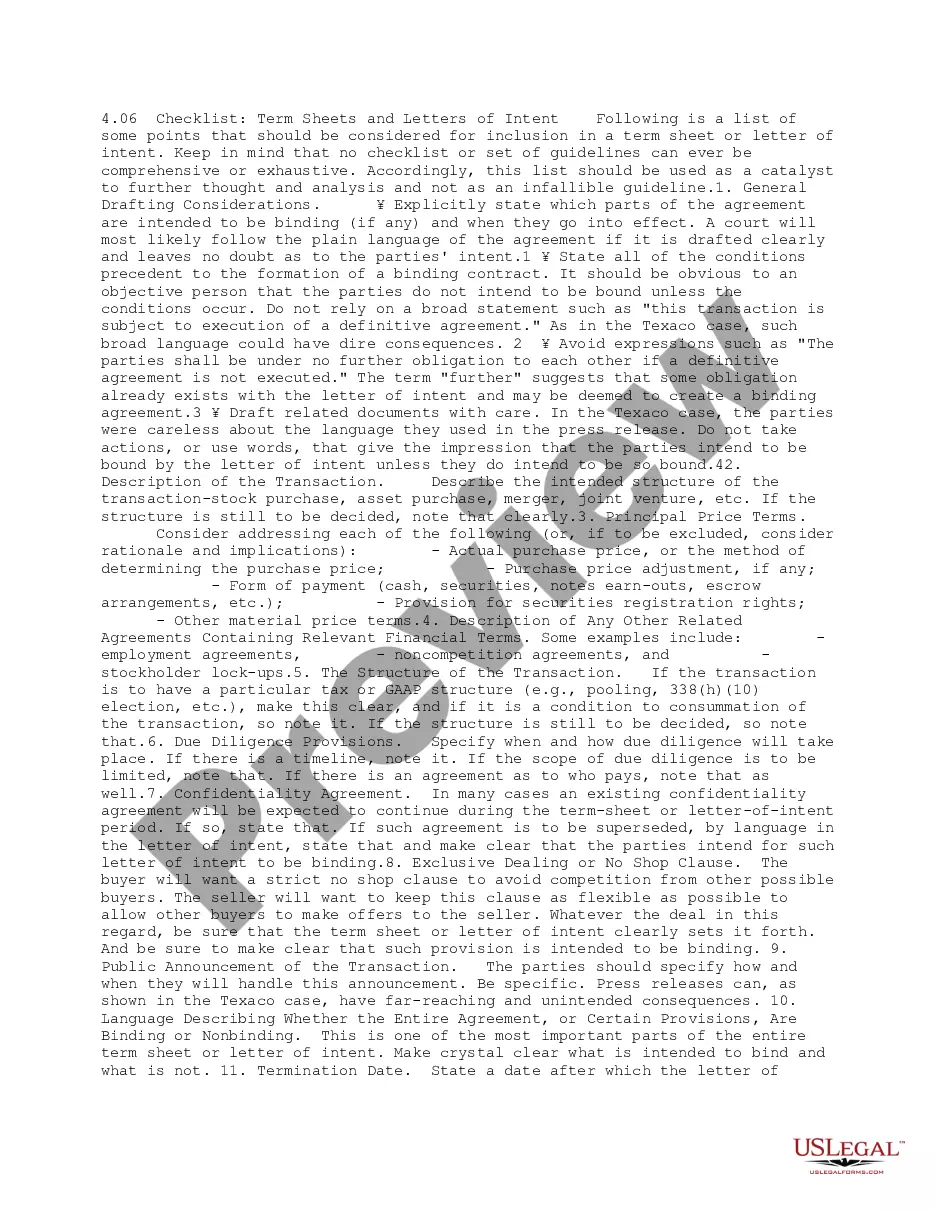


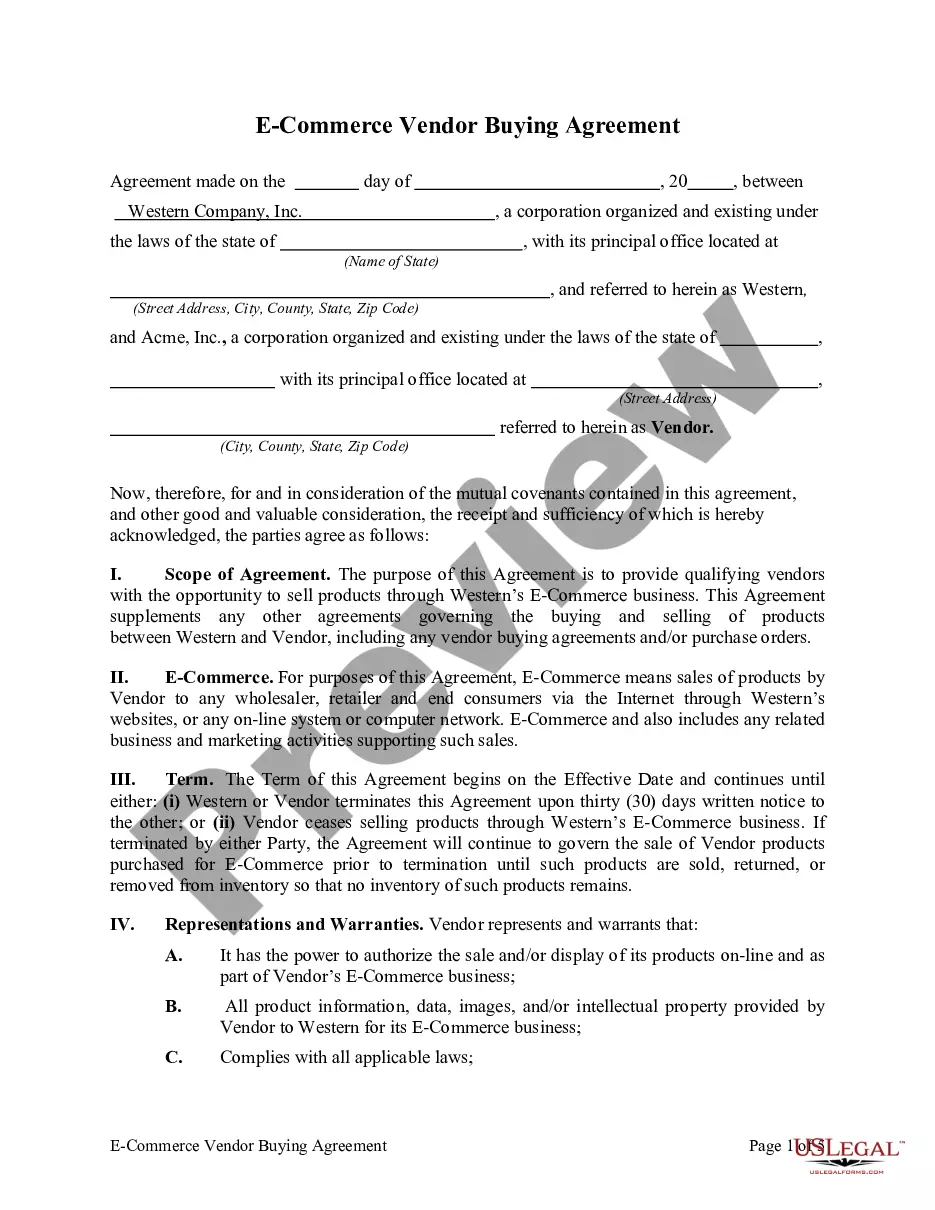

Form popularity
FAQ
Typically the most straightforward way to get out of a commercial lease is through the early termination clause. Ideally, your real estate transaction will include a formulaic approach to early termination penalties (i.e., liquidated damages).
The landlord tenant laws that allow you to break a lease are different from state to state. In many places, you can get out of your lease without penalty for a number of reasons, such as domestic violence, an unsafe environment, or if you've been called up for military service.
As discussed, certain circumstances allow you to break a lease without penalty. Common reasons include: Uninhabitable conditions: Document all issues with your apartment and communicate them to your landlord. Harassment or privacy violations: Keep a detailed record of incidents.
Negotiating an early termination or changes to the lease Typically, a tenant that needs to terminate an NYC office lease will start with negotiations. Sometimes, this can be a good option if the tenant has a replacement tenant available, even if the lease prohibits assignment and/or subleasing.
written rental agreement is absolutely valid and enforceable. It doesn't need to be notarized, but must be signed by both parties to the lease. Essential terms must be present in the writing, however.
A New York standard residential lease agreement is a form that allows a landlord and tenant to enter into a legally binding arrangement for leasing residential space. The term "standard" means a fixed term that usually lasts one year.
Tenants have the right to select a one or two year lease term when renewing their lease. Generally, the renewal lease must keep the same conditions and terms as the expiring lease.
Do leases in NY need to be notarized? No, lease agreements do not need to be notarized in New York. As leases are considered similar to standard contracts valid in the state, notarization is not required.
The most common lease terms are for one year or two years. Short term leases are usually three-month or six-month terms.
Also, commercial leases are for longer durations, ranging up to five years or more. However, residential leases are usually for 11 months. While in both cases, the tenant rents a property and pays monthly rentals, the terms and conditions differ drastically.