Right To Sell Option In Philadelphia
Description


Get your form ready online
Our built-in tools help you complete, sign, share, and store your documents in one place.
Make edits, fill in missing information, and update formatting in US Legal Forms—just like you would in MS Word.
Download a copy, print it, send it by email, or mail it via USPS—whatever works best for your next step.
Sign and collect signatures with our SignNow integration. Send to multiple recipients, set reminders, and more. Go Premium to unlock E-Sign.
If this form requires notarization, complete it online through a secure video call—no need to meet a notary in person or wait for an appointment.
We protect your documents and personal data by following strict security and privacy standards.

Make edits, fill in missing information, and update formatting in US Legal Forms—just like you would in MS Word.

Download a copy, print it, send it by email, or mail it via USPS—whatever works best for your next step.

Sign and collect signatures with our SignNow integration. Send to multiple recipients, set reminders, and more. Go Premium to unlock E-Sign.

If this form requires notarization, complete it online through a secure video call—no need to meet a notary in person or wait for an appointment.

We protect your documents and personal data by following strict security and privacy standards.
Looking for another form?


Form popularity
FAQ
Selling a put, one that is not covered requires the seller to be approved for margin trading by their broker and thus have a margin account. A margin account enables the investor to essentially borrow from their broker the necessary funds to implement their options trading strategy of selling a put.
What is the Passing Rate for the Real Estate Exam in Pennsylvania? The real estate exam isn't exactly easy, with 61% of people passing the national portion on the first try and only 46% passing the state-specific section on the first try.
Selling your house without a real estate agent in Pennsylvania is possible, but it can be a challenging process. While the state does not require you to have a real estate attorney, it's smart to hire one for a for-sale-by-owner transaction anyway.
Let us start with the legal requirements for selling real estate in Pennsylvania and New Jersey. In both states, you must have a real estate license to represent a buyer or seller in a real estate transaction. However, you are allowed to sell your own home without a real estate license.
You must successfully complete 75 hours of approved real estate education and be at least 18 years old with a high school diploma or an equivalent. The education requirements must be completed within five years of passing the real estate exams.
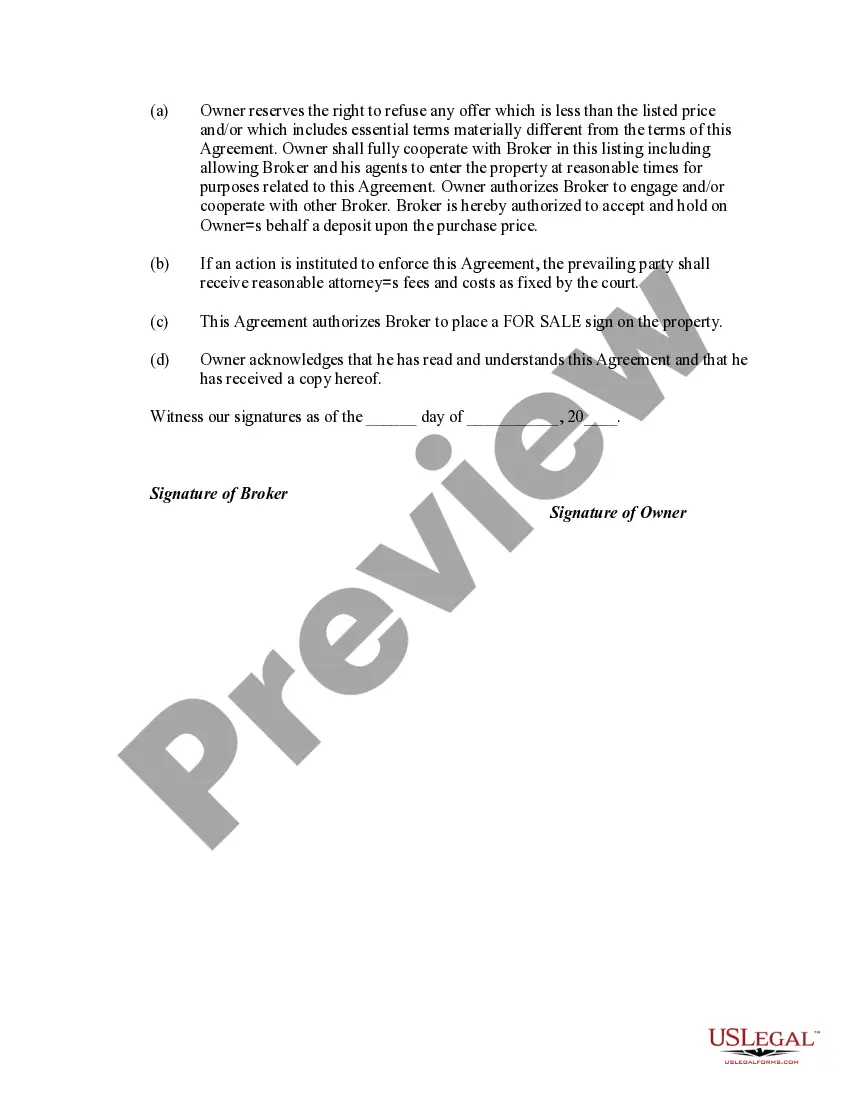
(4) In the case of an exclusive right-to-sell agreement, a statement in bold face type that the broker earns a commission on the sale of the property during the listing period by whomever made, including the owner.
You can do whatever you want with the remaining shares—keep the rest or sell some. Cashless (exercise and sell): If your company is public or offering a tender offer, they may allow you to exercise and sell all of your options in one transaction.
To the best of my knowledge, in order to Sell Option contracts you need to own the underlying security, usually at least 100 shares worth.
Call 311 to ask for an inspection from the Department of Licenses & Inspections (L&I). File a Fair Housing Complaint. If your unit fails an L&I inspection, you can contact the Fair Housing Commission at 215-686-4670 or go to 601 Walnut St, Suite 300 South to file a complaint.
Buying or selling a home in Philly doesn't end with paying closing costs, attorney fees, or real estate agent commissions. There's also a 3.27% Philadelphia Realty Transfer Tax to take care of, in addition to a 1% tax from the Commonwealth.