Listing Agreement Form 200 In Minnesota
Description


Get your form ready online
Our built-in tools help you complete, sign, share, and store your documents in one place.
Make edits, fill in missing information, and update formatting in US Legal Forms—just like you would in MS Word.
Download a copy, print it, send it by email, or mail it via USPS—whatever works best for your next step.
Sign and collect signatures with our SignNow integration. Send to multiple recipients, set reminders, and more. Go Premium to unlock E-Sign.
If this form requires notarization, complete it online through a secure video call—no need to meet a notary in person or wait for an appointment.
We protect your documents and personal data by following strict security and privacy standards.

Make edits, fill in missing information, and update formatting in US Legal Forms—just like you would in MS Word.

Download a copy, print it, send it by email, or mail it via USPS—whatever works best for your next step.

Sign and collect signatures with our SignNow integration. Send to multiple recipients, set reminders, and more. Go Premium to unlock E-Sign.

If this form requires notarization, complete it online through a secure video call—no need to meet a notary in person or wait for an appointment.

We protect your documents and personal data by following strict security and privacy standards.
Looking for another form?






Form popularity
FAQ
Key Components of a Listing Agreement It protects both the seller's interest and the broker's efforts in marketing the property. Broker's Duties: The agreement outlines all the duties and responsibilities of the broker, such as marketing the property, arranging showings, and negotiating with potential buyers.
If you choose to work with a real estate professional to sell your home, one of the first things you'll do is negotiate and sign a listing agreement with the agent you've selected.
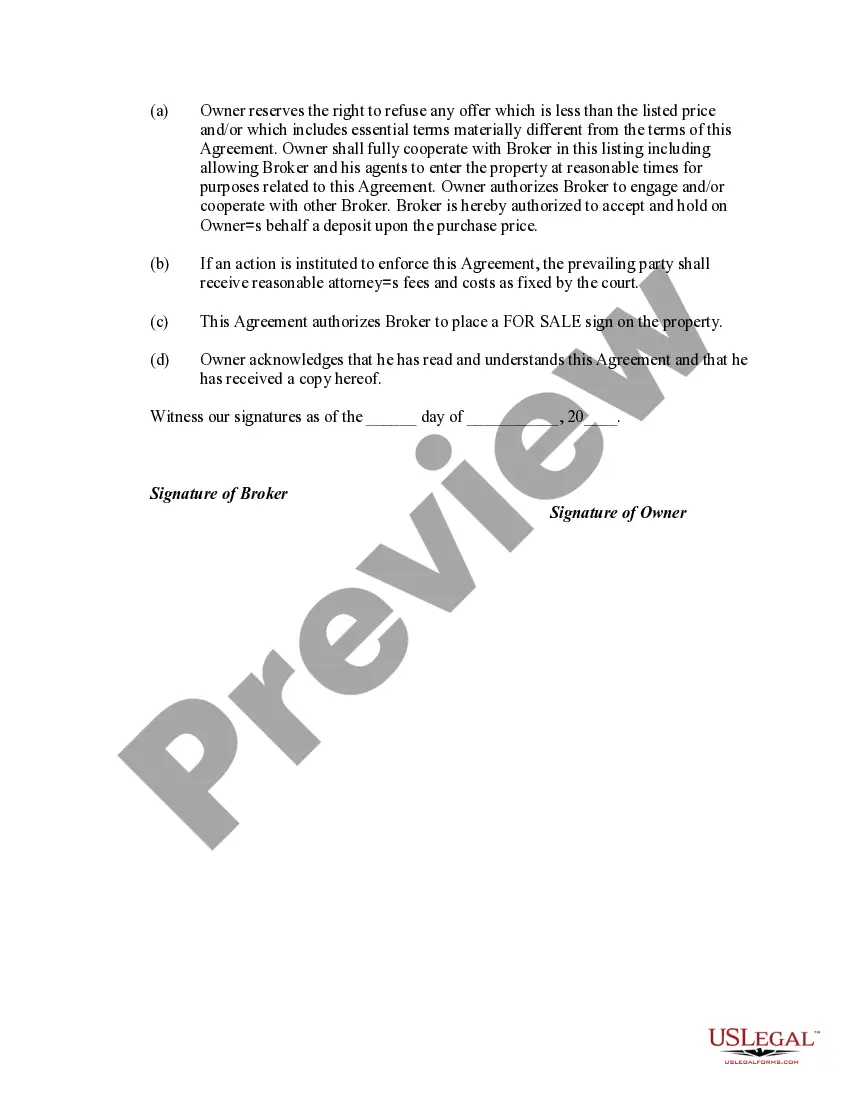
A listing agreement is a written document signed by all owners of real estate or their authorized attorney in fact authorizing a broker to offer or advertise real estate described in such document for sale or lease on specified terms for a defined period of time and is only valid if signed by all owners or their ...
State law requires Minnesota home sellers to either make disclosures about the house's condition to buyers, give them an inspection report, or agree with the buyers to waive these legal requirements.
In most listing agreements, the component that is NOT required is Consent to dual agency. A listing agreement is a legal contract between a property owner (the seller) and a real estate agent, outlining the specific terms under which the agent will represent the seller in the sale of a property.
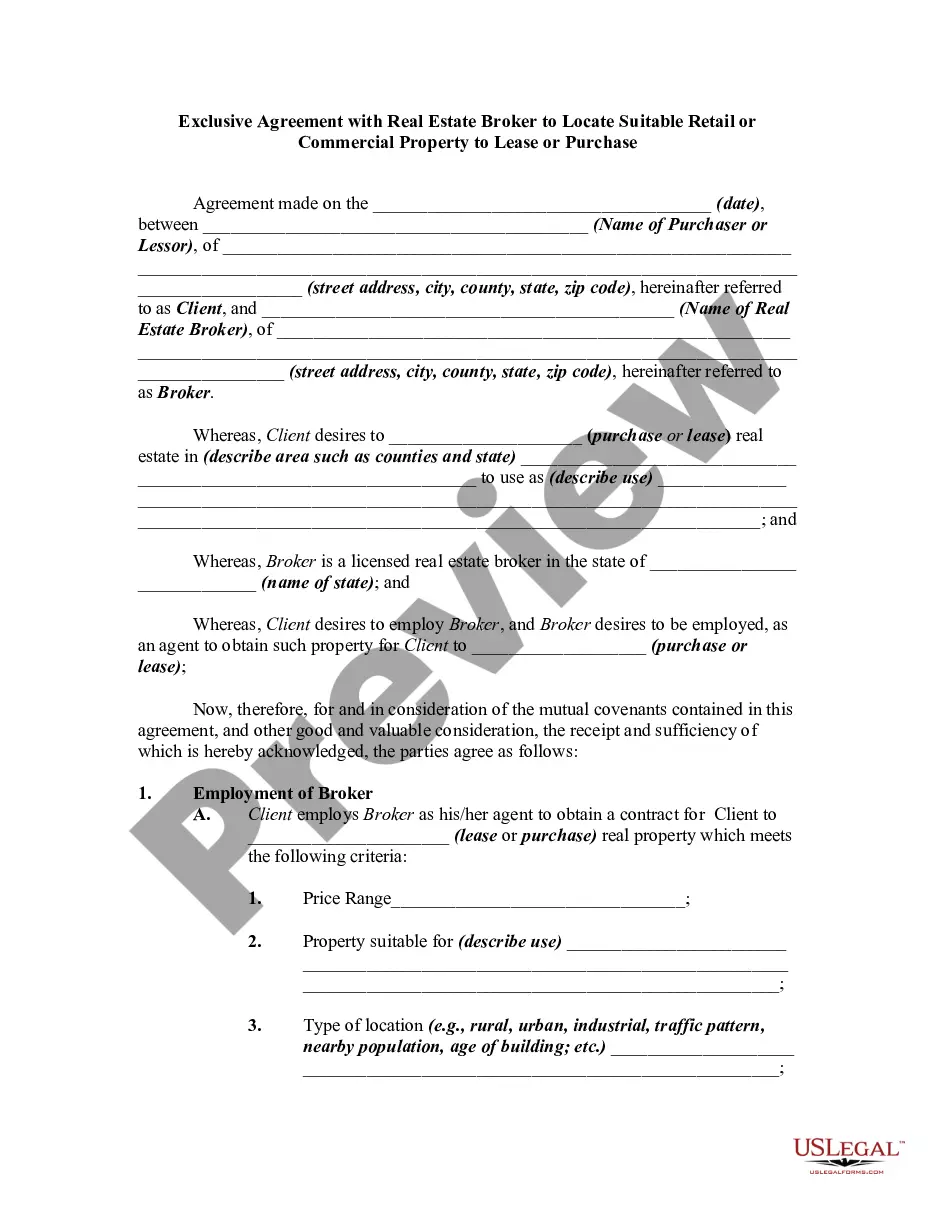
The short answer is no — a real estate listing agreement isn't always required. Nonetheless, a real estate listing agreement is a key element during the selling process for several reasons: Legal protection. A listing agreement provides legal protections to both the agent and the seller.
Exclusive Right of Sale Listing Agreement Transaction Broker (ERS-20tb). This is a listing agreement in which the seller grants the listing broker the sole right to list the property and establishes that the broker has a transaction broker agency relationship with the seller.
You must be at least 18 years old, and you must successfully complete three 30-hour education courses (known as Course I, Course II, and Course III), pass the salesperson's examination, become associated with a licensed real estate broker (who must submit the application for your license), and receive notice that the ...
A broker, salesperson, or closing agent shall deposit only trust funds in a trust account and shall not commingle personal funds or other funds in a trust account, except that a broker, salesperson, or closing agent may deposit and maintain a sum in a trust account from personal funds, which sum shall be specifically ...
Failure to do so means you'll risk a potential lawsuit with the other party. Ultimately, this means sellers cannot typically back out of a contract without a clear and justifiable reason. But it also means buyers can't back out without a justifiable reason, protecting your interest as a seller.
