Listing Agreement With Stock Exchange In Harris
Description


Get your form ready online
Our built-in tools help you complete, sign, share, and store your documents in one place.
Make edits, fill in missing information, and update formatting in US Legal Forms—just like you would in MS Word.
Download a copy, print it, send it by email, or mail it via USPS—whatever works best for your next step.
Sign and collect signatures with our SignNow integration. Send to multiple recipients, set reminders, and more. Go Premium to unlock E-Sign.
If this form requires notarization, complete it online through a secure video call—no need to meet a notary in person or wait for an appointment.
We protect your documents and personal data by following strict security and privacy standards.

Make edits, fill in missing information, and update formatting in US Legal Forms—just like you would in MS Word.

Download a copy, print it, send it by email, or mail it via USPS—whatever works best for your next step.

Sign and collect signatures with our SignNow integration. Send to multiple recipients, set reminders, and more. Go Premium to unlock E-Sign.

If this form requires notarization, complete it online through a secure video call—no need to meet a notary in person or wait for an appointment.

We protect your documents and personal data by following strict security and privacy standards.
Looking for another form?






Form popularity
FAQ
Stock market listing is a way of raising long-term equity finance for your company by offering shares to potential investors. Listing on a stock market is unlikely to be suitable for smaller businesses, as the process involved can be time-consuming and costly.
The basic document which is executed between the company and the stock exchange (when the shares of the company are listed on any stock exchange) is the listing agreement.
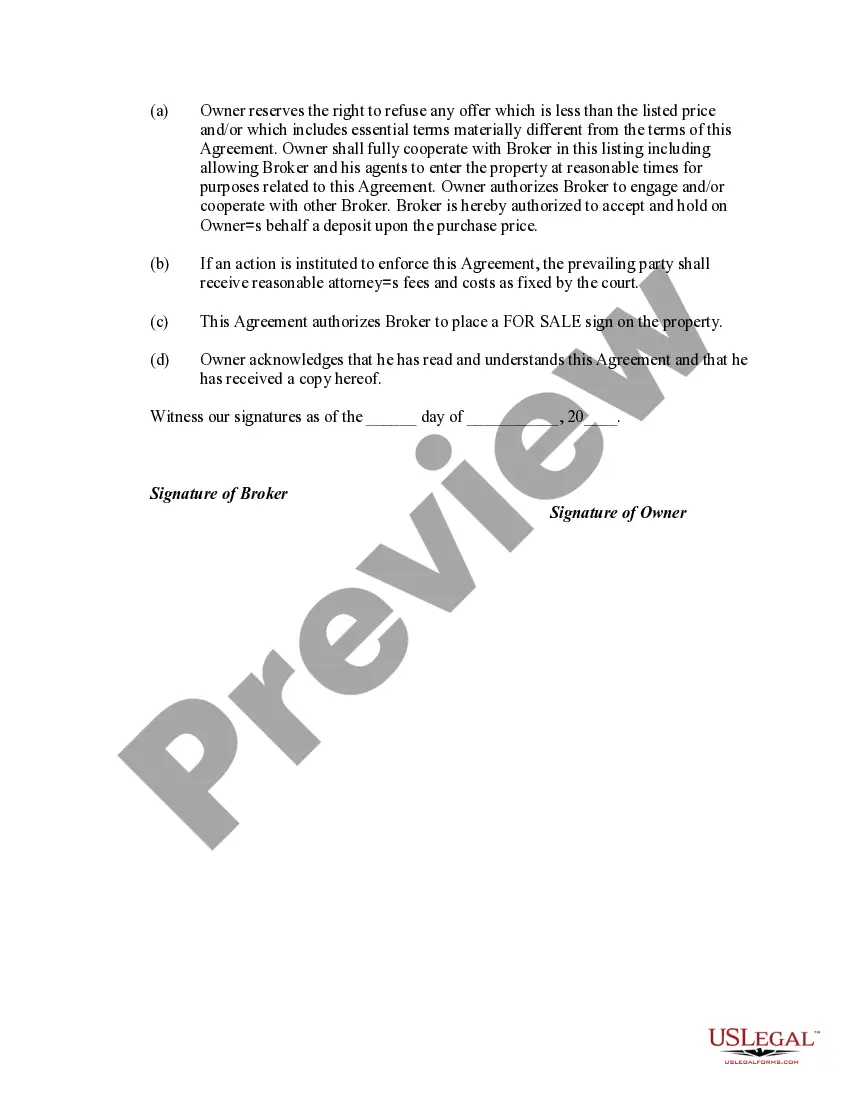
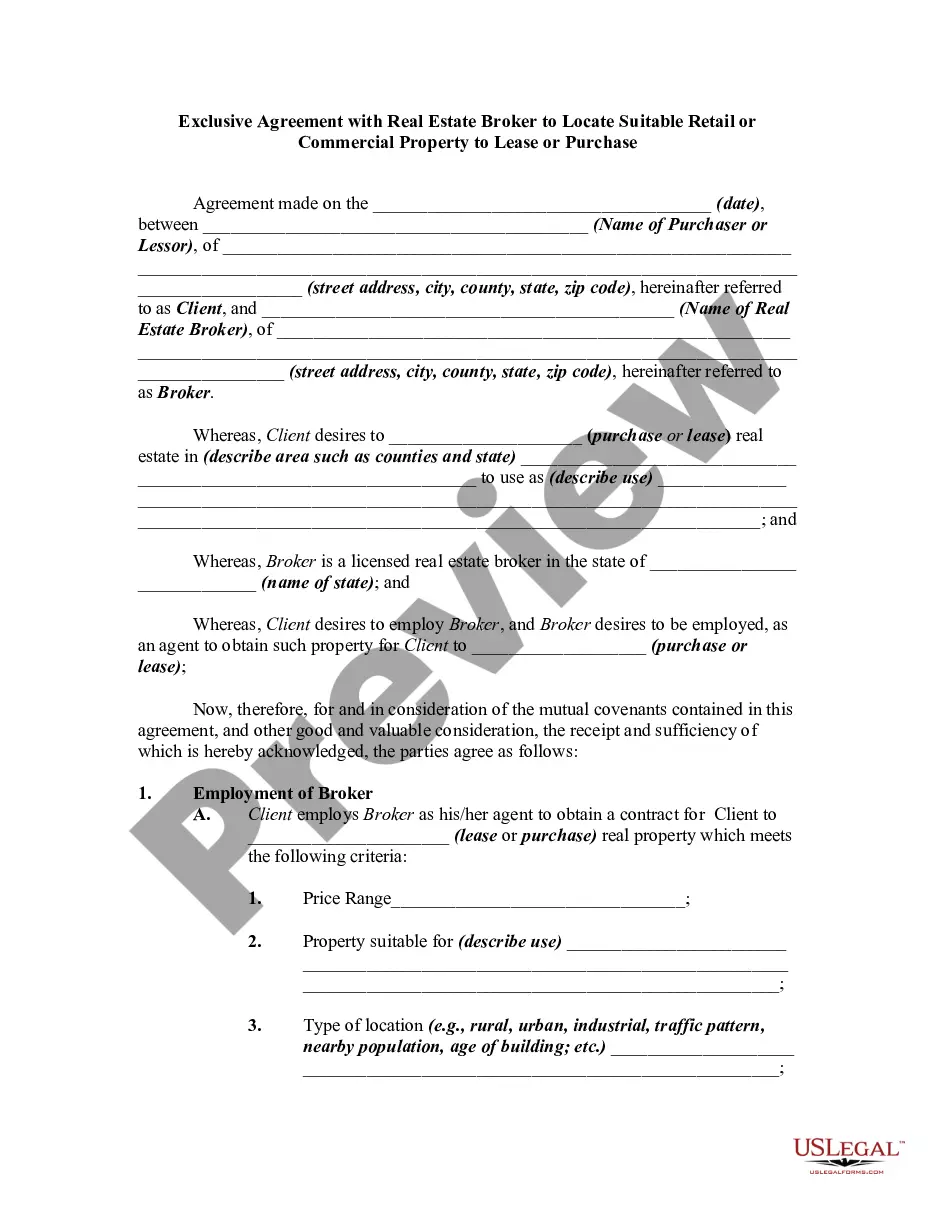
This legal document outlines the terms between a property owner and a real estate broker or agent, detailing what they can expect from each other during the process of selling a property. Let's explore what a listing agreement involves, the different types available, and why it's important for both parties involved.
Listing Agreement Process Step 1: Choosing the Right Brokerage. Step 2: Establishing Terms of Agreement. Step 3: Preparing the Property for Sale. Step 4: Signing the Listing Agreement. Step 5: Marketing and Negotiating. Step 6: Completing the Sale. Step 7: Paying Broker's Commission.
A listing agreement is “a legally binding contract that creates an agency relationship authorizing a broker to serve as the agent for a principal in a real estate transaction.” In other words, a listing agreement is an employment contract between a client and a broker that spells out what the broker is responsible for ...
Typical time frames for agreements range from three to six months, though they can be shorter or longer. Many include a renewal clause, which provides an option to extend the listing period if both parties agree.
