Retail Rights For Customers In Florida
Description


Get your form ready online
Our built-in tools help you complete, sign, share, and store your documents in one place.
Make edits, fill in missing information, and update formatting in US Legal Forms—just like you would in MS Word.
Download a copy, print it, send it by email, or mail it via USPS—whatever works best for your next step.
Sign and collect signatures with our SignNow integration. Send to multiple recipients, set reminders, and more. Go Premium to unlock E-Sign.
If this form requires notarization, complete it online through a secure video call—no need to meet a notary in person or wait for an appointment.
We protect your documents and personal data by following strict security and privacy standards.

Make edits, fill in missing information, and update formatting in US Legal Forms—just like you would in MS Word.

Download a copy, print it, send it by email, or mail it via USPS—whatever works best for your next step.

Sign and collect signatures with our SignNow integration. Send to multiple recipients, set reminders, and more. Go Premium to unlock E-Sign.

If this form requires notarization, complete it online through a secure video call—no need to meet a notary in person or wait for an appointment.

We protect your documents and personal data by following strict security and privacy standards.
Looking for another form?

Form popularity
FAQ
The most generally applicable federal consumer protection statute regulating conduct in the United States is the FTC Act, which prohibits “unfair or deceptive acts or practices in or affecting commerce”.
Consumer protection covers a wide range of topics, including but not necessarily limited to product liability, privacy rights, unfair business practices, fraud, misrepresentation, and other consumer/business interactions.
The Attorney General's Office is an enforcing authority of Florida's Deceptive and Unfair Trade Practices Act, which is meant to protect individual consumers and legitimate businesses from various types of illegal conduct in trade or commerce.
Consumer rights can be defined as the right to safety, the right to be informed, the right to choose, and the right to be heard. These rights were meant to ensure consumers' fair treatment and that they had the information they needed to make informed decisions about the products and services they bought.
What Are the Five Major Consumer Rights? Safety. Information. Choice. Voice. Redress.
The right to be informed: to be protected against fraudulent, deceitful, or grossly misleading information, advertising, labeling, or other practices, and to be given the facts needed to make informed choices. The right to choose: to have available a variety of products and services at competitive prices.
FDUTPA defines unfair trade practices as those that “cause substantial injury to consumers or other businesses and cannot be reasonably avoided by the consumer or the other business.” FDUTPA is also a “gap filler” to questions of federal law because it provides consumers with a private right of action to sue for unfair ...
The Division of Consumer Services offers a variety of information and resources to educate consumers regarding numerous insurance and financial topics. Our mission is to proactively educate and assist Florida's insurance and financial consumers through responsive, professional and innovative service.
File a complaint with your local consumer protection office or the state agency that regulates the company. Notify the Better Business Bureau (BBB) in your area about your problem. The BBB tries to resolve your complaints against companies.
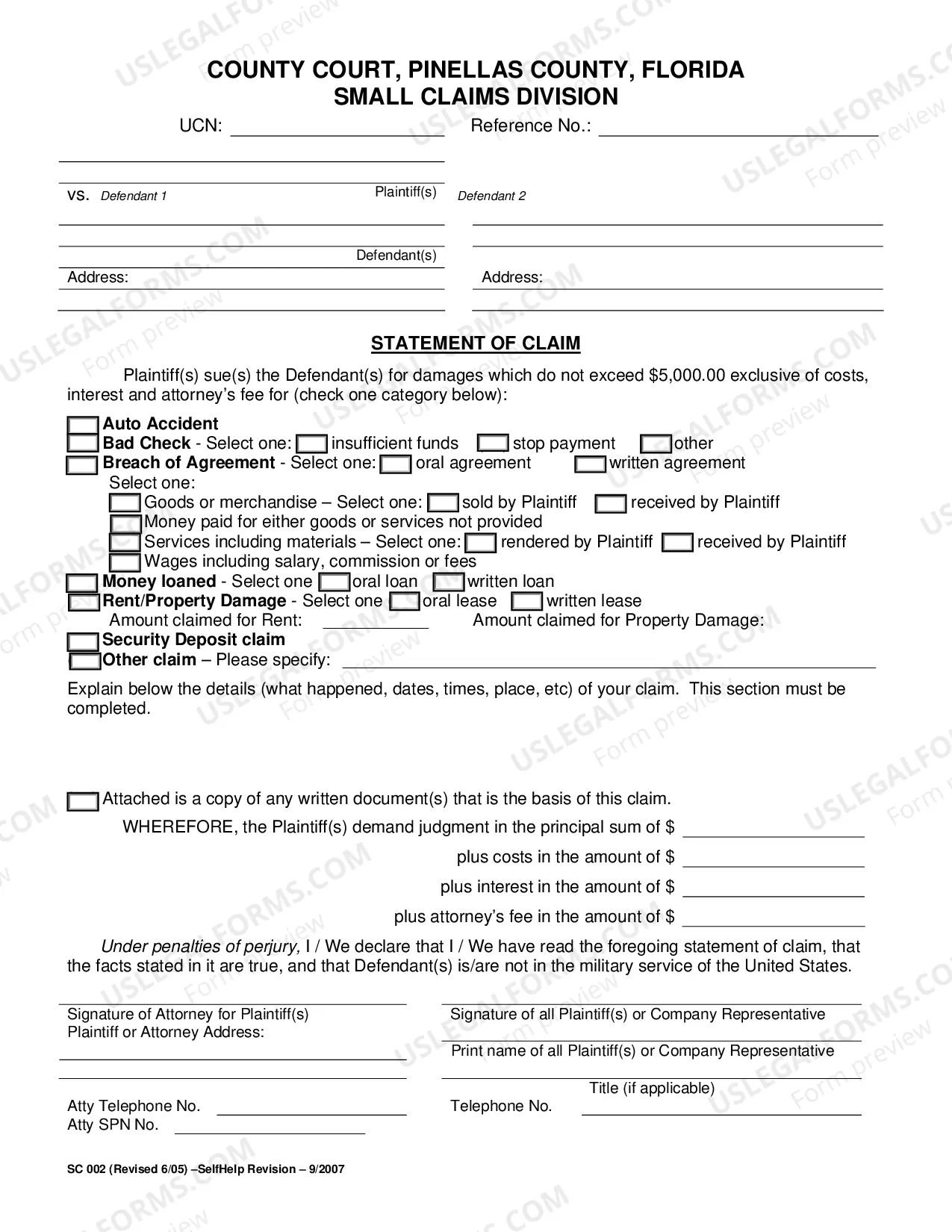
You, the plaintiff, must file a “Statement of Claim” form, available at your Clerk's office. This must be fully completed and signed to receive a pre-trial conference date. If your claim is based upon written documentation, attach a copy of the contract to the Statement of Claim form. You may file by mail or in person.