Agreement Commercial Property Without A Realtor In Collin
Description

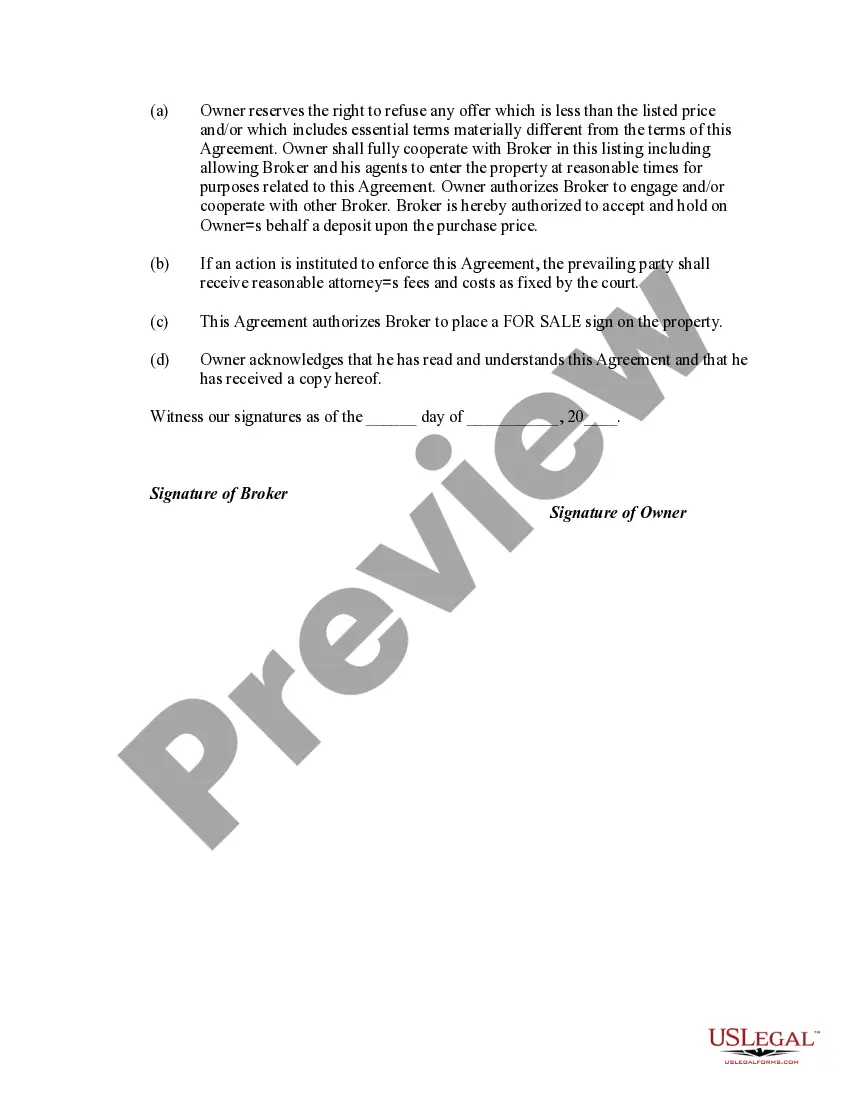

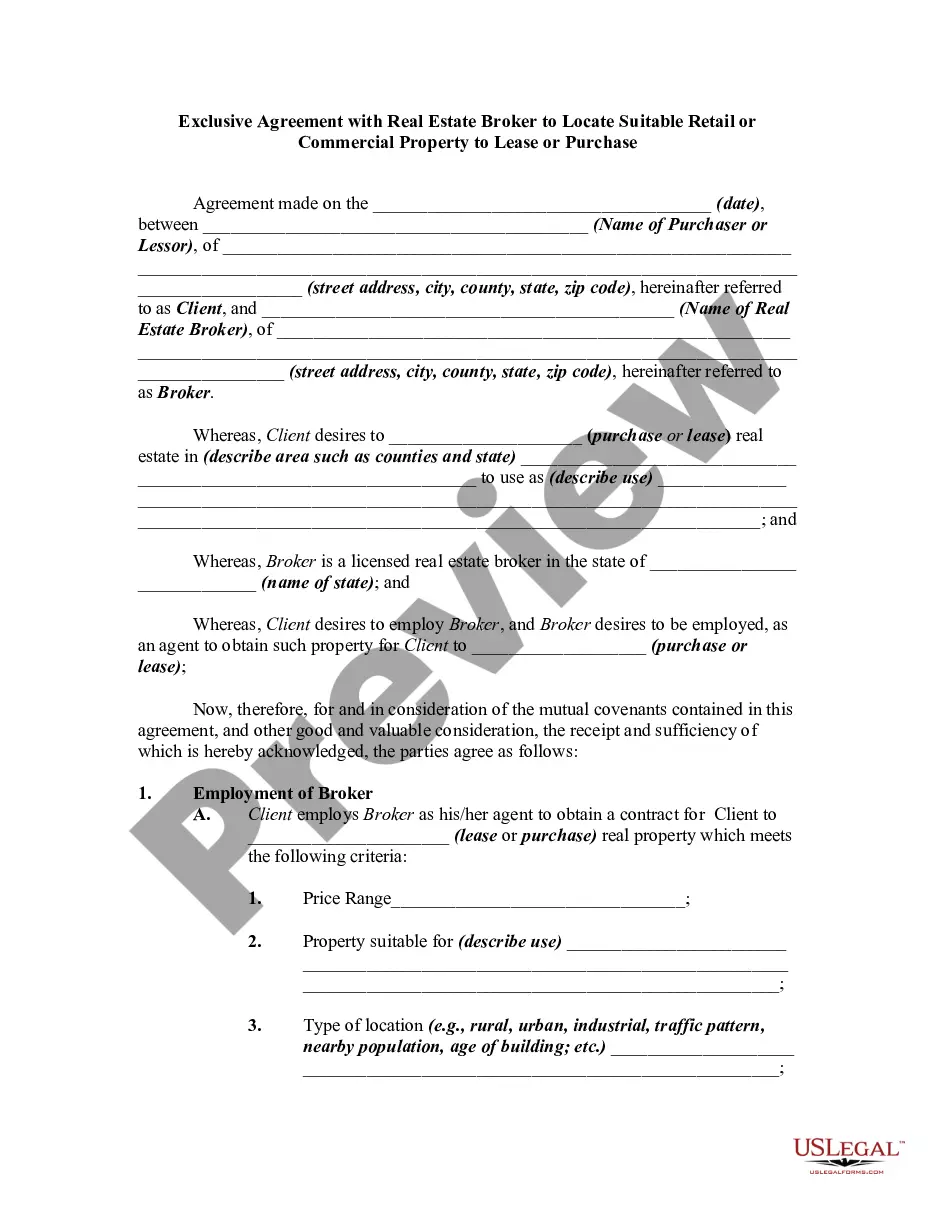
Get your form ready online
Our built-in tools help you complete, sign, share, and store your documents in one place.
Make edits, fill in missing information, and update formatting in US Legal Forms—just like you would in MS Word.
Download a copy, print it, send it by email, or mail it via USPS—whatever works best for your next step.
Sign and collect signatures with our SignNow integration. Send to multiple recipients, set reminders, and more. Go Premium to unlock E-Sign.
If this form requires notarization, complete it online through a secure video call—no need to meet a notary in person or wait for an appointment.
We protect your documents and personal data by following strict security and privacy standards.

Make edits, fill in missing information, and update formatting in US Legal Forms—just like you would in MS Word.

Download a copy, print it, send it by email, or mail it via USPS—whatever works best for your next step.

Sign and collect signatures with our SignNow integration. Send to multiple recipients, set reminders, and more. Go Premium to unlock E-Sign.

If this form requires notarization, complete it online through a secure video call—no need to meet a notary in person or wait for an appointment.

We protect your documents and personal data by following strict security and privacy standards.
Looking for another form?










Form popularity
FAQ
While Texas doesn't have a separate license for commercial real estate, the standard real estate license allows you to sell residential and commercial properties.
Due to these challenges, the Texas Real Estate Commission (TREC) does not allow dual agency. Agents in Texas must work exclusively on behalf of either the buyer or the seller in any given transaction. This ensures clear advocacy, transparent communication, and the absence of conflicts of interest.
In Texas anyone that wants to represent buyers, sellers, tenants, landlords, and tenants whether commercial or residential has to get a real estate license. The basic education requirements for this are the same for both.
Many of the issues confronting industry stakeholders in the new year are interrelated. High Financing Costs. Massive Commercial Real Estate Debt. High Cap Rates. Soaring Insurance Costs. Increasingly Unaffordable Housing. Rise in Artificial Intelligence. Impact of Extreme Weather. Lingering Office Vacancies.
TREC does not require separate licenses for residential and commercial real estate. Most brokers, however, focus on one type of real estate, and they can obtain certification from private organizations showing that they have experience and expertise in specific areas of real estate.
To answer the question of can a residential realtor sell commercial property, know that the answer is, "Yes." Various states have different licensure requirements, but they typically include taking a certain number of hours of an approved course, passing an exam, and working with a licensed firm.
How to Sell Commercial Property List Your Commercial Real Estate Property for Sale. Market Your Property Effectively. Collaborate With a Commercial Real Estate Agent. Identify Off-Market Buyers. Search for Recent Sellers & Buyers. Negotiate With Potential Buyers. Analyze Commercial Real Estate Comparable in Your Area.
Contact the agent and say that you wish to end your agreement. Optionally, you can explain the source of your displeasure. But the best way is to announce to the agent that you wish to end your agreement.
LOI: A preliminary, non-binding agreement that outlines the basic terms and conditions of a potential transaction. It is a tool that sets the stage for more detailed negotiations. PSA: A legally binding contract that finalizes the terms of a real estate transaction.
An LOI stands for Letter of Intent. In commercial real estate, a Letter of Intent is a preliminary agreement that is negotiated between a tenant and landlord or buyer and seller. The LOI or Letter of Intent states the primary economics and deal points with proposed terms.
