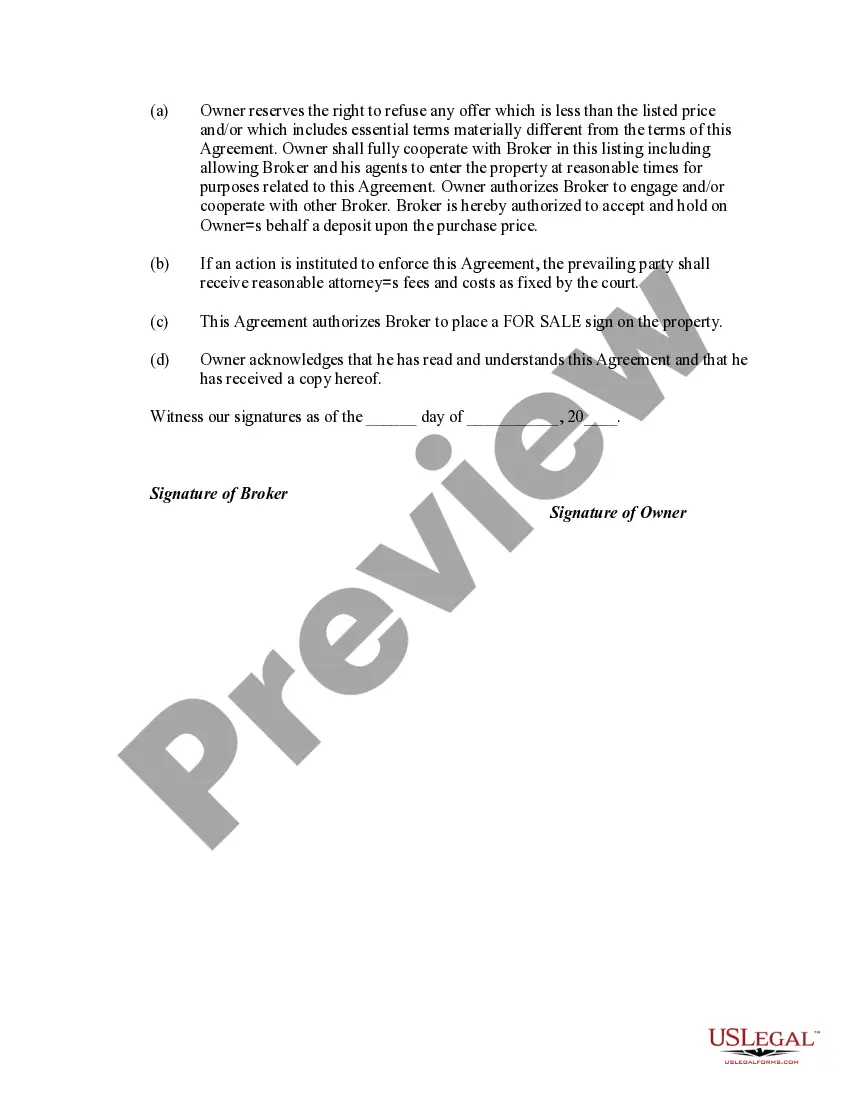
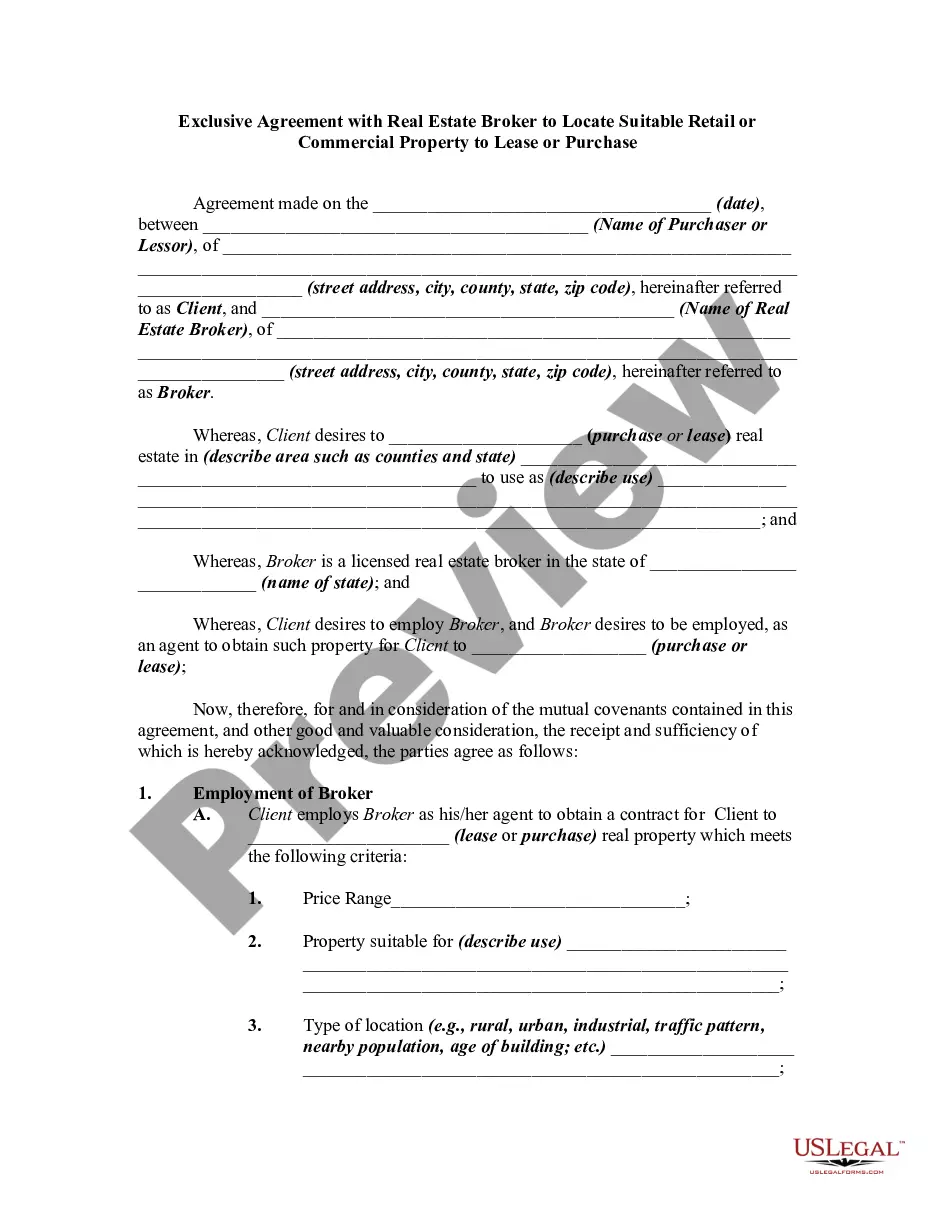
Listing Agreement Commercial Form With Two Points In Bronx
Description


Get your form ready online
Our built-in tools help you complete, sign, share, and store your documents in one place.
Make edits, fill in missing information, and update formatting in US Legal Forms—just like you would in MS Word.
Download a copy, print it, send it by email, or mail it via USPS—whatever works best for your next step.
Sign and collect signatures with our SignNow integration. Send to multiple recipients, set reminders, and more. Go Premium to unlock E-Sign.
If this form requires notarization, complete it online through a secure video call—no need to meet a notary in person or wait for an appointment.
We protect your documents and personal data by following strict security and privacy standards.

Make edits, fill in missing information, and update formatting in US Legal Forms—just like you would in MS Word.

Download a copy, print it, send it by email, or mail it via USPS—whatever works best for your next step.

Sign and collect signatures with our SignNow integration. Send to multiple recipients, set reminders, and more. Go Premium to unlock E-Sign.

If this form requires notarization, complete it online through a secure video call—no need to meet a notary in person or wait for an appointment.

We protect your documents and personal data by following strict security and privacy standards.
Looking for another form?








Form popularity
FAQ
Exclusive Rights-to-Sell Listing Selling your home under an exclusive rights-to-sell listing is the most common option. This gives the real estate agent the exclusive rights to market your home and list it on MLS. They will receive the full commission as long the home is sold within the designated timeframe.
The most desirable form of listing agreement for an agent is the Exclusive Right to Sell, as it guarantees a commission regardless of who sells the property. This agreement provides financial security and protection for the agent.
A valid reason for terminating a buyer representation agreement includes the death of the broker, which makes it impossible for them to fulfill their obligations. While mutual agreement to adjust terms can also lead to termination, there are specific conditions under which these agreements can be dissolved.
The "Exclusive Right to Sell" is the most common, but there is the "open listing," the "exclusive agency listing," and the "one-time show." The "open listing" is mostly used by people trying to sell their home by owner who are also willing to work with real estate agents.
How to Amend a Listing Agreement (3 steps) Discuss the Amendment. The broker and owner should meet and discuss the changes to the listing agreement. Write the Amendment. Once a verbal agreement is made, the amendment should be written. Sign and Attach to Listing Agreement.
Exclusive Right to Sell Listing As the most commonly used listing agreement, the Exclusive Right to Sell Listing's name pretty much says it all. With an Exclusive Right to Sell Listing Agreement, the real estate agent or broker has total control over the transaction.
2. Exclusive right to sell listing agreement. An exclusive right to sell listing is the most widely-used listing agreement. Under this agreement, the broker has the exclusive right to market the property for a specified period of time.
The most common is the Exclusive Right to Sell or Lease Listing Agreement. The means there is an agency agreement between the seller and the broker, granting the broker the exclusive right to represent the seller in the sale or lease of the seller's property.
Claimant Does Not Appear If the clerk calls your case on the calendar and the claimant does not answer and appear, the claim will be dismissed without prejudice and you may go home. However, the claimant may start a case against you for the same claim in the future.
To begin an action in Small Claims Court, a person, or someone acting on his or her behalf, must come to the Small Claims Court Clerk's office in the proper county and fill out a statement of claim. To find out where the clerk's office is located in your county, click on Locations.
