Agreement Commercial Property Without A Realtor In Alameda
Description

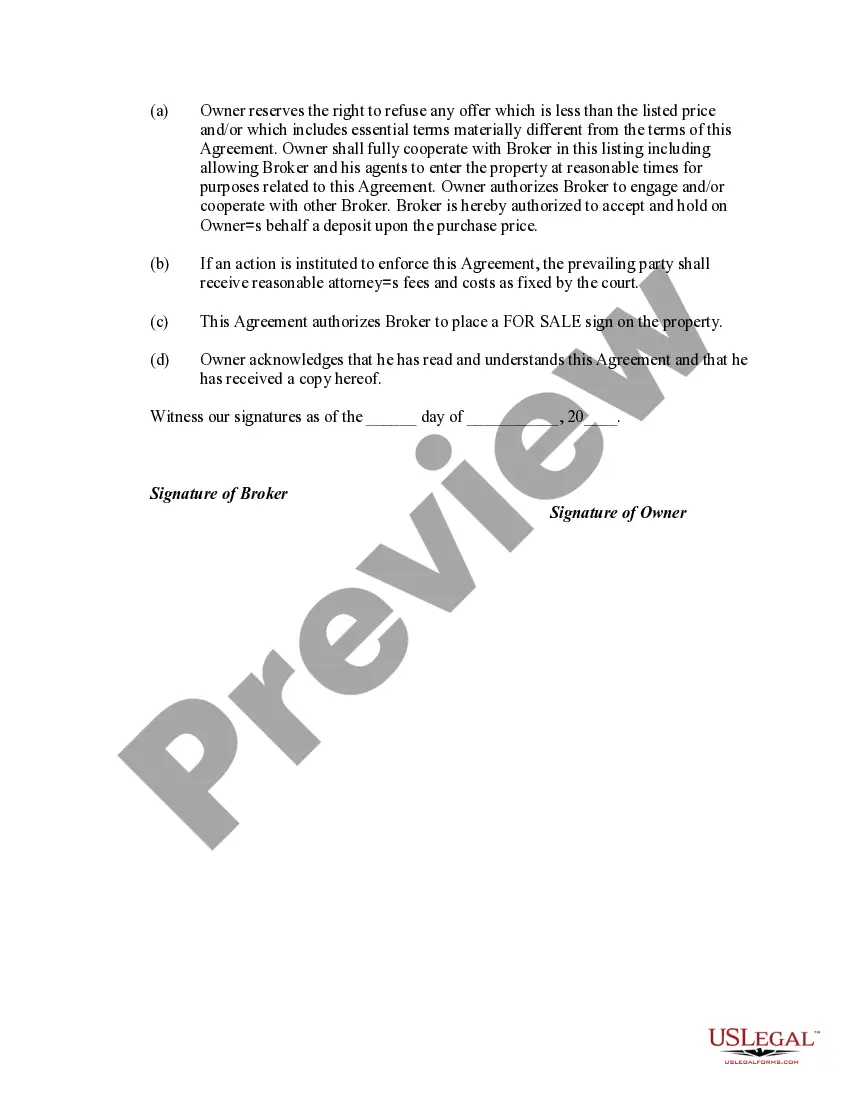

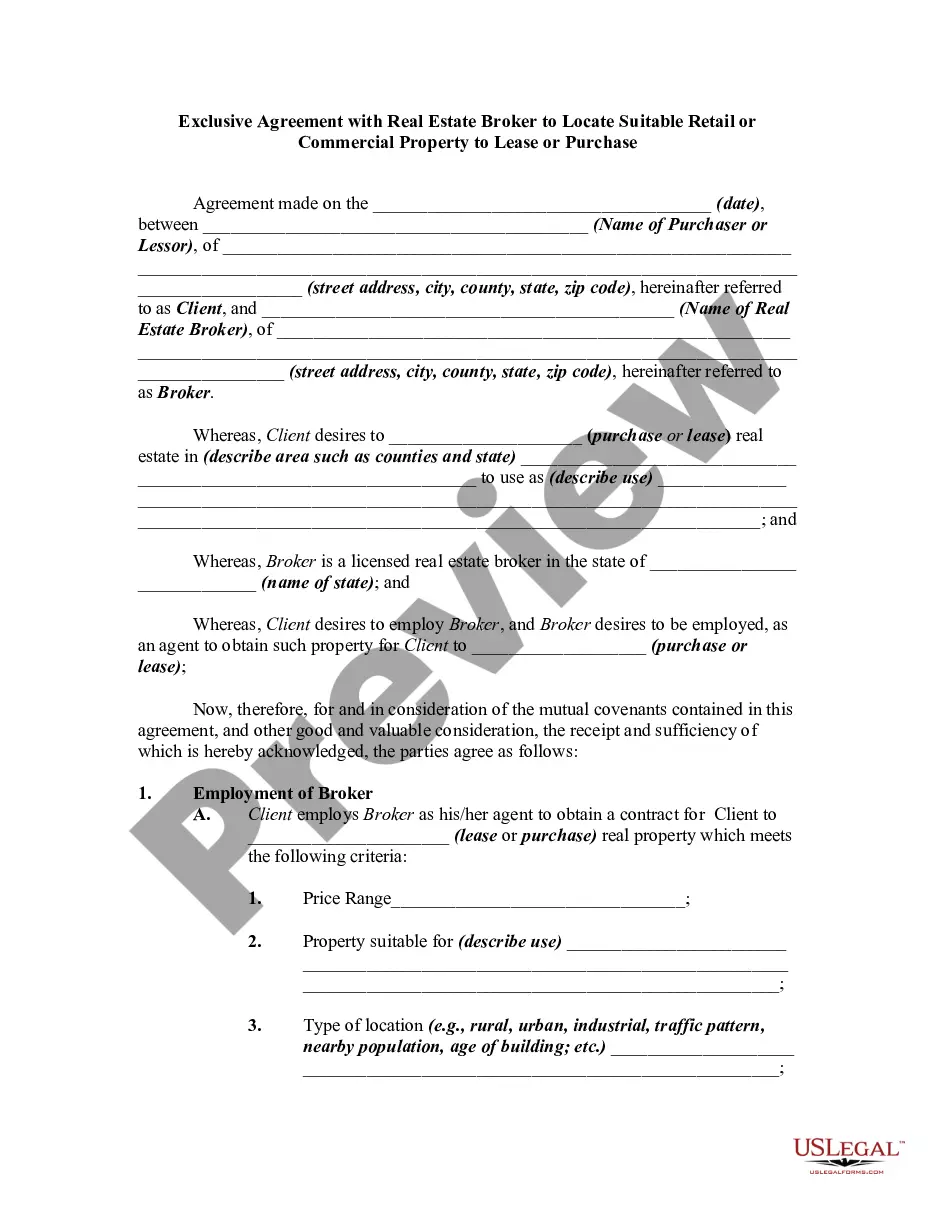
Get your form ready online
Our built-in tools help you complete, sign, share, and store your documents in one place.
Make edits, fill in missing information, and update formatting in US Legal Forms—just like you would in MS Word.
Download a copy, print it, send it by email, or mail it via USPS—whatever works best for your next step.
Sign and collect signatures with our SignNow integration. Send to multiple recipients, set reminders, and more. Go Premium to unlock E-Sign.
If this form requires notarization, complete it online through a secure video call—no need to meet a notary in person or wait for an appointment.
We protect your documents and personal data by following strict security and privacy standards.

Make edits, fill in missing information, and update formatting in US Legal Forms—just like you would in MS Word.

Download a copy, print it, send it by email, or mail it via USPS—whatever works best for your next step.

Sign and collect signatures with our SignNow integration. Send to multiple recipients, set reminders, and more. Go Premium to unlock E-Sign.

If this form requires notarization, complete it online through a secure video call—no need to meet a notary in person or wait for an appointment.

We protect your documents and personal data by following strict security and privacy standards.
Looking for another form?





Form popularity
FAQ
A registered sale agreement is deemed to be valid for three years. In the presence of a negative clause in the agreement, for instance, in case the buyer is required to register a property within three months, the limitation is then extended by such a period.
An agreement to sell signifies the promise of a future transfer of property ownership, whereas a sale deed marks the actual transfer of property ownership to the buyer. While the former is a legally binding commitment, the latter completes the transaction, making the buyer the rightful owner of the property.
To answer the question of can a residential realtor sell commercial property, know that the answer is, "Yes." Various states have different licensure requirements, but they typically include taking a certain number of hours of an approved course, passing an exam, and working with a licensed firm.
An agreement to sell signifies the promise of a future transfer of property ownership, whereas a sale deed marks the actual transfer of property ownership to the buyer. While the former is a legally binding commitment, the latter completes the transaction, making the buyer the rightful owner of the property.
The statutory merger of the real estate and business opportunity licenses occurred in 1966. Since then, a real estate license is required to engage as an agent in the sale or lease of business opportunities.
How to Sell Commercial Property List Your Commercial Real Estate Property for Sale. Market Your Property Effectively. Collaborate With a Commercial Real Estate Agent. Identify Off-Market Buyers. Search for Recent Sellers & Buyers. Negotiate With Potential Buyers. Analyze Commercial Real Estate Comparable in Your Area.
SB 6, the Middle Class Housing Act of 2022, allows for residential development on property zoned for retail, parking and office space without the requirement for a rezoning of the property.
To answer the question of can a residential realtor sell commercial property, know that the answer is, "Yes." Various states have different licensure requirements, but they typically include taking a certain number of hours of an approved course, passing an exam, and working with a licensed firm.
You must obtain a business license from Alameda County only if you are conducting any type of business, including leasing residential and commercial property, or your business is based in an unincorporated area of Alameda County. DO NOT APPLY TO ALAMEDA COUNTY IF YOU OPERATE A BUSINESS WITHIN CITY LIMITS.
