Boundary Line Agreement Sample With Agreement In Nevada
Description


Get your form ready online
Our built-in tools help you complete, sign, share, and store your documents in one place.
Make edits, fill in missing information, and update formatting in US Legal Forms—just like you would in MS Word.
Download a copy, print it, send it by email, or mail it via USPS—whatever works best for your next step.
Sign and collect signatures with our SignNow integration. Send to multiple recipients, set reminders, and more. Go Premium to unlock E-Sign.
If this form requires notarization, complete it online through a secure video call—no need to meet a notary in person or wait for an appointment.
We protect your documents and personal data by following strict security and privacy standards.

Make edits, fill in missing information, and update formatting in US Legal Forms—just like you would in MS Word.

Download a copy, print it, send it by email, or mail it via USPS—whatever works best for your next step.

Sign and collect signatures with our SignNow integration. Send to multiple recipients, set reminders, and more. Go Premium to unlock E-Sign.

If this form requires notarization, complete it online through a secure video call—no need to meet a notary in person or wait for an appointment.

We protect your documents and personal data by following strict security and privacy standards.
Looking for another form?


Form popularity
FAQ
Property boundaries are the crucial lines that mark where one property ends and the neighboring property begins.
The Boundary Line Agreement (BL AGR) provides a procedure for County review whenever a point or line determining the boundary between two or more parcels of real property cannot be identified from the existing public record, monuments, and landmarks or is in dispute. RCW 58.04.
A physical boundary is a naturally occurring barrier between two areas. Rivers, mountain ranges, oceans, and deserts can all serve as physical boundaries. Many times, political boundaries between countries or states form along physical boundaries.
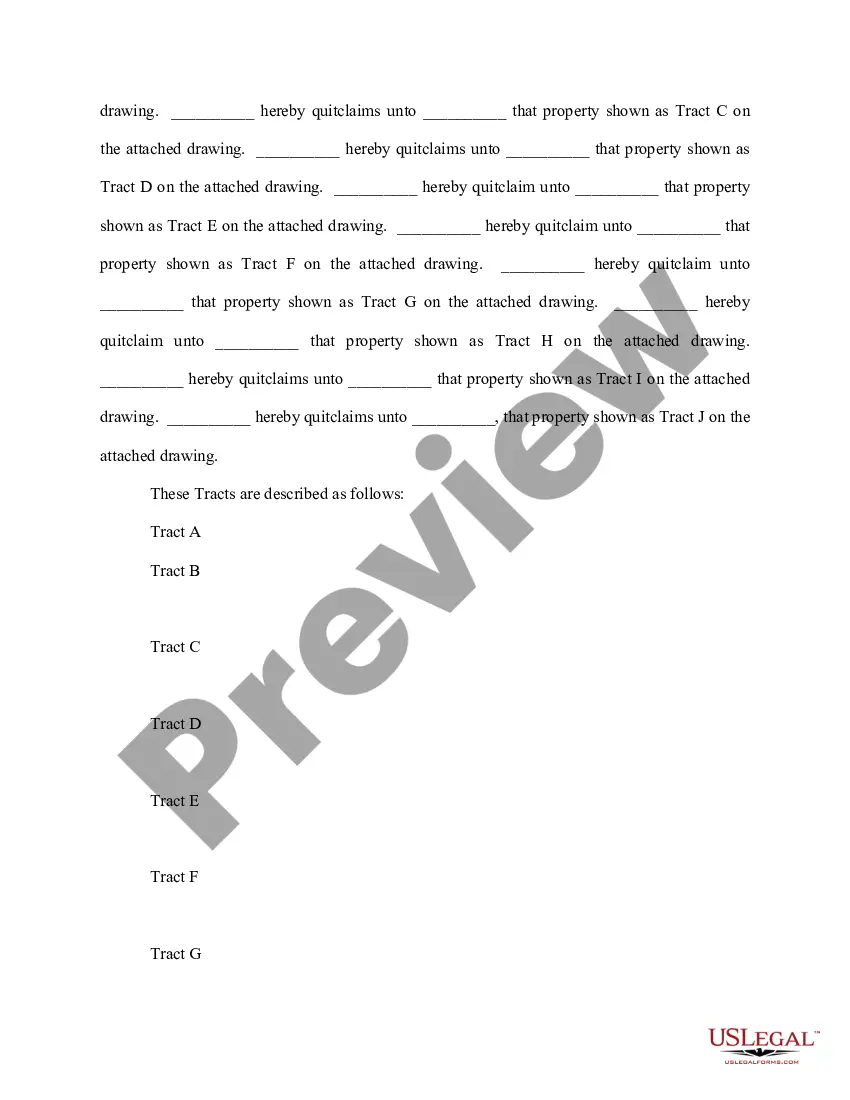
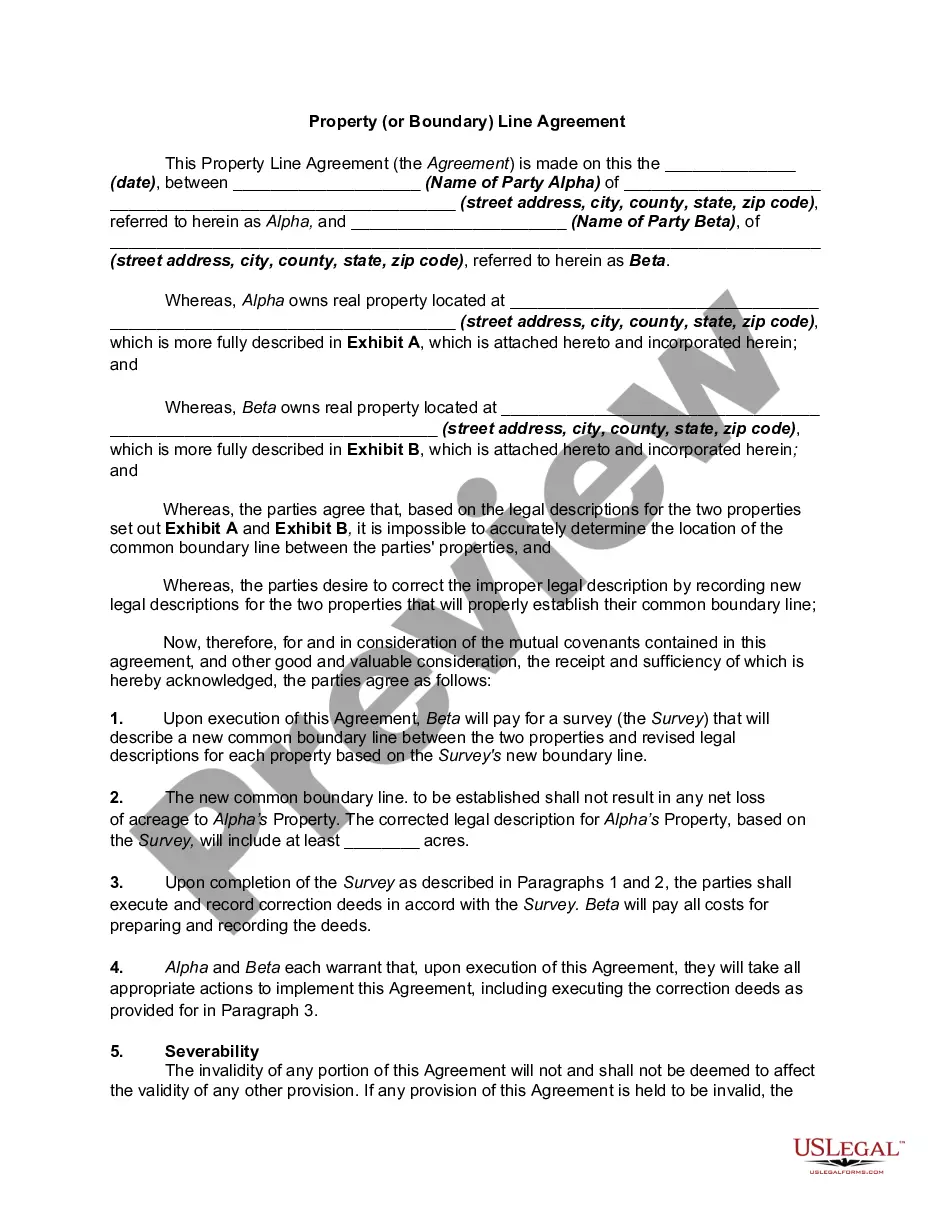
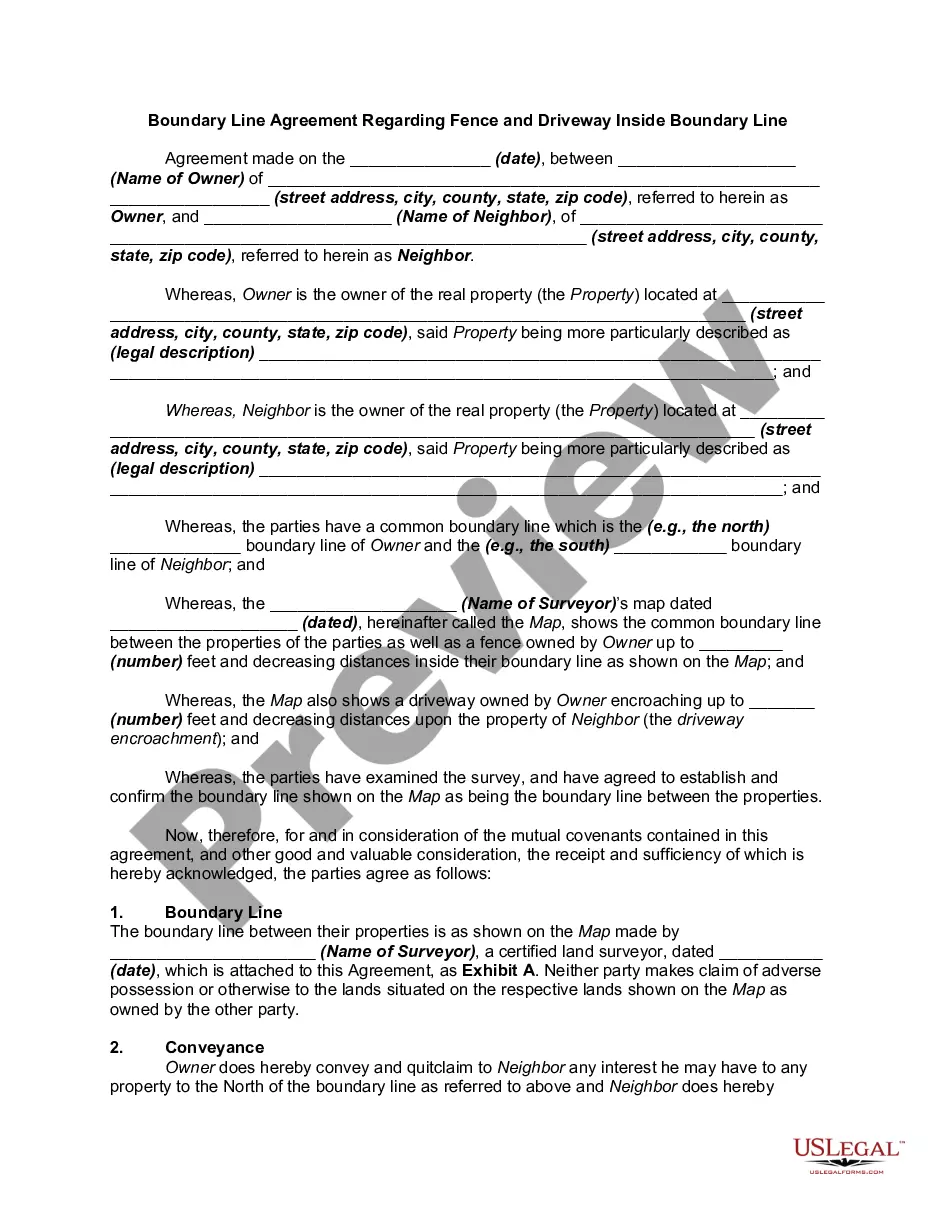
A boundary line agreement is a legally binding document that sets clear boundaries between neighboring properties, providing certainty and preventing conflicts.
If you want to change an existing boundary, such as replacing an old fence with a new one, we always recommend discussing with your neighbour first and making sure it is all agreed. The registered titles can help you to reach an agreement, but only if this information has been added.
Land boundary refers to the line or border that separates one piece of land from another. It is the point where one property ends and another begins. Think of it like a fence that separates your yard from your neighbor's yard.
By definition, the idea of boundaries is at the core of architecture and design: the limits between inside and outside, between up and down, between the public and the private, between inside and outside, between up and down, between the public and the private, between construction and nature.
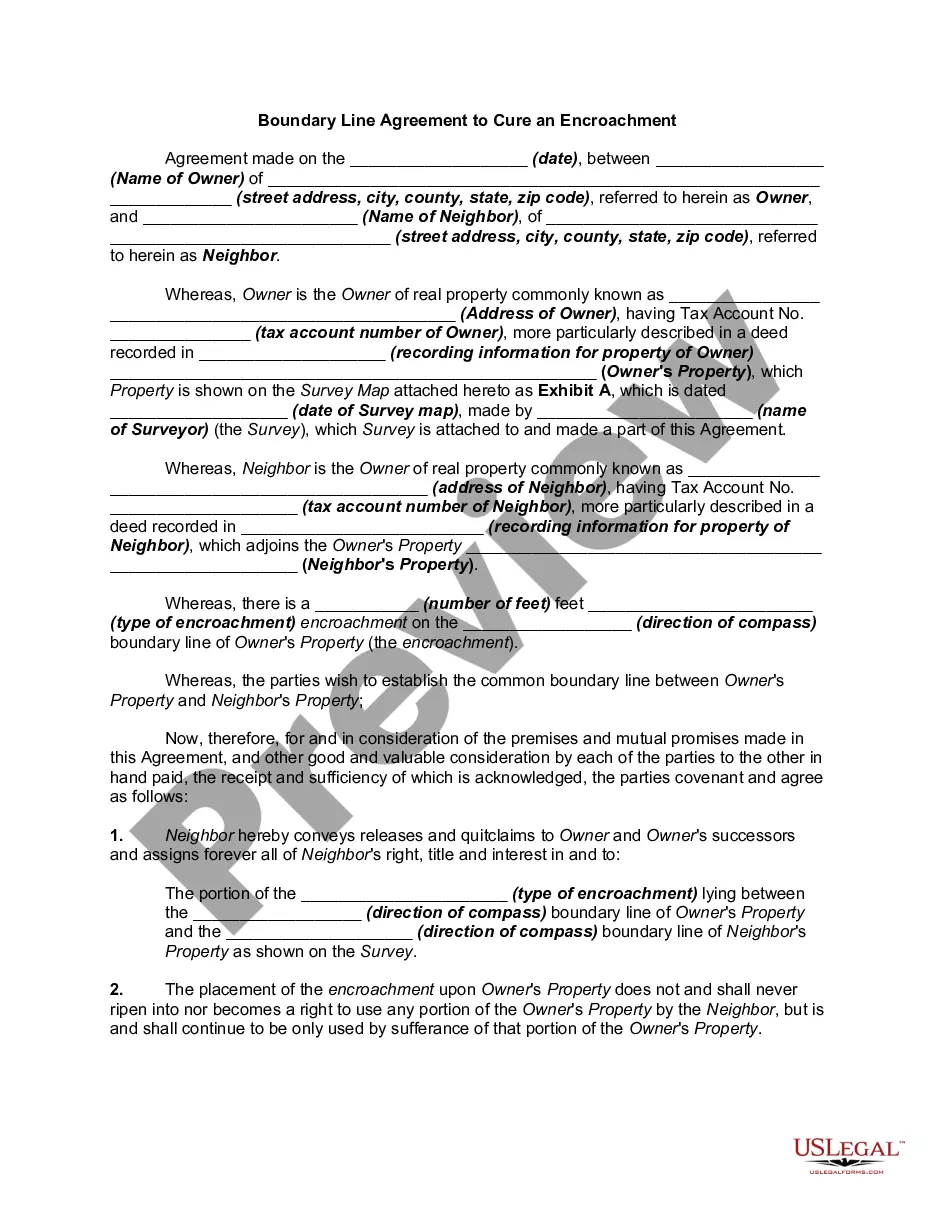
Under such an agreement, the parties acknowledge the true boundary line between the properties, and the encroaching owner releases any claim to the strip of land encroached upon. In return, the “encroached upon” owner allows the encroachment to continue for so long as he/she is not adversely affected.
