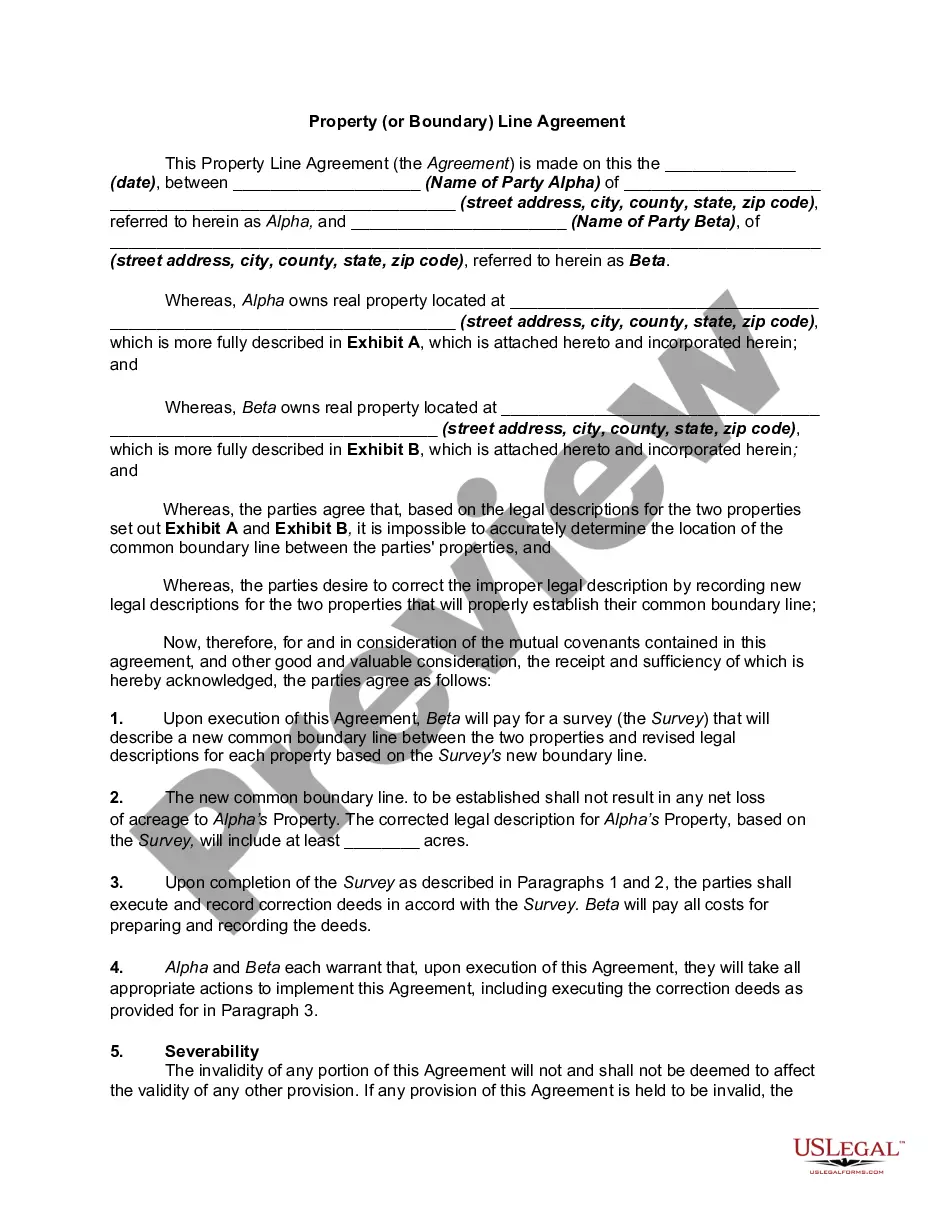
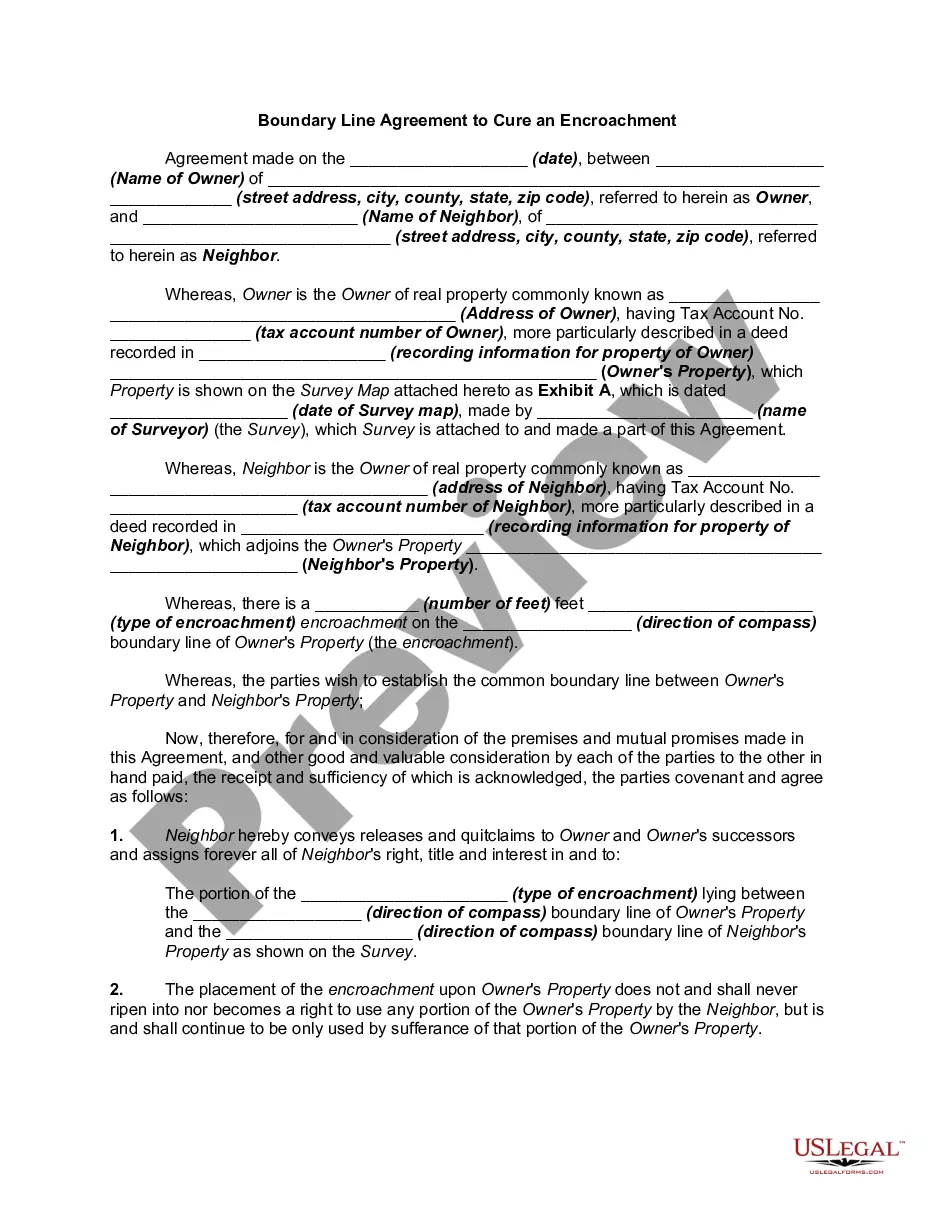
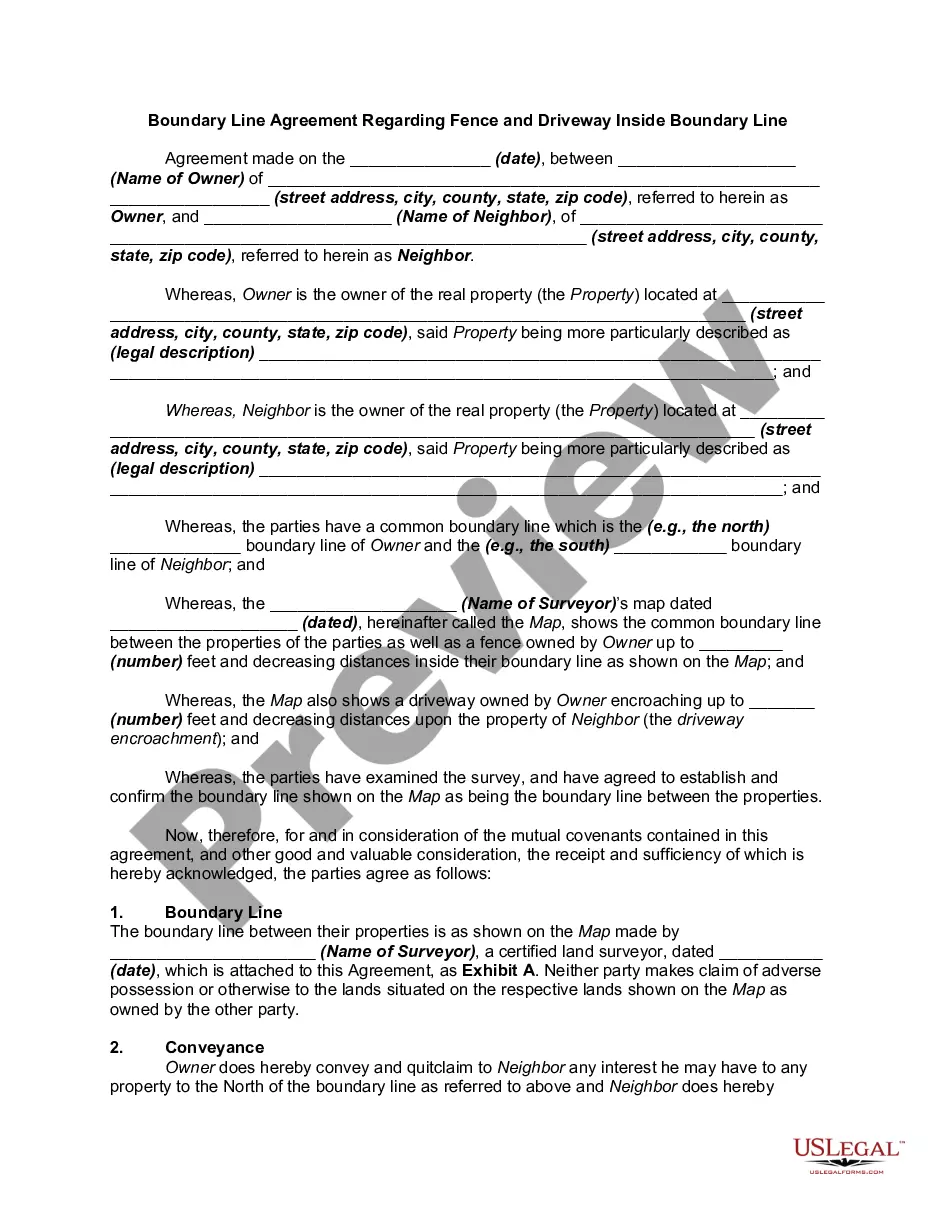
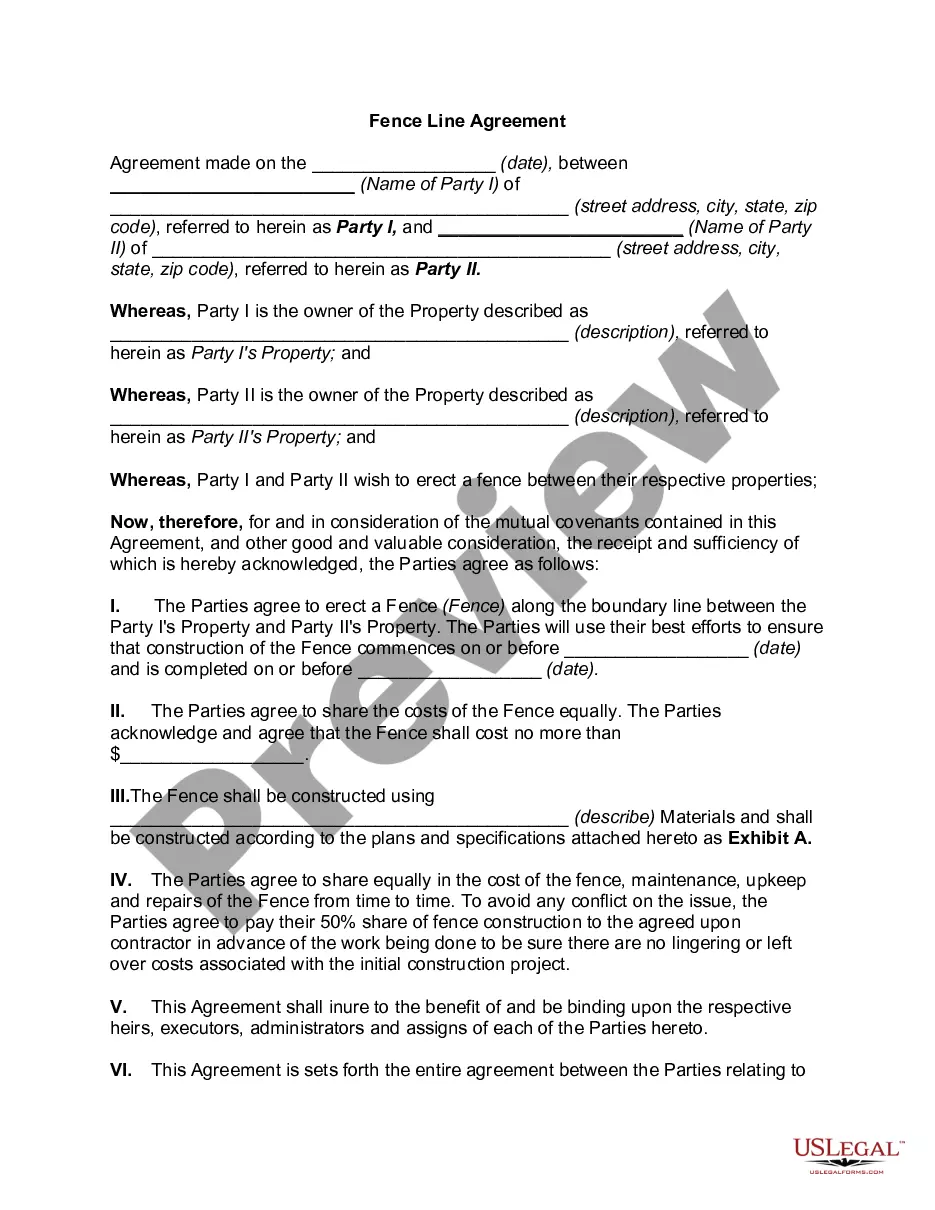
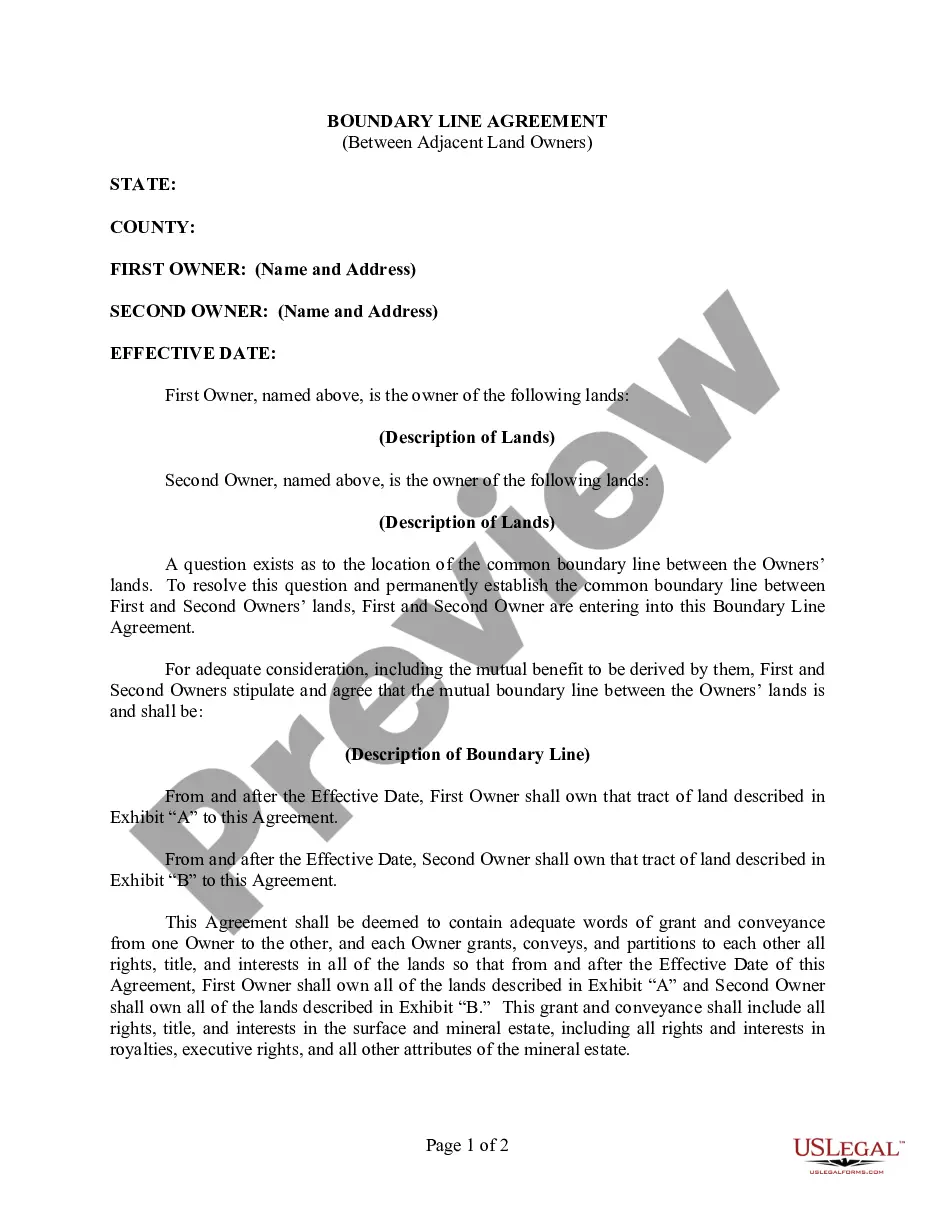
Boundary Line Agreement Sample With Agreement In Massachusetts
Description


Get your form ready online
Our built-in tools help you complete, sign, share, and store your documents in one place.
Make edits, fill in missing information, and update formatting in US Legal Forms—just like you would in MS Word.
Download a copy, print it, send it by email, or mail it via USPS—whatever works best for your next step.
Sign and collect signatures with our SignNow integration. Send to multiple recipients, set reminders, and more. Go Premium to unlock E-Sign.
If this form requires notarization, complete it online through a secure video call—no need to meet a notary in person or wait for an appointment.
We protect your documents and personal data by following strict security and privacy standards.

Make edits, fill in missing information, and update formatting in US Legal Forms—just like you would in MS Word.

Download a copy, print it, send it by email, or mail it via USPS—whatever works best for your next step.

Sign and collect signatures with our SignNow integration. Send to multiple recipients, set reminders, and more. Go Premium to unlock E-Sign.

If this form requires notarization, complete it online through a secure video call—no need to meet a notary in person or wait for an appointment.

We protect your documents and personal data by following strict security and privacy standards.
Looking for another form?








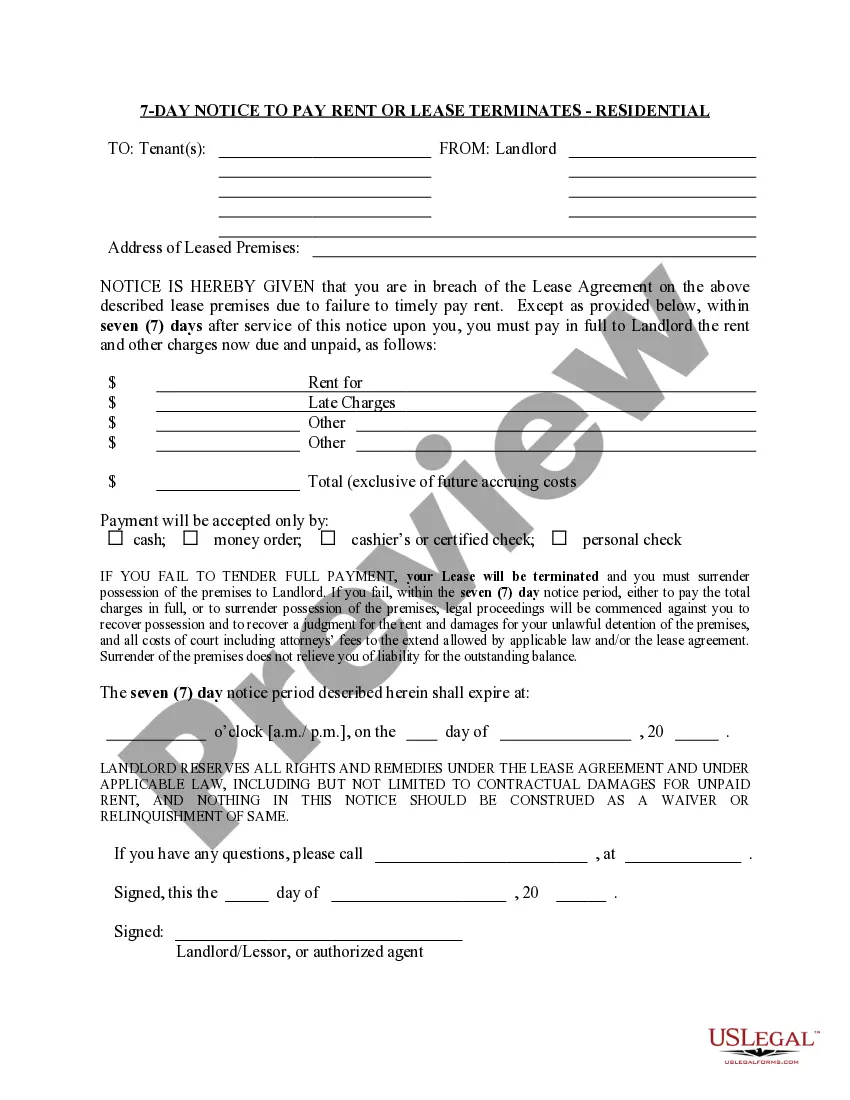
Form popularity
FAQ
Boundary lines help determine the extent of a property and its legal ownership. Specifically, these lines define a property's physical limits and help prevent conflicts between neighboring property owners.
A boundary line agreement is a legally binding document that sets clear boundaries between neighboring properties, providing certainty and preventing conflicts.
Boundary treaties are treaties, but are distinctive. They constitute a special. category of treaties. Boundary treaties may constitute a root of title to territory. and, as such, will have widespread effect within the international community.
A boundary line agreement is a legally binding document that sets clear boundaries between neighboring properties, providing certainty and preventing conflicts.
If you want to change an existing boundary, such as replacing an old fence with a new one, we always recommend discussing with your neighbour first and making sure it is all agreed. The registered titles can help you to reach an agreement, but only if this information has been added.
A boundary line agreement is a written document between abutting landowners which first identifies their common boundary as being “ambiguous”, “lost” or “uncertain” and secondly describes an agreed to boundary line that is certain.
You and your neighbour can create a 'boundary agreement' to record: the boundary between 2 properties. who's responsible for maintaining a hedge, wall, tree or fence between 2 properties.
The first, and easiest means of preventing adverse possession, is to simply give the other party permission to use the property. This is a good option when the other party's use of the property isn't a major concern, and (other than to avoid adverse possession) there is no real harm to the land owner.
Adverse possession is granted when one person makes open and notorious use of another person's property for a period of 20 or more continuous years. The common law of Massachusetts states that the use of the property must have been open, notorious, adverse, and exclusive for those 20 years.
Height Restrictions: Typically, fences in residential areas in Massachusetts cannot exceed 6 feet in height without a permit granted by the local municipality. It is important to check the height restrictions determined by your town or city.
