Settlement Against Estate Format In Wake
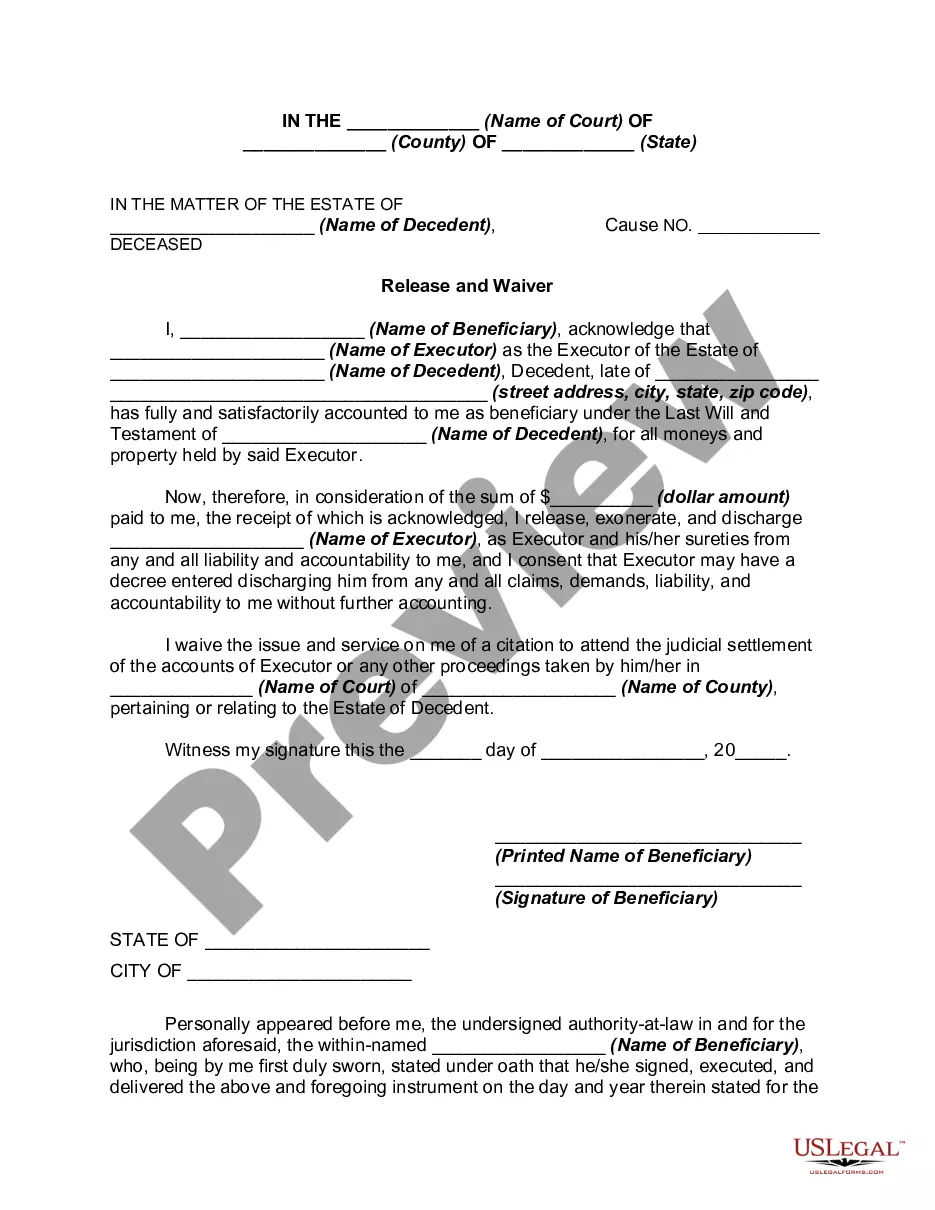
Description


Get your form ready online
Our built-in tools help you complete, sign, share, and store your documents in one place.
Make edits, fill in missing information, and update formatting in US Legal Forms—just like you would in MS Word.
Download a copy, print it, send it by email, or mail it via USPS—whatever works best for your next step.
Sign and collect signatures with our SignNow integration. Send to multiple recipients, set reminders, and more. Go Premium to unlock E-Sign.
If this form requires notarization, complete it online through a secure video call—no need to meet a notary in person or wait for an appointment.
We protect your documents and personal data by following strict security and privacy standards.

Make edits, fill in missing information, and update formatting in US Legal Forms—just like you would in MS Word.

Download a copy, print it, send it by email, or mail it via USPS—whatever works best for your next step.

Sign and collect signatures with our SignNow integration. Send to multiple recipients, set reminders, and more. Go Premium to unlock E-Sign.

If this form requires notarization, complete it online through a secure video call—no need to meet a notary in person or wait for an appointment.

We protect your documents and personal data by following strict security and privacy standards.
Looking for another form?







Form popularity
FAQ
Generally, North Carolina law expects the executor to settle the estate within a reasonable time frame, typically ranging from six to 18 months or longer for complex cases.
Section 28A-19-1 - Manner of presentation of claims (a) A claim against a decedent's estate must be in writing and state the amount or item claimed, or other relief sought, the basis for the claim, and the name and address of the claimant; and must be presented by one of the following methods: (1) By delivery in person ...
Settling Estate in the Philippines: A Guide for Executors and... Gather Essential Documents. Engage the Services of an Estate Lawyer. Determine the Applicable Estate Administration Rules. File for Probate. Inventory and Appraise Assets. Settle Debts and Taxes. Distribute the Estate.
Process used by Probate Creditors The Executor is required to provide 90-days from the date of the first publication of the notice for the Estate Creditors to present their claims.
Understanding the Deceased Estate 3-Year Rule The core premise of the 3-year rule is that if the deceased's estate is not claimed or administered within three years of their death, the state or governing body may step in and take control of the distribution and management of the assets.
Do All Estates Have to Go Through Probate in North Carolina? Smaller estates with probate-qualified assets valued at less than $20,000 can avoid the formal probate proceeding.
The notice will also request the creditors to institute their claims against the deceased estate within a period of not less than 30 days or more than 3 months after publication of the notice. The notice must be published in a local newspaper and the Government Gazette.

