Claim Against Executor Of Estate Form California In Middlesex
Description


Get your form ready online
Our built-in tools help you complete, sign, share, and store your documents in one place.
Make edits, fill in missing information, and update formatting in US Legal Forms—just like you would in MS Word.
Download a copy, print it, send it by email, or mail it via USPS—whatever works best for your next step.
Sign and collect signatures with our SignNow integration. Send to multiple recipients, set reminders, and more. Go Premium to unlock E-Sign.
If this form requires notarization, complete it online through a secure video call—no need to meet a notary in person or wait for an appointment.
We protect your documents and personal data by following strict security and privacy standards.

Make edits, fill in missing information, and update formatting in US Legal Forms—just like you would in MS Word.

Download a copy, print it, send it by email, or mail it via USPS—whatever works best for your next step.

Sign and collect signatures with our SignNow integration. Send to multiple recipients, set reminders, and more. Go Premium to unlock E-Sign.

If this form requires notarization, complete it online through a secure video call—no need to meet a notary in person or wait for an appointment.

We protect your documents and personal data by following strict security and privacy standards.
Looking for another form?
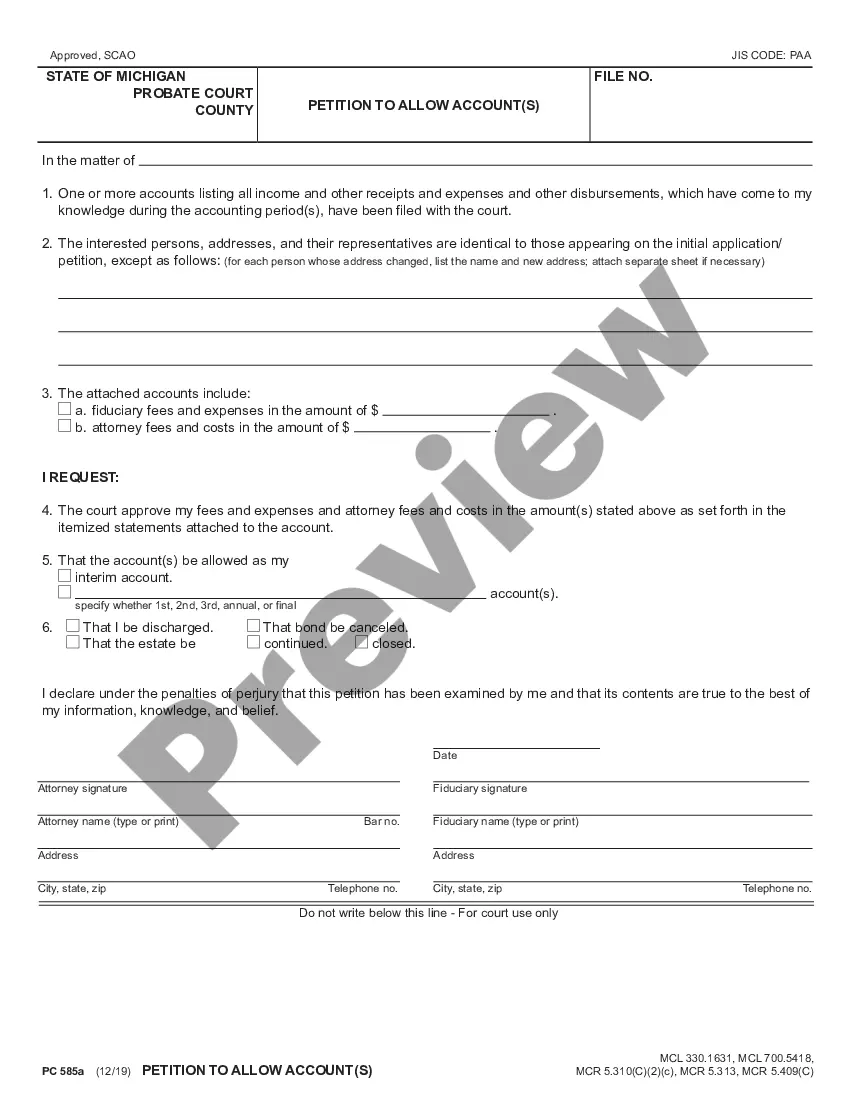


Form popularity
FAQ
California probate law permits the removal of an estate executor if justified reasons are presented. This process involves submitting a formal Petition to Remove Administrator of Estate to the probate court, detailing the grounds for removal and possibly proposing a successor.
DE-140: Probate Order The DE-140 Order for Probate form is used when a court in California needs to officially appoint a personal representative, such as an executor or administrator, to manage and distribute a decedent's estate ing to their will or the state's intestacy laws.
A petition to remove an executor, or an application to remove an executor, is a legal motion filed with a probate court on behalf of an interested party to a will or estate. A petition for removal alleges that the current executor is unfit for their position due to negligence, misconduct, or incapacity.
Generally, in California creditors of a decedent's estate have up to one year (365 days) from the decedent's death to file a timely creditor claim. The claim must be filed inside an open probate court proceeding.
Once the probate process begins, the executive of the estate has 12 months to complete the probate process. One exception to this rule would be if a federal tax filing is required as part of the probate process. In that case, the courts allow 18 months to settle an estate.
In some cases, the probate process in California can take as little as nine months, but that is rare. It typically takes anywhere from half a year to eighteen months, and complicated cases may take as long as two years or more. However, having an idea of how long a case may take helps you understand the process.
California law says the personal representative must complete probate within one year from the date of appointment, unless s/he files a federal estate tax. In this case, the personal representative can have 18 months to complete probate.
How Long Does An Executor Have To Sell Property In California? In the Golden State, there's no hard and fast deadline for an executor to sell a property. However, they do need to keep things moving along with the estate's timely administration.
Can You Sue A Deceased Person? The short answer to this question in California is yes. Two sets of California statutes set out the applicable law under these circumstances: Code of Civil Procedure Sections 337.40 through 377.42; and Probate Code Sections 550 through 554.
How long does it take to remove an executor? Assuming the claim does not settle, it normally takes around 12-15 months for the claim to get to the Court for a final hearing after it has been issued.

