Filing A Claim Against An Estate In Nj In Clark
Description
Get your form ready online
Our built-in tools help you complete, sign, share, and store your documents in one place.
Make edits, fill in missing information, and update formatting in US Legal Forms—just like you would in MS Word.
Download a copy, print it, send it by email, or mail it via USPS—whatever works best for your next step.
Sign and collect signatures with our SignNow integration. Send to multiple recipients, set reminders, and more. Go Premium to unlock E-Sign.
If this form requires notarization, complete it online through a secure video call—no need to meet a notary in person or wait for an appointment.
We protect your documents and personal data by following strict security and privacy standards.

Make edits, fill in missing information, and update formatting in US Legal Forms—just like you would in MS Word.

Download a copy, print it, send it by email, or mail it via USPS—whatever works best for your next step.

Sign and collect signatures with our SignNow integration. Send to multiple recipients, set reminders, and more. Go Premium to unlock E-Sign.

If this form requires notarization, complete it online through a secure video call—no need to meet a notary in person or wait for an appointment.

We protect your documents and personal data by following strict security and privacy standards.
Looking for another form?

Form popularity
FAQ
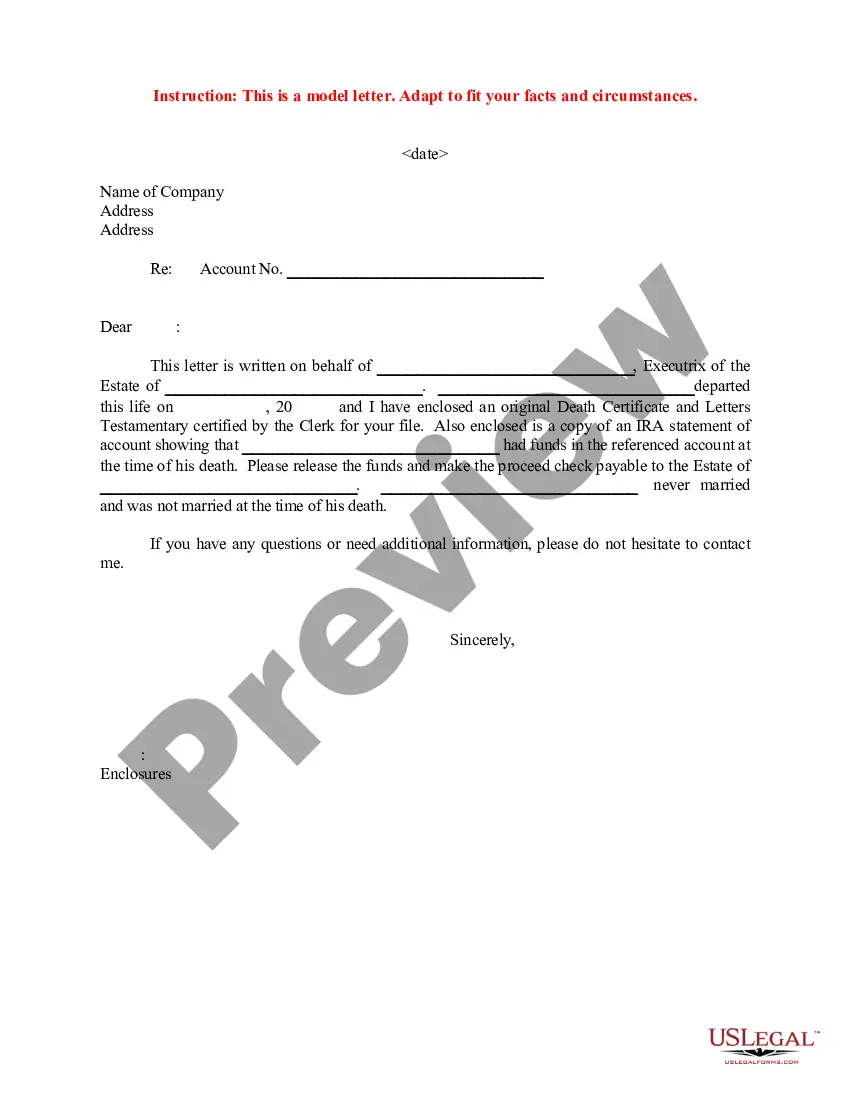
Pursuant to NJ Statute 3B:22-4, creditors of the decedent shall present their claims to the personal representative of the decedent's estate in writing and under oath, specifying the amount claimed and the particulars of the claim, within nine months from the date of the decedent's death.
The creditor first files a Statement of Claim in the probate matter for the decedent, or the person who died. If a claim is filed and it is timely, the court will not close the matter until the claim has been satisfied or the personal representative shows that funds are not sufficient to cover it.
Filing a claim against an estate is a fairly simple process: In the claim, you'll state under oath that the debt is owed and provide details on the amount of the debt and any payments the decedent made. If you have written documentation, you can attach it to your claim.
Except as to proceedings which do not survive the death of the decedent, a personal representative of a decedent domiciled in this State at his death has the same standing to sue and be sued in the courts of this State and the courts of any other jurisdiction as his decedent had immediately prior to death.
In New Jersey, the statute of limitations for suing a deceased person's estate depends on the nature of the claim. The general rule is that claims against a decedent's estate must be filed within six months from the date of the decedent's death.
If there are no claims against the estate within nine months of the death of the deceased, the executor can distribute the assets to beneficiaries and issue a declaration of discharge. So, nine months is essentially the minimum timeline for settling estates valued at over $20,000 in New Jersey.
The statute of limitations for the challenge of probate is one of the shortest in New Jersey law: the action must be commenced within four months after the Will is admitted to probate (or 6 months if the person bringing the action lives out-of-state).