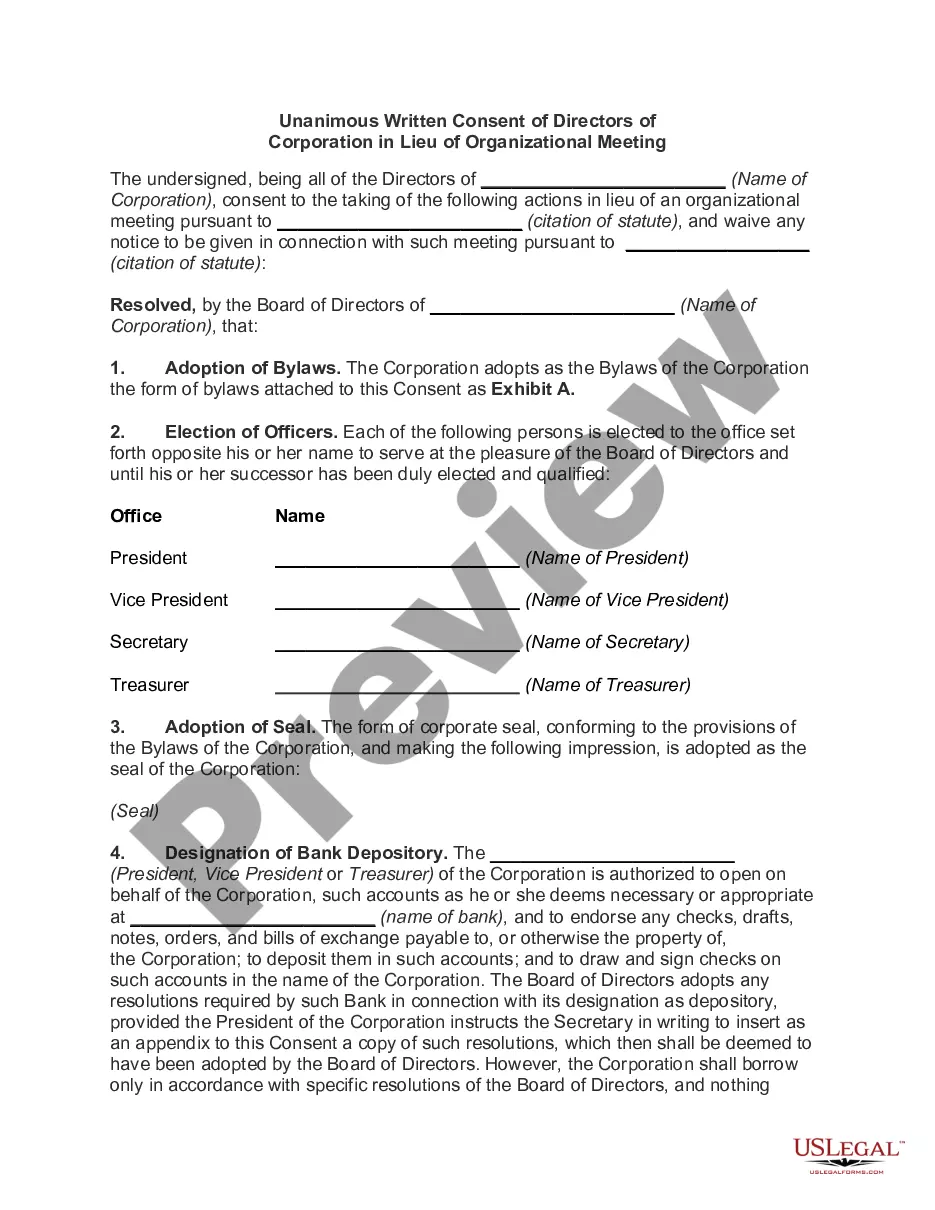
Appointed Director Without Consent In Washington
Description
Get your form ready online
Our built-in tools help you complete, sign, share, and store your documents in one place.
Make edits, fill in missing information, and update formatting in US Legal Forms—just like you would in MS Word.
Download a copy, print it, send it by email, or mail it via USPS—whatever works best for your next step.
Sign and collect signatures with our SignNow integration. Send to multiple recipients, set reminders, and more. Go Premium to unlock E-Sign.
If this form requires notarization, complete it online through a secure video call—no need to meet a notary in person or wait for an appointment.
We protect your documents and personal data by following strict security and privacy standards.

Make edits, fill in missing information, and update formatting in US Legal Forms—just like you would in MS Word.

Download a copy, print it, send it by email, or mail it via USPS—whatever works best for your next step.

Sign and collect signatures with our SignNow integration. Send to multiple recipients, set reminders, and more. Go Premium to unlock E-Sign.

If this form requires notarization, complete it online through a secure video call—no need to meet a notary in person or wait for an appointment.

We protect your documents and personal data by following strict security and privacy standards.
Looking for another form?








Form popularity
FAQ
A person's "right to privacy," "right of privacy," "privacy," or "personal privacy," as these terms are used in this chapter, is invaded or violated only if disclosure of information about the person: (1) Would be highly offensive to a reasonable person, and (2) is not of legitimate concern to the public.
As images are shared more and more, there is a good chance that a picture of you could be posted without your consent or knowledge. If you took the photo, you usually own it. But, if you didn't take the photo but you are in it, someone could breach your rights (such as data protection or privacy rights) by posting it.
Washington State is a "2-party" consent recording state. You have a right to privacy in your private conversations. This means that you must get permission from everyone being recorded in the private conversation before you can record them by video or audio. You can read the state law about this at RCW 9.73.
With some limited but important exceptions, Washington law requires all parties to consent to the recording of a private communication, and there are penalties for breaking this law. People's privacy is protected in connection with recording communications and conversations.
Washington state law does not prohibit the use of photos taken without someone's permission if they were taken in a public place or from a security camera in your home—provided they do not have recorded sound. The inclusion of sound would make the video subject to audio-interception laws.
Any individual above 21 years can be appointed as a director. However, an artificial person, such as a corporation, company, firm, association or entity, cannot be appointed as a director.
A person's "right to privacy," "right of privacy," "privacy," or "personal privacy," as these terms are used in this chapter, is invaded or violated only if disclosure of information about the person: (1) Would be highly offensive to a reasonable person, and (2) is not of legitimate concern to the public.
Bylaws can add additional qualifications as agreed upon by the current board members. 501(c)(3) public charities must have at least 3 board members.
Washington State is a "2-party" consent recording state. You have a right to privacy in your private conversations. This means that you must get permission from everyone being recorded in the private conversation before you can record them by video or audio.
Yes, you can be your own registered agent in Washington. However, after considering the registered agent requirements most business owners elect to hire a registered agent service instead.
