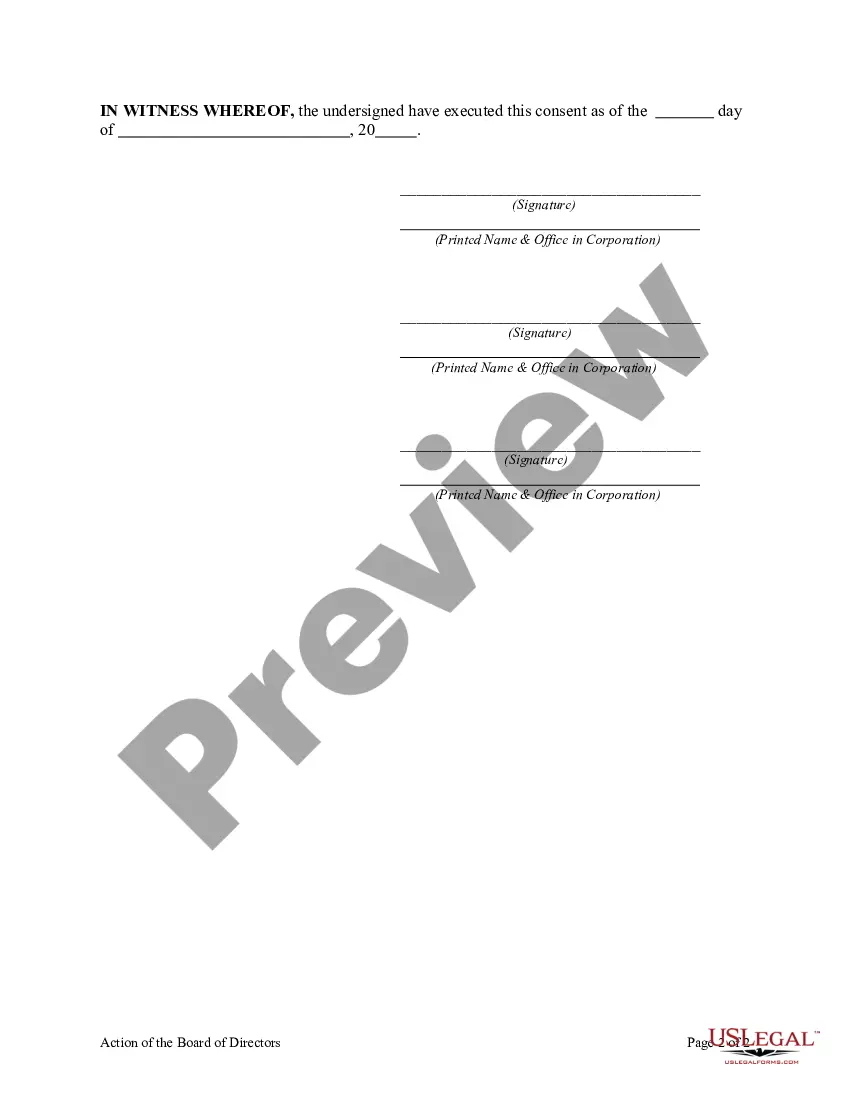
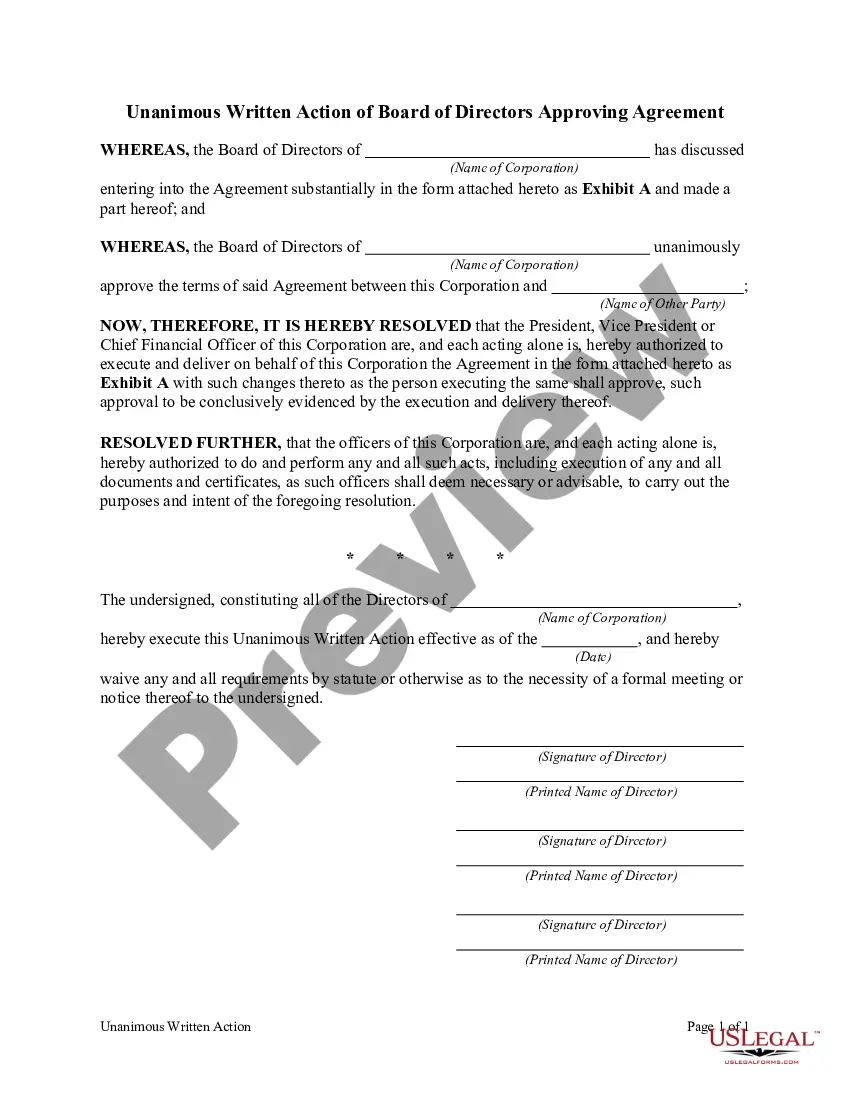
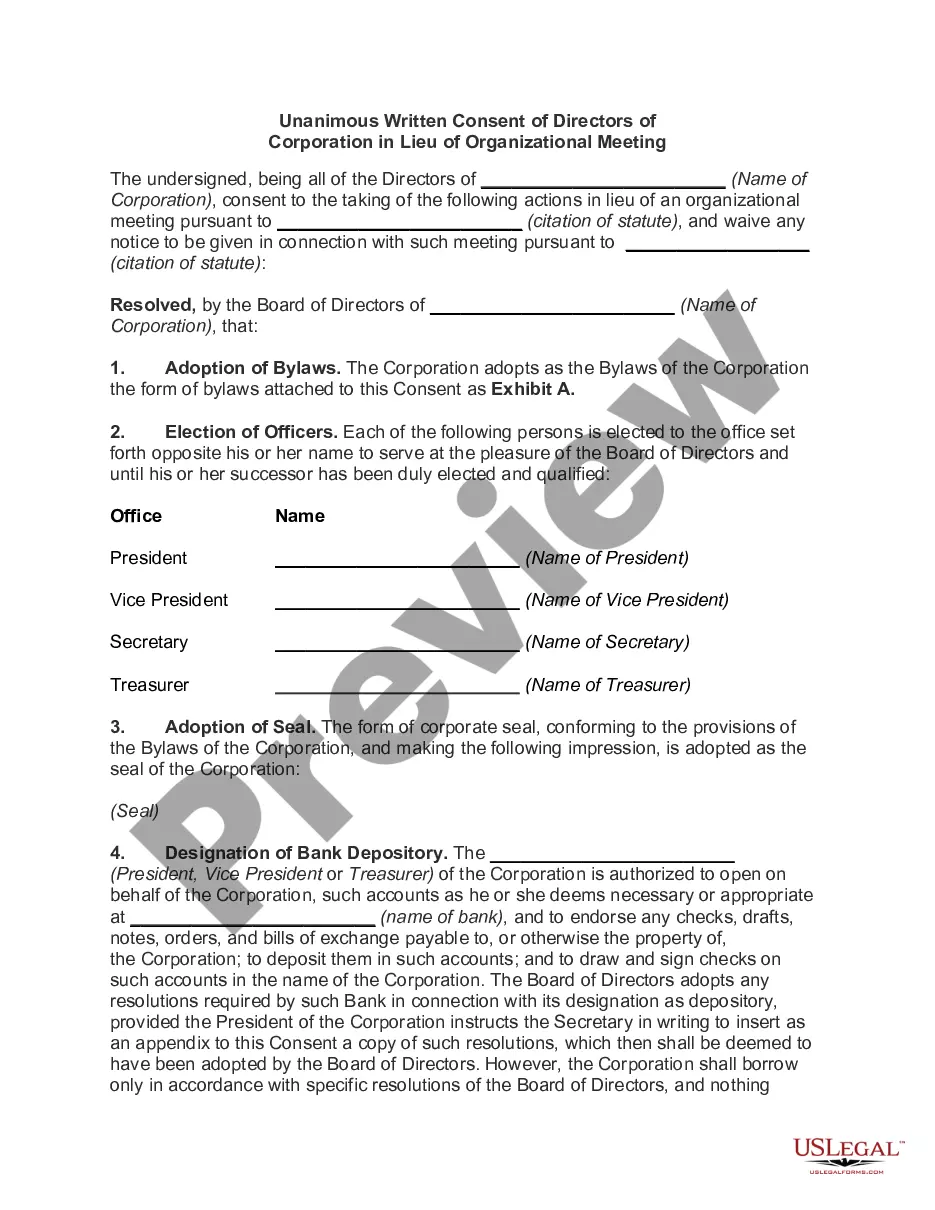
Director Consent Form Existing Company In Bexar
Description


Get your form ready online
Our built-in tools help you complete, sign, share, and store your documents in one place.
Make edits, fill in missing information, and update formatting in US Legal Forms—just like you would in MS Word.
Download a copy, print it, send it by email, or mail it via USPS—whatever works best for your next step.
Sign and collect signatures with our SignNow integration. Send to multiple recipients, set reminders, and more. Go Premium to unlock E-Sign.
If this form requires notarization, complete it online through a secure video call—no need to meet a notary in person or wait for an appointment.
We protect your documents and personal data by following strict security and privacy standards.

Make edits, fill in missing information, and update formatting in US Legal Forms—just like you would in MS Word.

Download a copy, print it, send it by email, or mail it via USPS—whatever works best for your next step.

Sign and collect signatures with our SignNow integration. Send to multiple recipients, set reminders, and more. Go Premium to unlock E-Sign.

If this form requires notarization, complete it online through a secure video call—no need to meet a notary in person or wait for an appointment.

We protect your documents and personal data by following strict security and privacy standards.
Looking for another form?








Form popularity
FAQ
Subject: Consent to act as a director. I ………………………, hereby give my consent to act as director of ……….. (name of the company), pursuant to sub-section (5) of section 152 of the Companies Act, 2013 and certify that I am not disqualified to become a director under the Companies Act, 2013.
The board of directors of a public company is elected by shareholders. The board makes key decisions on issues such as mergers and acquisitions, the issuance of dividends, and the hiring and firing of senior executives.
What is a director's consent? In a director's consent an individual agrees in writing to be a director of a nonprofit. Every director who is elected or appointed needs to sign a consent. The consent needs to be signed within 10 days of being elected or appointed as a director.
The principal types are: Executive Directors. Non-Executive Directors. Independent Directors. Step 1: Reviewing the Articles of Association (AOA) ... Step 2: Resolution at a General Meeting. Step 3: Application for DIN and DSC. Step 4: Obtaining Director's Consent (Form DIR-2) ... Step 5: Issuing the Letter of Appointment.
Here's how to become the director of a company in six generalised steps: Finish your higher education. Undergo professional training. Gain relevant business experience. Seek industry mentors. Network with key investors. Consider upskilling your skill set.
Change of directors takes place – either by appointing a new director or by removing an existing director. The process of change of directors should always be handled by experts having the best interest of the company.
I, the undersigned, give my consent to act as an Independent Director of M/s_____________________ (Company Name) pursuant to section 149, 164, 197, 198 of the Companies Act, 2013 and the rules made thereunder, hereby certify that I am not disqualified to act as an Independent Director of the company and hereby give my ...
The appointment of directors will usually be covered by the company's articles (or possibly a shareholders' agreement) which may provide for appointment by the board, or by the shareholders via a written resolution or at a general meeting.
By obtaining consent, employers can officially certify that they have: Notified candidates about the details of the background screening process. Informed candidates about their legal rights in case of an adverse action. Taken steps to ensure candidate privacy and prevent discrimination.
