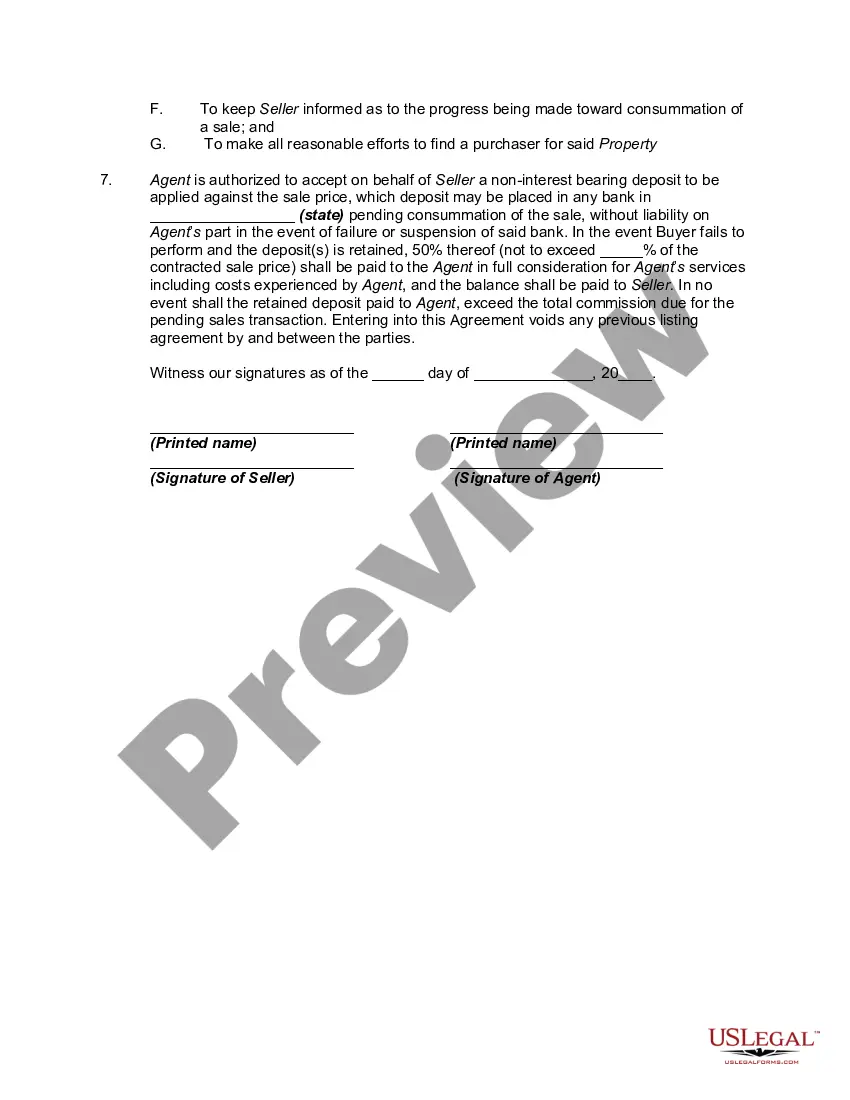
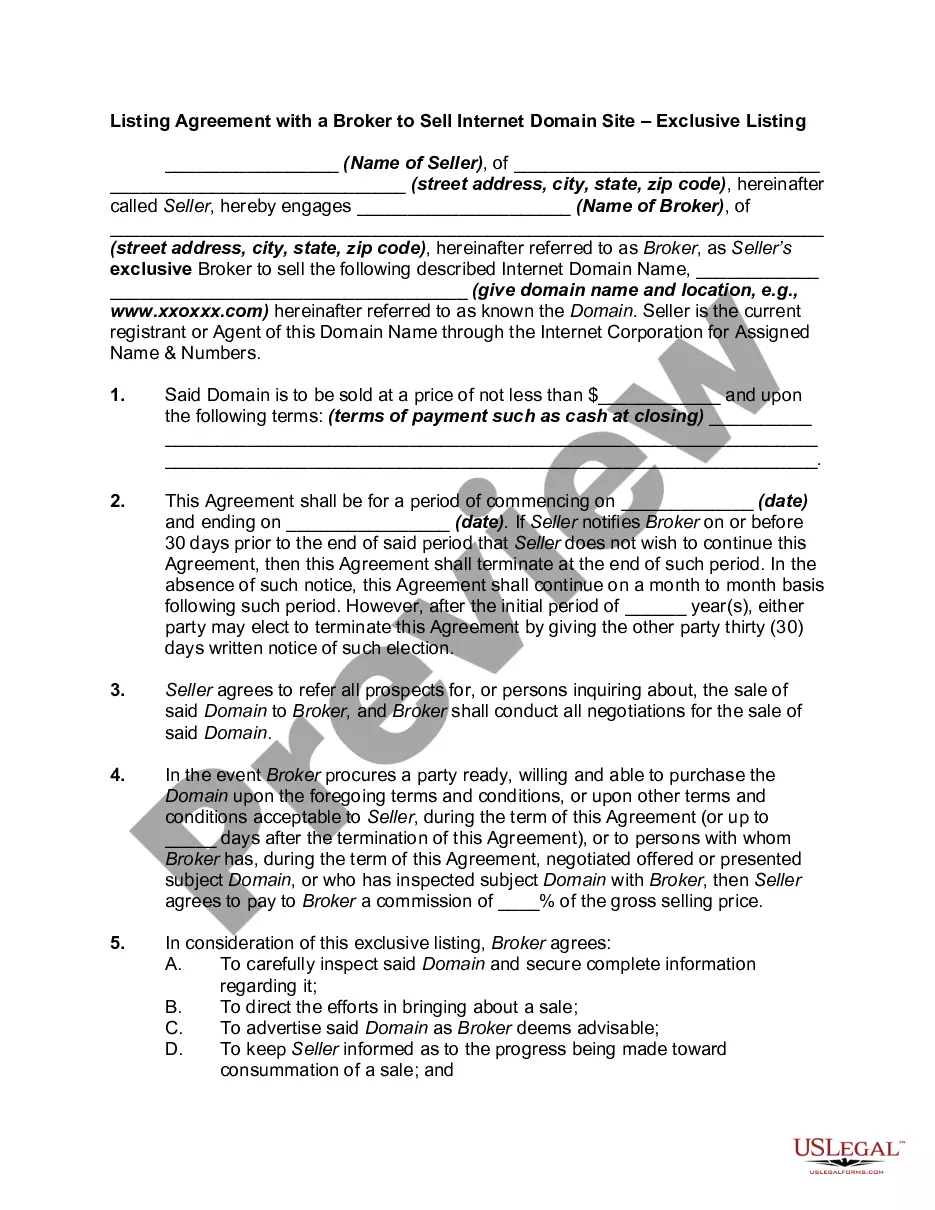
Agreement Broker Real Estate Without License In Minnesota
Description


Get your form ready online
Our built-in tools help you complete, sign, share, and store your documents in one place.
Make edits, fill in missing information, and update formatting in US Legal Forms—just like you would in MS Word.
Download a copy, print it, send it by email, or mail it via USPS—whatever works best for your next step.
Sign and collect signatures with our SignNow integration. Send to multiple recipients, set reminders, and more. Go Premium to unlock E-Sign.
If this form requires notarization, complete it online through a secure video call—no need to meet a notary in person or wait for an appointment.
We protect your documents and personal data by following strict security and privacy standards.

Make edits, fill in missing information, and update formatting in US Legal Forms—just like you would in MS Word.

Download a copy, print it, send it by email, or mail it via USPS—whatever works best for your next step.

Sign and collect signatures with our SignNow integration. Send to multiple recipients, set reminders, and more. Go Premium to unlock E-Sign.

If this form requires notarization, complete it online through a secure video call—no need to meet a notary in person or wait for an appointment.

We protect your documents and personal data by following strict security and privacy standards.
Looking for another form?





Form popularity
FAQ
In Minnesota, property managers do require a real estate broker's license to operate, which necessitates passing a licensing examination, meeting educational criteria, and other requirements set by state laws.
If you will engage in transactions as principal only, or if you will solely engage in negotiations of mortgage loans other than residential mortgage loans as defined below, you can apply for a limited real estate broker's license.
If you are issued a limited license, you are restricted to: Travel to/from work and as required for employment.
All other information will be shared. Broker cannot act as a dual agent unless both the seller(s) and the buyer(s) agree to it. By agreeing to a possible dual agency, the seller(s) will be giving up the right to exclusive representation in an in-house transaction.
You must have at least 3 years of licensed real estate salesperson experience in Minnesota or another state with comparable requirements within the 5 years prior to the date of application for the broker's examination. Complete the 30 hour broker course. Pass the broker exam.
A broker may allow any unlicensed person, who is authorized by the broker, to disclose any factual information pertaining to the properties listed with the broker, if the factual information is provided to the unlicensed person in written form by the broker representing or assisting the seller(s).
The main difference between a salesperson and a broker is that a broker has additional training and experience and the broker may work independently where a salesperson must work under a broker.
Who is eligible to participate? Minnesota has separate tuition reciprocity agreements with North Dakota, South Dakota, and Wisconsin covering all public postsecondary institutions in those states.
No persons shall advertise or represent themselves to be real estate brokers or real estate salespersons unless licensed as provided in this section.
