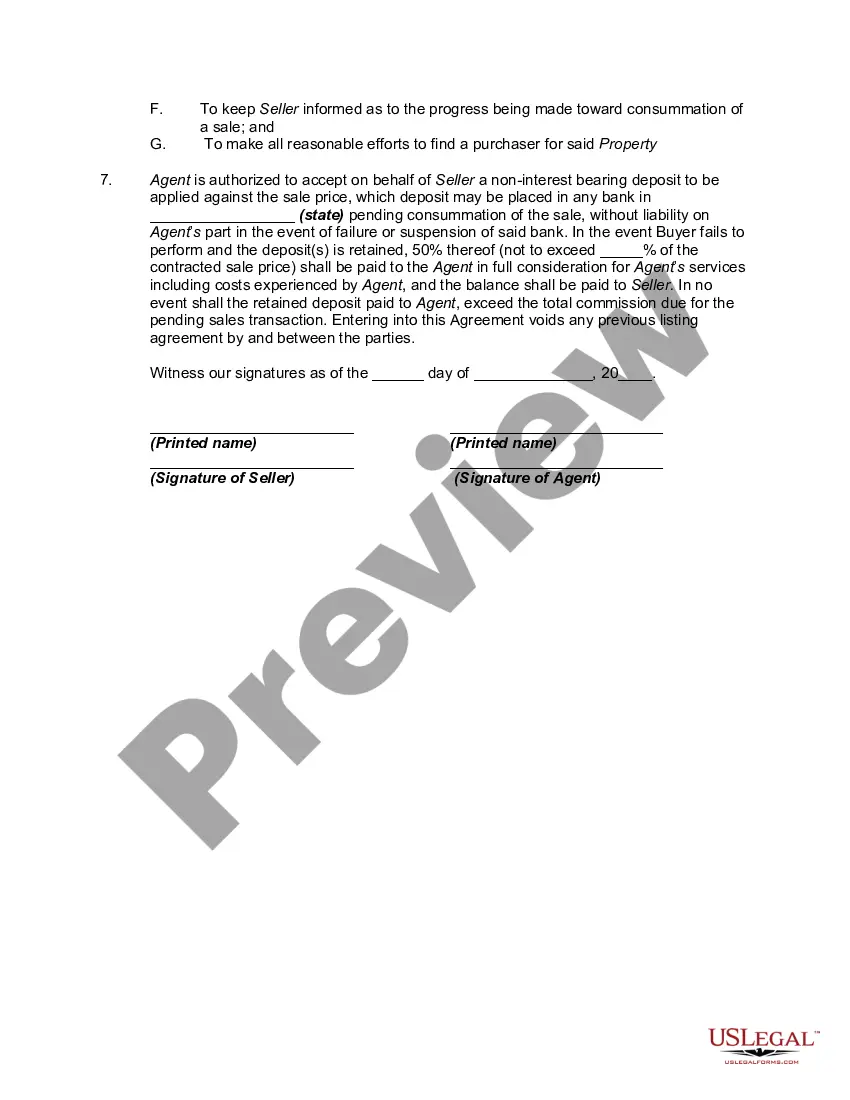
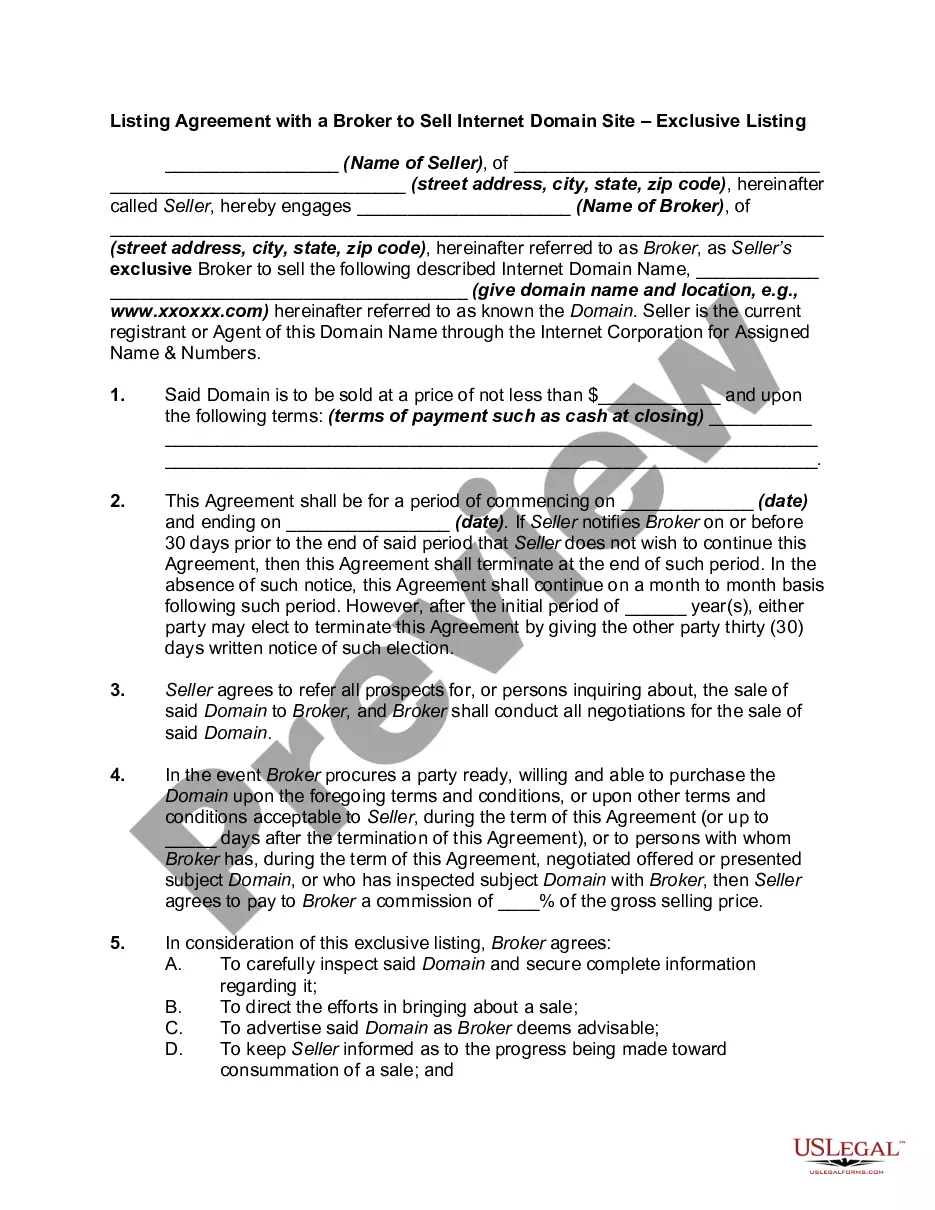
Listing Agreement Real Estate With Broker In Miami-Dade
Description


Get your form ready online
Our built-in tools help you complete, sign, share, and store your documents in one place.
Make edits, fill in missing information, and update formatting in US Legal Forms—just like you would in MS Word.
Download a copy, print it, send it by email, or mail it via USPS—whatever works best for your next step.
Sign and collect signatures with our SignNow integration. Send to multiple recipients, set reminders, and more. Go Premium to unlock E-Sign.
If this form requires notarization, complete it online through a secure video call—no need to meet a notary in person or wait for an appointment.
We protect your documents and personal data by following strict security and privacy standards.

Make edits, fill in missing information, and update formatting in US Legal Forms—just like you would in MS Word.

Download a copy, print it, send it by email, or mail it via USPS—whatever works best for your next step.

Sign and collect signatures with our SignNow integration. Send to multiple recipients, set reminders, and more. Go Premium to unlock E-Sign.

If this form requires notarization, complete it online through a secure video call—no need to meet a notary in person or wait for an appointment.

We protect your documents and personal data by following strict security and privacy standards.
Looking for another form?




Form popularity
FAQ
A showing agreement is a document sometimes used by Realtors in Florida to formalize their relationship with prospective buyers. Essentially, it is a prelude to a potential real estate transaction.
A Buyer Brokerage Agreement (BBA) becomes necessary when a REALTOR® provides brokerage services to a Buyer, including, but not limited to, touring a home. If the REALTOR® is merely holding an open house or granting an unrepresented Buyer access to a listed house, a BBA is not needed.
Florida has taken a firm stance against dual agency, making it illegal to ensure that buyers and sellers receive the representation they deserve. The primary reason is conflict of interest.
This means they must be of sound mind and at least 18 years old. Additionally, the contract must be for a lawful purpose; a contract for an illegal act is not enforceable. Finally, a real estate contract in Florida must be in writing and signed by the parties involved.
Exclusive Right to Sell Listing As the most commonly used listing agreement, the Exclusive Right to Sell Listing's name pretty much says it all. With an Exclusive Right to Sell Listing Agreement, the real estate agent or broker has total control over the transaction.
Listing agreements vary. Each type has its own advantages and disadvantages: Exclusive Right-to-Sell Listing: The most common type. It grants the broker the exclusive right to sell your home, regardless of who finds the buyer.
The exclusive right to sell listing agreement is the most common type of agreement in real estate. Under this arrangement, the broker is given exclusive rights to market the property for a set period.
FSBO contracts in Florida should include the following: Contract Title. Details of Seller and Buyer: Full names, marital status and contact information. Contract Date: The date of execution. Property Details. Payment terms. Real Estate Taxes: Detail who pays real estate taxes and how.
Most Common Disclosures in Real Estate Natural Hazards Disclosure. First on the list is the natural hazards disclosure. Market Conditions Advisory (MCA) Market Conditions Advisory, also known as MCA, covers items more financial in nature. State Transfer Disclosure. Local Transfer Disclosure. Megan's Law Disclosures.
