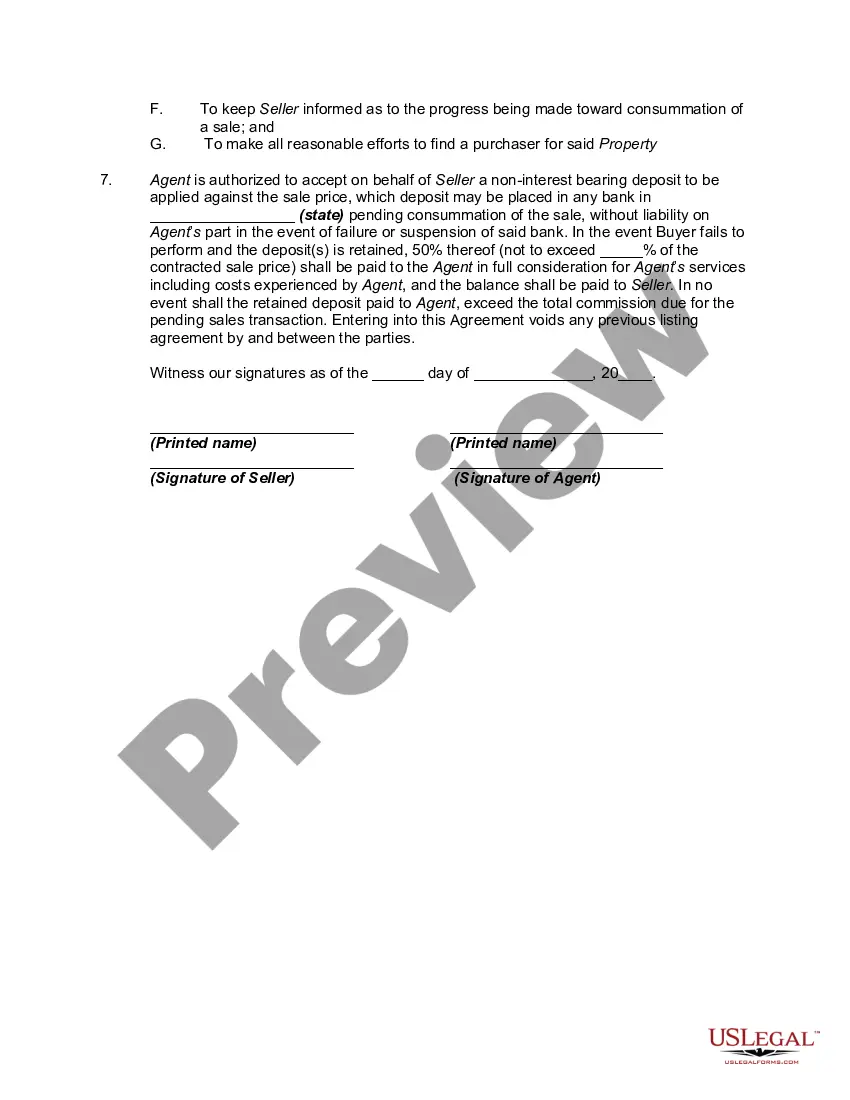
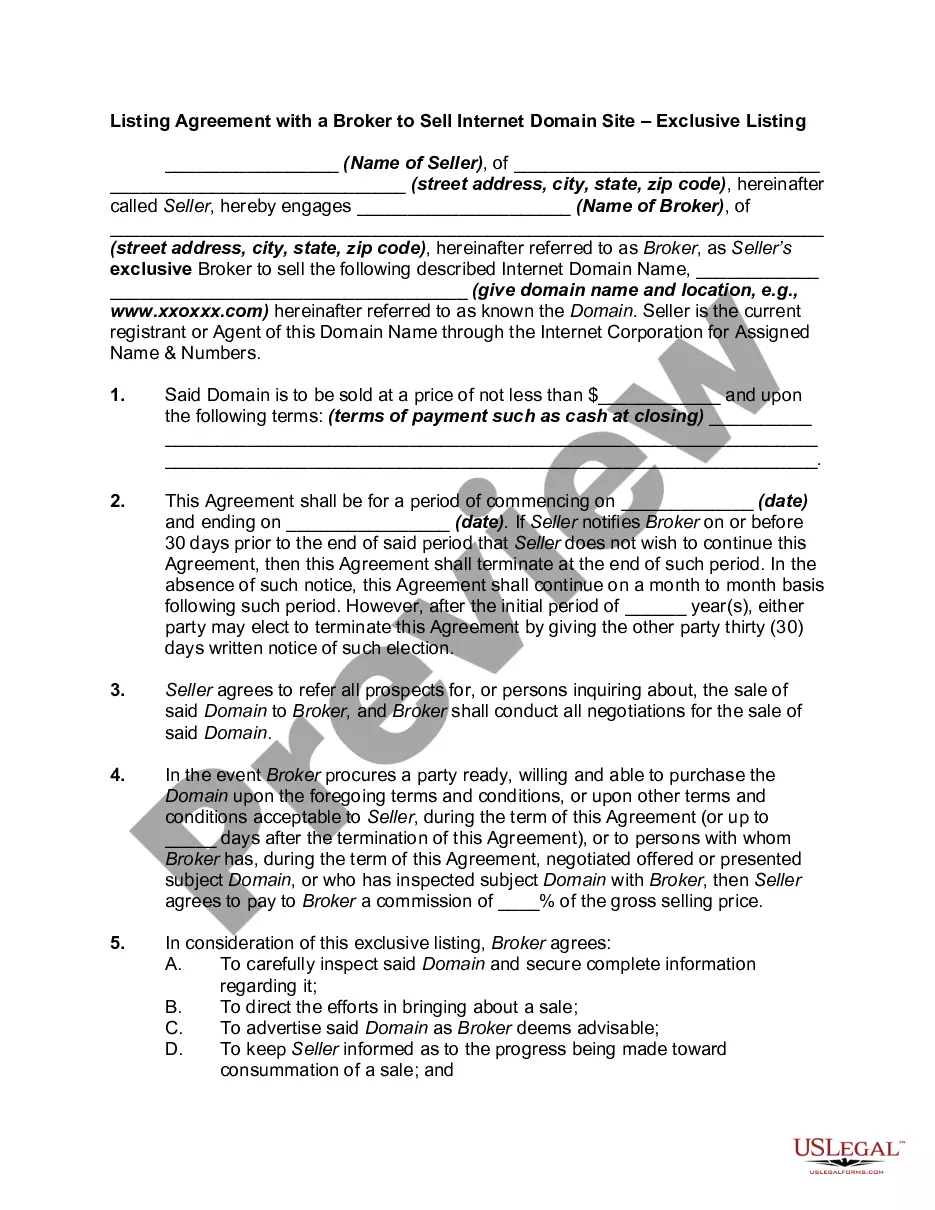
Commercial Listing Agreement Form In Massachusetts
Description


Get your form ready online
Our built-in tools help you complete, sign, share, and store your documents in one place.
Make edits, fill in missing information, and update formatting in US Legal Forms—just like you would in MS Word.
Download a copy, print it, send it by email, or mail it via USPS—whatever works best for your next step.
Sign and collect signatures with our SignNow integration. Send to multiple recipients, set reminders, and more. Go Premium to unlock E-Sign.
If this form requires notarization, complete it online through a secure video call—no need to meet a notary in person or wait for an appointment.
We protect your documents and personal data by following strict security and privacy standards.

Make edits, fill in missing information, and update formatting in US Legal Forms—just like you would in MS Word.

Download a copy, print it, send it by email, or mail it via USPS—whatever works best for your next step.

Sign and collect signatures with our SignNow integration. Send to multiple recipients, set reminders, and more. Go Premium to unlock E-Sign.

If this form requires notarization, complete it online through a secure video call—no need to meet a notary in person or wait for an appointment.

We protect your documents and personal data by following strict security and privacy standards.
Looking for another form?








Form popularity
FAQ
Who signs the P&S first? The tradition and custom in Eastern Massachusetts is for the Buyer to sign it first. Legally speaking, this may not matter as it is not a valid contract until both parties sign.
Both buyer and seller must sign a deed to make it official. Massachusetts law recognizes three types of deeds, each of which provides varying levels of protection for buyers and sellers. These three types are warranty deeds, quitclaim deeds, and release deeds.
In Massachusetts Disclosed Dual Agency is legal, provided there exists full disclosure and written informed consent to the dual agency by both the Buyer and the Seller in a specific transaction. A Dual Agent has a duty of confidentiality and accounting to both parties.
A Massachusetts real estate agent listing agreement is a document that sets forth the terms of the relationship between a real estate broker and a buyer or seller of property. The contract outlines each party's rights and obligations regarding a real estate transaction.
"Exclusive right to sell listing agreement" means a listing agreement whereby the owner grants to a seller's agent, for a specified period of time, the exclusive right to sell, find, or obtain a buyer for the real property, and the seller's agent is entitled to the agreed compensation if, during that period of time, ...
An exclusive license grants the licensee the sole right to use, manufacture, and sell a product or service. The licensor, or the person or entity that owns the intellectual property, cannot grant the same rights to anyone else.
Exclusive right-to-represent contracts. This is the most common buyer-broker agreement between home buyers and brokers. This agreement outlines the obligations of the broker, the broker-agent relationship, and the responsibilities of the buyer.
"Exclusive right to sell listing agreement" means a listing agreement whereby the owner grants to a seller's agent, for a specified period of time, the exclusive right to sell, find, or obtain a buyer for the real property, and the seller's agent is entitled to the agreed compensation if, during that period of time, ...
An exclusive right to sell listing agreement is a contract between a listing agent and a home or property owner. An exclusive right to sell specifies that the listing agent is the only agent you've hired, and the agent is guaranteed to receive the commission when your house sells.
