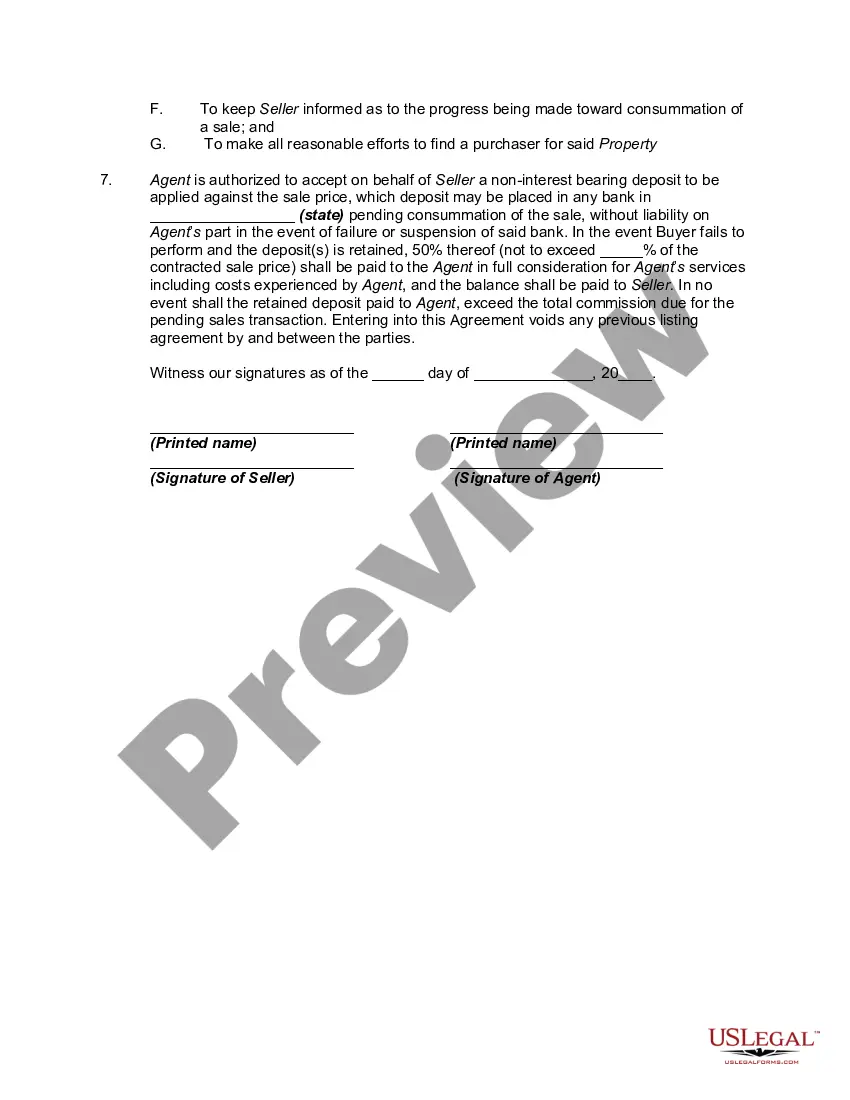
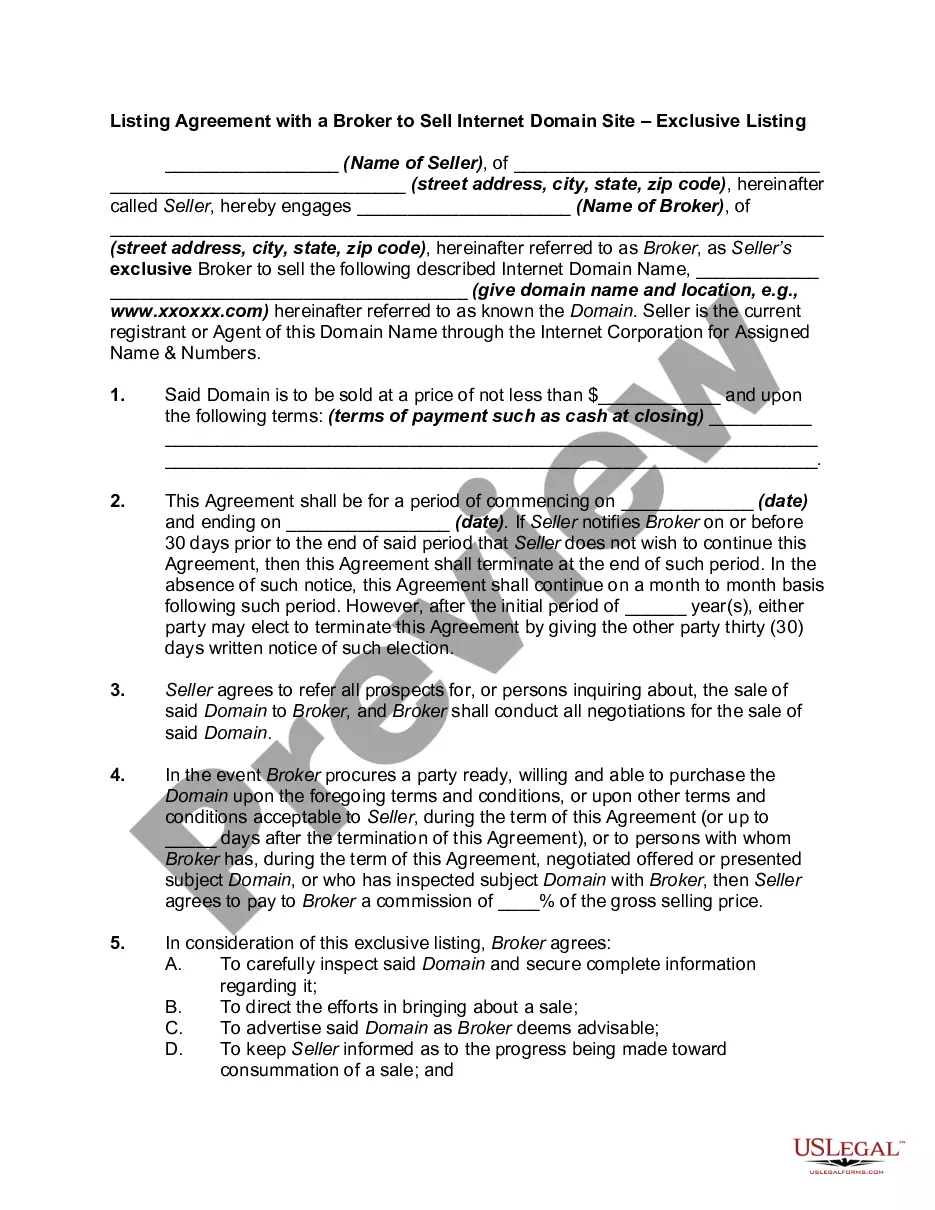
Listing Agreement Commercial With A Self-renewing Clause In Harris
Description


Get your form ready online
Our built-in tools help you complete, sign, share, and store your documents in one place.
Make edits, fill in missing information, and update formatting in US Legal Forms—just like you would in MS Word.
Download a copy, print it, send it by email, or mail it via USPS—whatever works best for your next step.
Sign and collect signatures with our SignNow integration. Send to multiple recipients, set reminders, and more. Go Premium to unlock E-Sign.
If this form requires notarization, complete it online through a secure video call—no need to meet a notary in person or wait for an appointment.
We protect your documents and personal data by following strict security and privacy standards.

Make edits, fill in missing information, and update formatting in US Legal Forms—just like you would in MS Word.

Download a copy, print it, send it by email, or mail it via USPS—whatever works best for your next step.

Sign and collect signatures with our SignNow integration. Send to multiple recipients, set reminders, and more. Go Premium to unlock E-Sign.

If this form requires notarization, complete it online through a secure video call—no need to meet a notary in person or wait for an appointment.

We protect your documents and personal data by following strict security and privacy standards.
Looking for another form?








Form popularity
FAQ
Typical time frames for agreements range from three to six months, though they can be shorter or longer. Many include a renewal clause, which provides an option to extend the listing period if both parties agree.
The holdover period is a defined amount time following the expiration of a listing agreement during which the listing brokerage would be entitled to a commission if the property were sold to someone who was introduced to it while it was listed.
Ing to the National Association of Realtors (NAR), failure is defined as those who get a real estate license and then leave the industry within the first five years. ing to them, 75% of real estate agents fail within the first year, and 87% fail within five years.
Listing agreements vary. Each type has its own advantages and disadvantages: Exclusive Right-to-Sell Listing: The most common type. It grants the broker the exclusive right to sell your home, regardless of who finds the buyer.
Most of the time, you can sell your house privately or with a new agent 90 days after the listing contract expires. This will prevent you from paying the agent's commission. Usually, real estate listing agreements have a safety clause that protects the agent from the seller.
Once this agreement expires, your real estate agent no longer represents you. It also means your listing will officially no longer be for sale, as it will be removed from platforms like Realtor®. It will also be removed from the multiple listing service, also called the MLS.
Holding over is simply a tenant remaining in occupation of premises once the original term of their letting has come to an end. Holding over – the risks. Holding over principally presents risks as a result of the lack of clarity on the legal position of the parties that it creates.
This Agreement has a one-year term from the Effective Date and shall continue in full force until the first anniversary of the Effective Date. Thereafter, this Agreement may be renewed for an unlimited number of successive one-year terms upon mutual consent of the parties.
When a tenant stays past the end of the lease, without renewing or extending the term, the tenant is a “holdover tenant.” In that situation, the existence of a holdover clause in a lease contract helps protect the landlord's rights, and potentially those of a successor occupant.
When a tenant stays past the end of the lease, without renewing or extending the term, the tenant is a “holdover tenant.” In that situation, the existence of a holdover clause in a lease contract helps protect the landlord's rights, and potentially those of a successor occupant.
