Listing Agreement Commercial With Realtor In Fairfax
Description


Get your form ready online
Our built-in tools help you complete, sign, share, and store your documents in one place.
Make edits, fill in missing information, and update formatting in US Legal Forms—just like you would in MS Word.
Download a copy, print it, send it by email, or mail it via USPS—whatever works best for your next step.
Sign and collect signatures with our SignNow integration. Send to multiple recipients, set reminders, and more. Go Premium to unlock E-Sign.
If this form requires notarization, complete it online through a secure video call—no need to meet a notary in person or wait for an appointment.
We protect your documents and personal data by following strict security and privacy standards.

Make edits, fill in missing information, and update formatting in US Legal Forms—just like you would in MS Word.

Download a copy, print it, send it by email, or mail it via USPS—whatever works best for your next step.

Sign and collect signatures with our SignNow integration. Send to multiple recipients, set reminders, and more. Go Premium to unlock E-Sign.

If this form requires notarization, complete it online through a secure video call—no need to meet a notary in person or wait for an appointment.

We protect your documents and personal data by following strict security and privacy standards.
Looking for another form?



Form popularity
FAQ
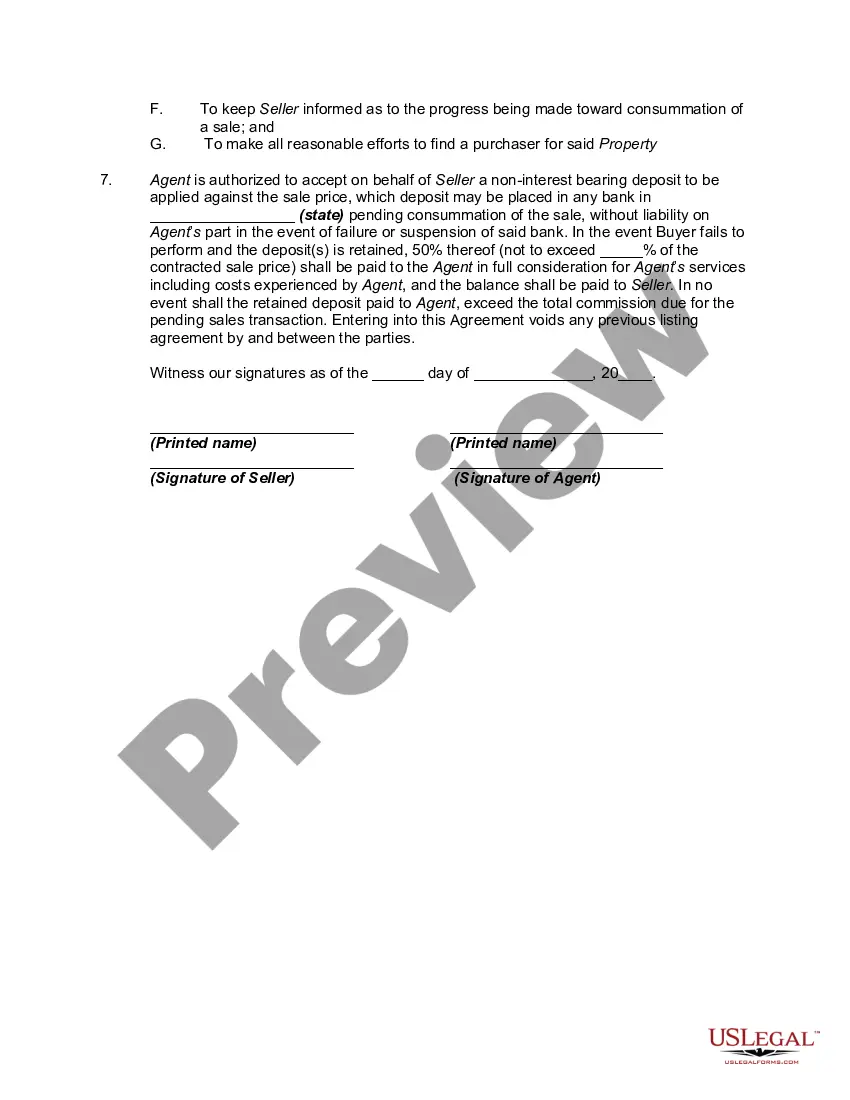
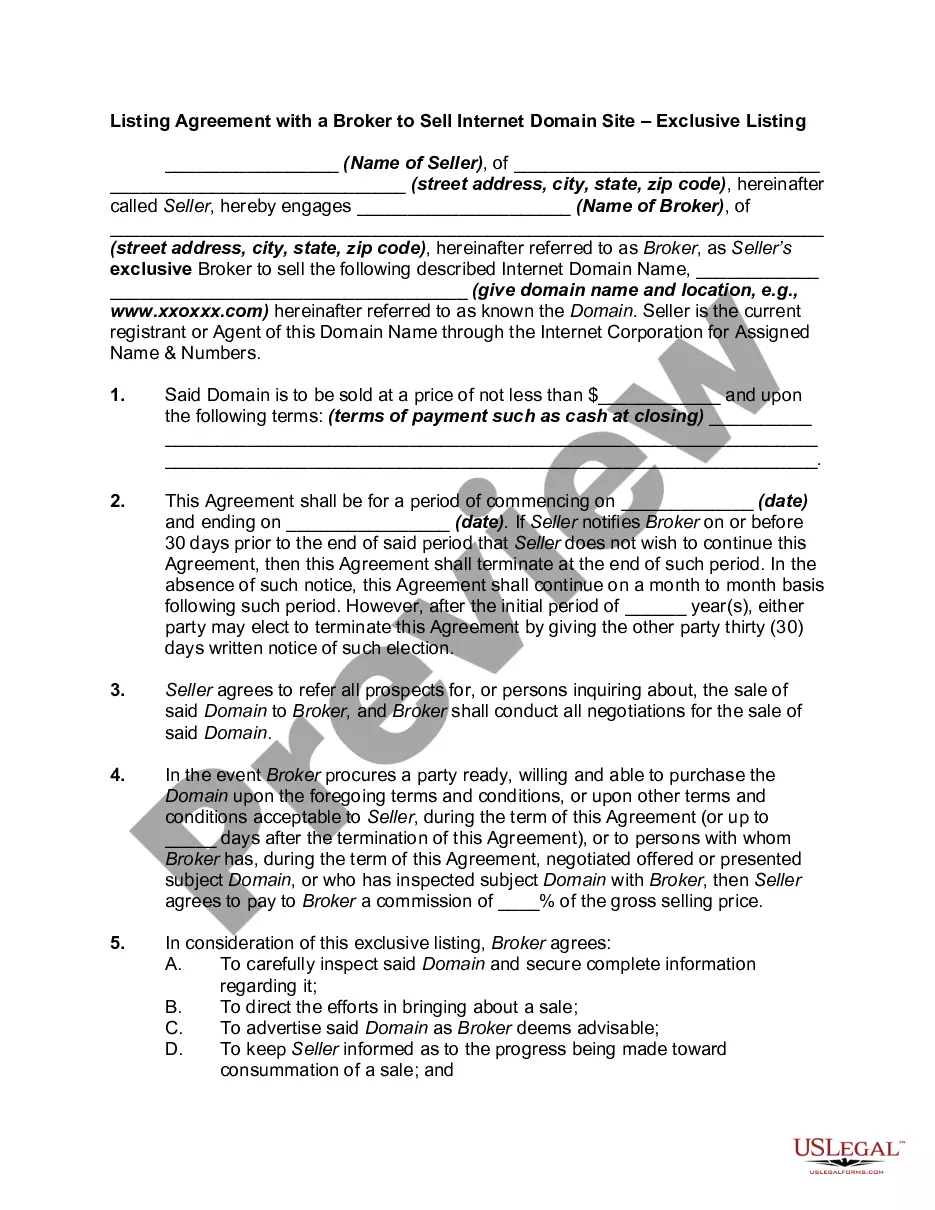
A listing agreement is “a legally binding contract that creates an agency relationship authorizing a broker to serve as the agent for a principal in a real estate transaction.” In other words, a listing agreement is an employment contract between a client and a broker that spells out what the broker is responsible for ...
Exclusive Right to Sell Listing As the most commonly used listing agreement, the Exclusive Right to Sell Listing's name pretty much says it all. With an Exclusive Right to Sell Listing Agreement, the real estate agent or broker has total control over the transaction.
Listing agreements vary. Each type has its own advantages and disadvantages: Exclusive Right-to-Sell Listing: The most common type. It grants the broker the exclusive right to sell your home, regardless of who finds the buyer.
An open listing enables multiple real estate agents to try to sell your home. This setup gives the seller the ability to work with multiple agents at once. This differs from an exclusive listing, in which the seller works exclusively with one listing agent to find a buyer.
The exclusive right to sell listing agreement is the most common type of agreement in real estate. Under this arrangement, the broker is given exclusive rights to market the property for a set period.
Most Common Disclosures in Real Estate Natural Hazards Disclosure. First on the list is the natural hazards disclosure. Market Conditions Advisory (MCA) Market Conditions Advisory, also known as MCA, covers items more financial in nature. State Transfer Disclosure. Local Transfer Disclosure. Megan's Law Disclosures.
Known under a variety of names, a common element of these product listing agreements (PLAs) is the negotiation of confidential prices that are typically achieved through rebates that may or may not be tied to drug expenditures, utilization patterns or health outcomes.
Typical time frames for agreements range from three to six months, though they can be shorter or longer. Many include a renewal clause, which provides an option to extend the listing period if both parties agree.
Open listing: Definition An open listing enables multiple real estate agents to try to sell your home. This setup gives the seller the ability to work with multiple agents at once. This differs from an exclusive listing, in which the seller works exclusively with one listing agent to find a buyer.
A listing agreement is a contract between a property owner and a real estate broker that authorizes the broker to represent the seller and find a buyer for the property. The three types of real estate listing agreements are open listing, exclusive agency listing, and exclusive right-to-sell listing.