Agreement Satisfaction With Judgment In Virginia
Description
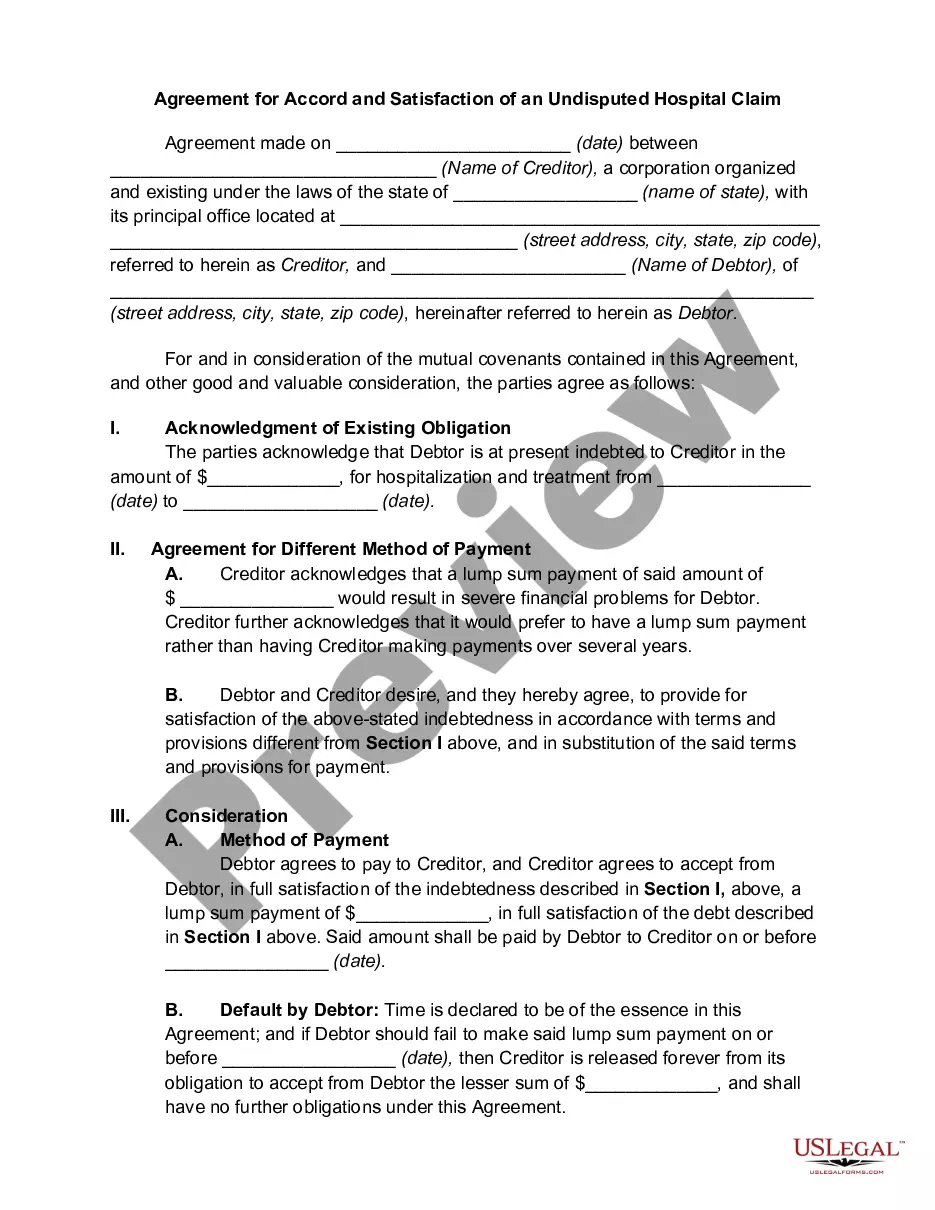
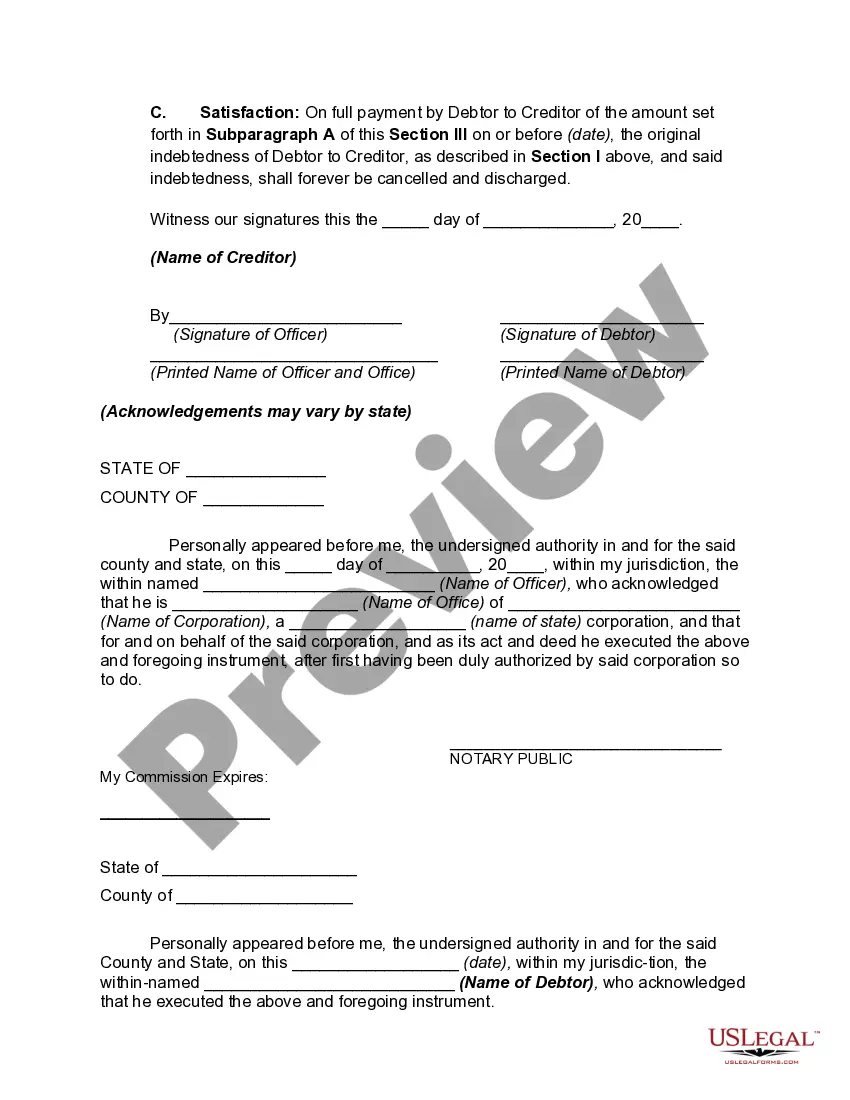


Get your form ready online
Our built-in tools help you complete, sign, share, and store your documents in one place.
Make edits, fill in missing information, and update formatting in US Legal Forms—just like you would in MS Word.
Download a copy, print it, send it by email, or mail it via USPS—whatever works best for your next step.
Sign and collect signatures with our SignNow integration. Send to multiple recipients, set reminders, and more. Go Premium to unlock E-Sign.
If this form requires notarization, complete it online through a secure video call—no need to meet a notary in person or wait for an appointment.
We protect your documents and personal data by following strict security and privacy standards.

Make edits, fill in missing information, and update formatting in US Legal Forms—just like you would in MS Word.

Download a copy, print it, send it by email, or mail it via USPS—whatever works best for your next step.

Sign and collect signatures with our SignNow integration. Send to multiple recipients, set reminders, and more. Go Premium to unlock E-Sign.

If this form requires notarization, complete it online through a secure video call—no need to meet a notary in person or wait for an appointment.

We protect your documents and personal data by following strict security and privacy standards.
Looking for another form?






Form popularity
FAQ
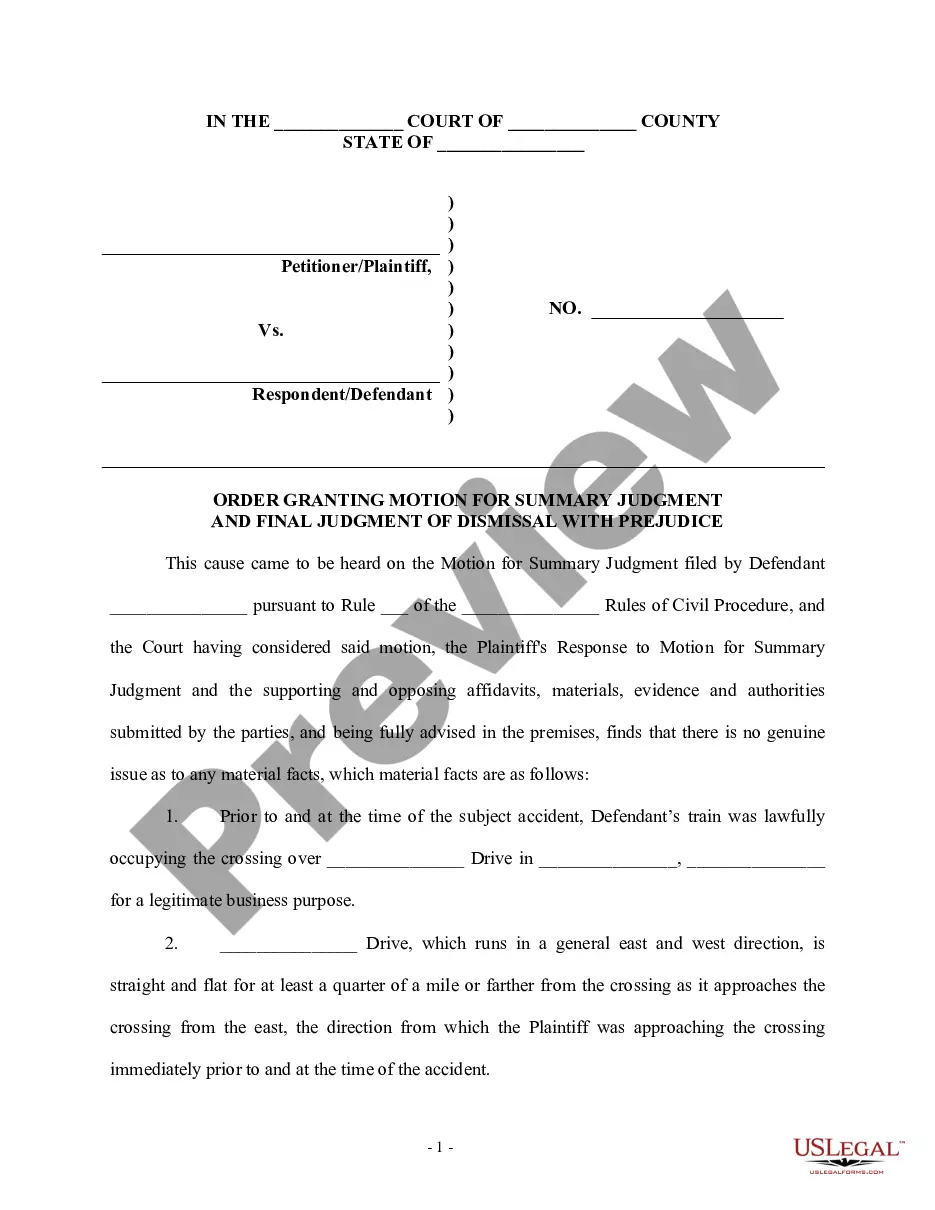
Rule . — All final judgments, orders, and decrees, irrespective of terms of court, remain under the control of the trial court and may be modified, vacated, or suspended for twenty-one days after the date of entry, and no longer.
A judgment-creditor may ask the court for these things to help collect a judgment. Summons to answer debtor interrogatories. Garnishment of your income. Levy (or attachment) to sell your personal property.
VA Code Ann. § 8.01-251(B). A judgment expires ten years from the date of entry.
First, the judgment creditor must obtain a “Writ of Execution” or “Writ of Fiera Facias.” The Writ of Execution is an order from the court to the sheriff to satisfy the judgment from any personal property of the debtor in the sheriff's bailiwick (county).
The certificate of satisfaction shall be signed by the creditor or his duly authorized agent, attorney or attorney-in-fact, or any person to whom the instrument evidencing the indebtedness has been endorsed or assigned for the purpose of effecting such release.
The clerk shall record in the proper book any judgment confessed under the provisions of § 8.01-432 and the day and hour when the same was confessed, and the lien thereof shall attach and be binding from the time such judgment is recorded on the judgment lien docket of the clerk's office of the county or city in which ...
2. In civil actions that result in a judgment, all documents in the possession of the general district court shall be retained for 10 years and, unless sooner satisfied, the judgment shall remain in force for a period of 10 years; 3.
