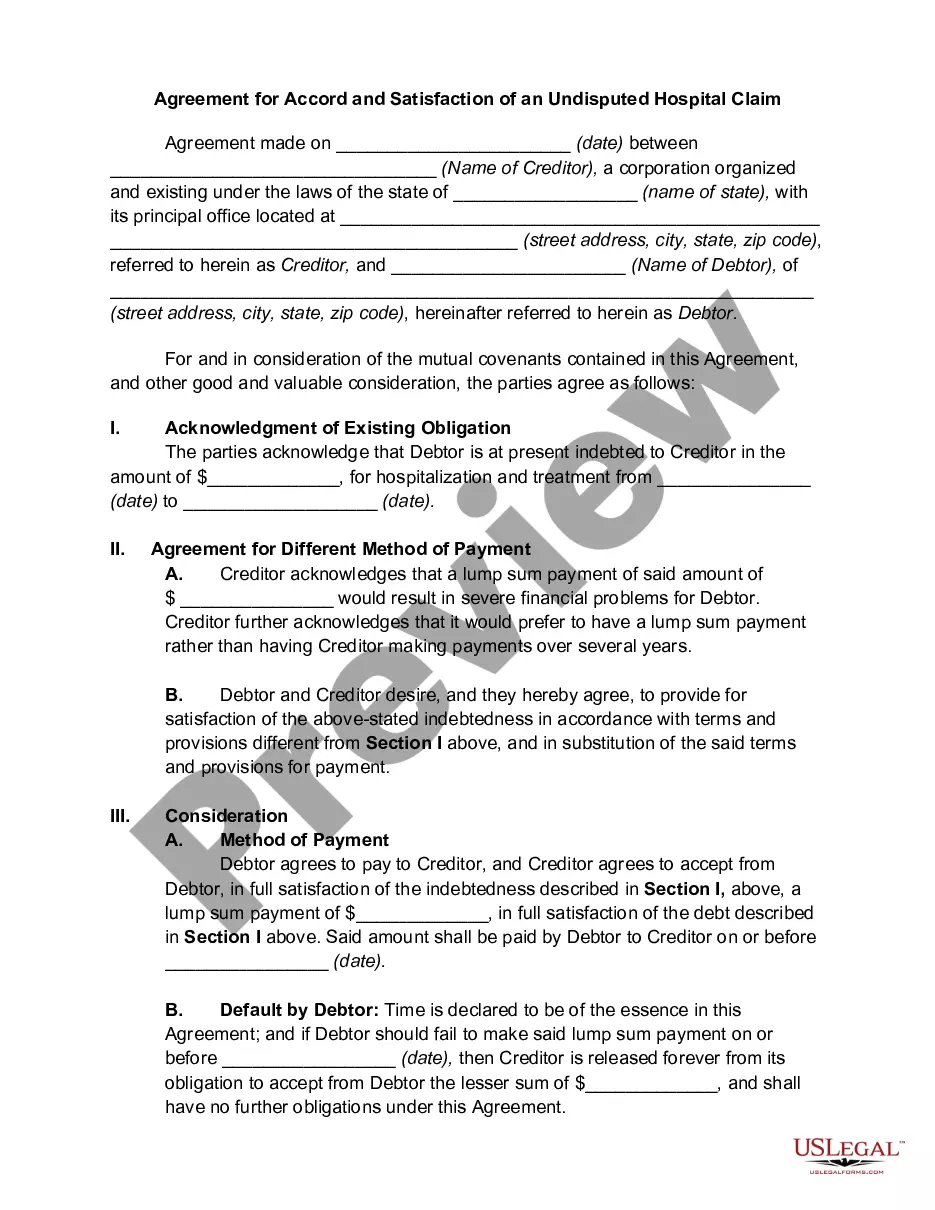
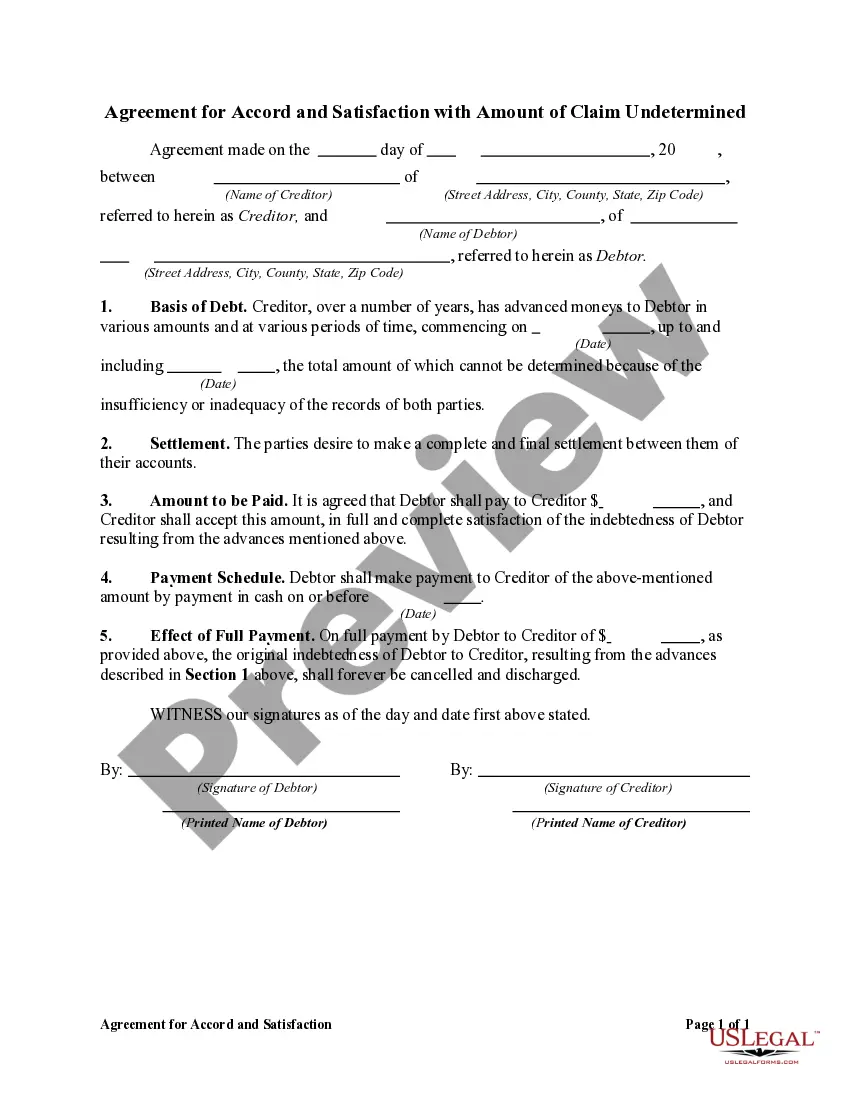
Satisfaction Agreement Form In North Carolina
Description

Get your form ready online
Our built-in tools help you complete, sign, share, and store your documents in one place.
Make edits, fill in missing information, and update formatting in US Legal Forms—just like you would in MS Word.
Download a copy, print it, send it by email, or mail it via USPS—whatever works best for your next step.
Sign and collect signatures with our SignNow integration. Send to multiple recipients, set reminders, and more. Go Premium to unlock E-Sign.
If this form requires notarization, complete it online through a secure video call—no need to meet a notary in person or wait for an appointment.
We protect your documents and personal data by following strict security and privacy standards.

Make edits, fill in missing information, and update formatting in US Legal Forms—just like you would in MS Word.

Download a copy, print it, send it by email, or mail it via USPS—whatever works best for your next step.

Sign and collect signatures with our SignNow integration. Send to multiple recipients, set reminders, and more. Go Premium to unlock E-Sign.

If this form requires notarization, complete it online through a secure video call—no need to meet a notary in person or wait for an appointment.

We protect your documents and personal data by following strict security and privacy standards.
Looking for another form?










Form popularity
FAQ
Pardons are rarely granted In North Carolina the power to Pardon comes from Article III of the State Constitution. The power vests in the Governor of North Carolina under Article III, Section 5, Subsection (6) of the North Carolina State Constitution. The Governor may grant: Reprieves.
This can be obtained electronically and printed, or you can visit the Office of the Clerk of Superior Court where they will provide you with a form. After you fill out the form, you will need to file the petition in the county where you were convicted, and the clerk's office will contact the District Attorney's office.
Are All Offenses Eligible for Expungement? Not every offense is eligible to be expunged. Exceptions include: Violent misdemeanors, violent felonies, and certain drug crime convictions.
Deeds of trust are the most common instrument used in the financing of real estate purchases in Alaska, Arizona, California, Colorado, the District of Columbia, Idaho, Maryland, Mississippi, Missouri, Montana, Nebraska, Nevada, North Carolina, Oregon, Tennessee, Texas, Utah, Virginia, Washington, and West Virginia, ...
This means your record is sealed and you are given a “clean slate.” In order to be eligible to restore your right to own a firearm after a felony conviction in NC, your sentence or probation must have been 10 years ago or longer, must be a Class H or Class I felony, and cannot: Involve any kind of violence or assault.
