Agreement Satisfaction With Judgment In Illinois
Description


Get your form ready online
Our built-in tools help you complete, sign, share, and store your documents in one place.
Make edits, fill in missing information, and update formatting in US Legal Forms—just like you would in MS Word.
Download a copy, print it, send it by email, or mail it via USPS—whatever works best for your next step.
Sign and collect signatures with our SignNow integration. Send to multiple recipients, set reminders, and more. Go Premium to unlock E-Sign.
If this form requires notarization, complete it online through a secure video call—no need to meet a notary in person or wait for an appointment.
We protect your documents and personal data by following strict security and privacy standards.

Make edits, fill in missing information, and update formatting in US Legal Forms—just like you would in MS Word.

Download a copy, print it, send it by email, or mail it via USPS—whatever works best for your next step.

Sign and collect signatures with our SignNow integration. Send to multiple recipients, set reminders, and more. Go Premium to unlock E-Sign.

If this form requires notarization, complete it online through a secure video call—no need to meet a notary in person or wait for an appointment.

We protect your documents and personal data by following strict security and privacy standards.
Looking for another form?








Form popularity
FAQ
(a) Except as provided in subsection (a-5), a judgment may be revived by filing a petition to revive the judgment in the seventh year after its entry, or in the seventh year after its last revival, or in the twentieth year after its entry, or at any other time within 20 years after its entry if the judgment becomes ...
A "Default Judgment" is similar to a Judge's order in that it can be used to place a lien on your property, garnish your wages and/or affect your credit.
Illinois law governs the time limit for enforcing judgment and states “no judgment shall be enforced after the expiration of 7 years from the time the same is rendered.”1 The same statute allows the 7-year limitation period to be extended “upon the revival of the judgment by a proceeding.”
Enforcement proceedings (also known as collection actions) to collect judgments are governed primarily by 735 ILCS 5/2-1402. This statute provides three main tools for enforcing and collecting judgments: (1) the Citation to Discover Assets; (2) wage garnishment proceedings; and (3) non-wage garnishment proceedings.
Enforcement of a Foreign Judgment in the U.S. Under U.S. law, an individual seeking to enforce a foreign judgment, decree or order in this country must file suit before a competent court. The court will determine whether to recognize and enforce the foreign judgment.
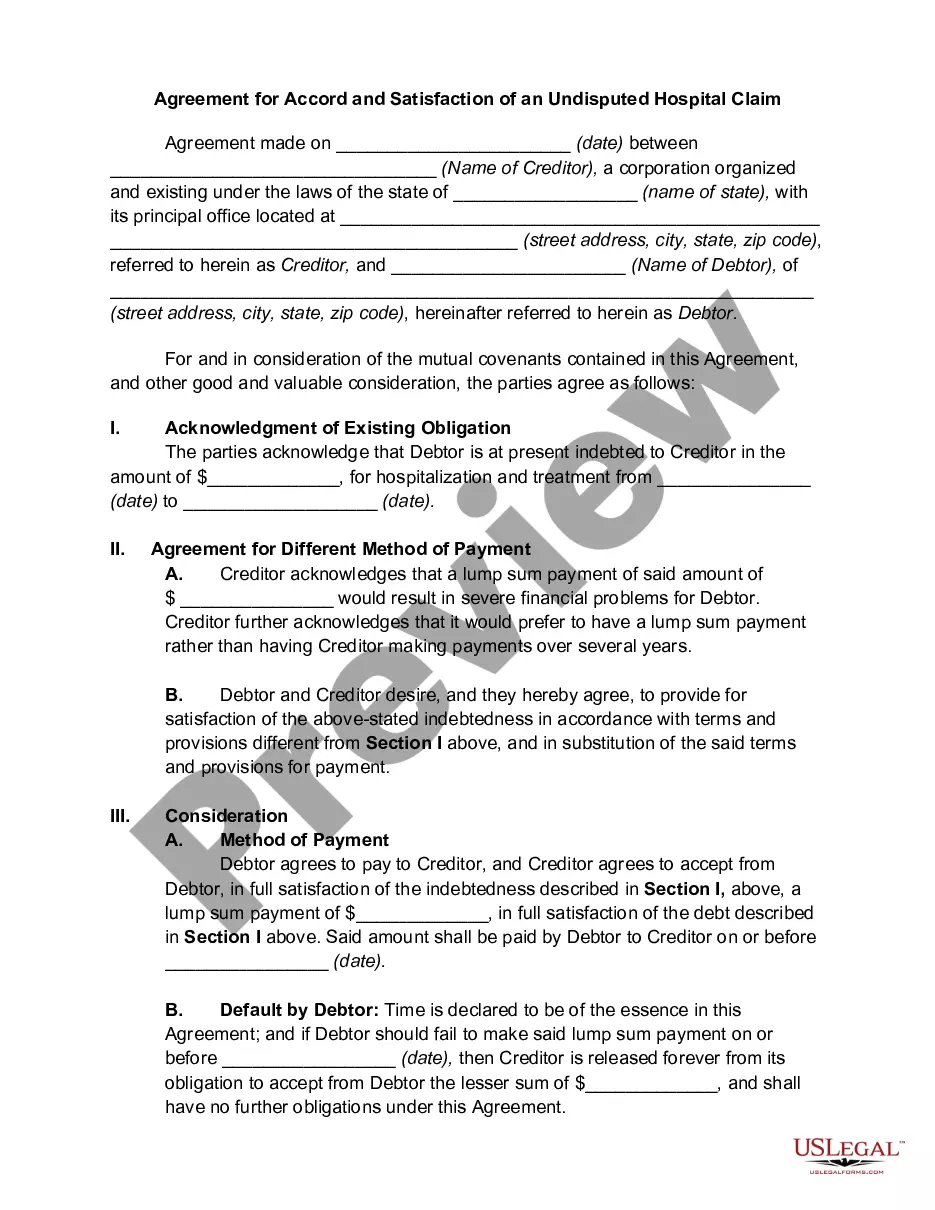
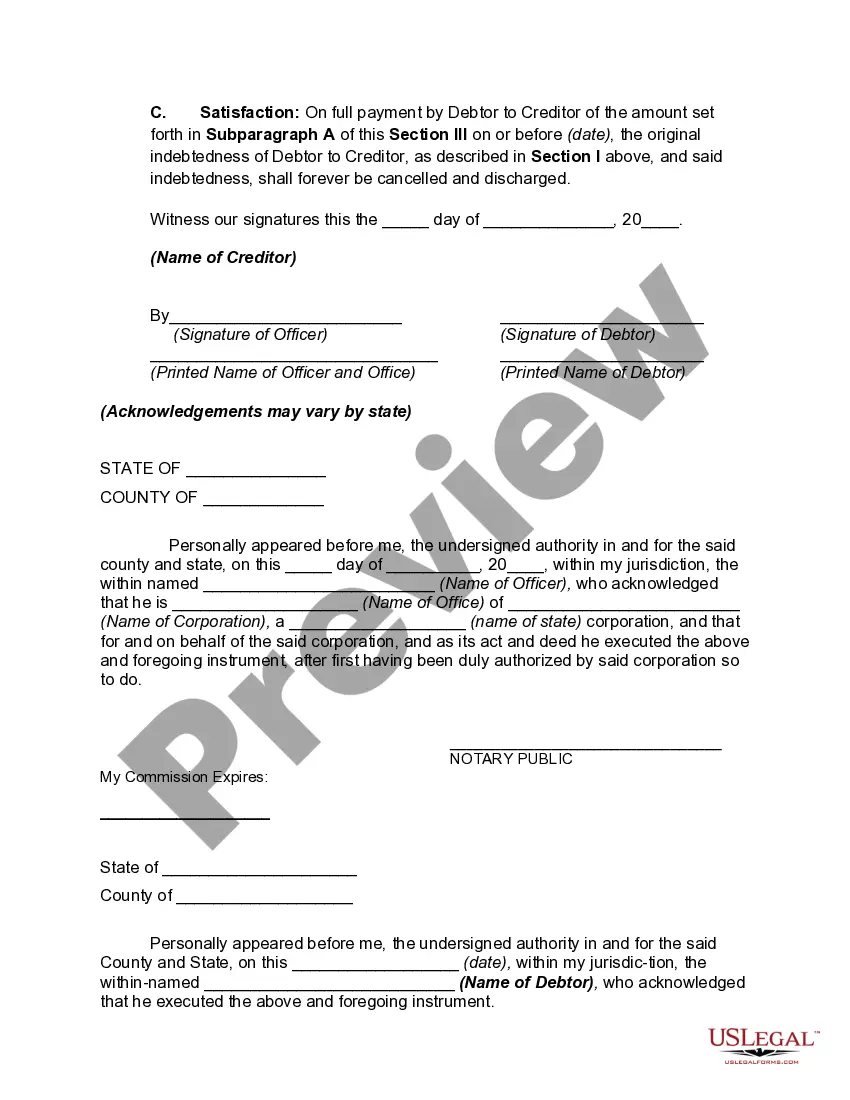
And satisfaction occurs when there is an agreement ( ) between two parties (an obligor and an obligee ) for alternative performance to discharge a pre-existing duty , and the obligor subsequently completes such performance ( satisfaction ).
And satisfaction is a defense to a breach of contract claim under Illinois law. An and satisfaction is a contractual method of discharging debts or claims between the parties to such an agreement. To constitute an and satisfaction there must be: A genuine dispute pending between the parties.
The principle of and satisfaction usually refers to a debtor's offer of payment and a creditor's acceptance of a lesser sum than the creditor claimed. In most contracts, the consideration provided is less than what was negotiated for in the initial contract.
If a judgment is old, it may need to be revived before it can be enforced. Illinois law governs the enforcement and resurrection of judgments. Under Illinois law, judgments have an enforcement time limit of seven years from the date of their entry.
And satisfaction is a defense to a breach of contract claim under Illinois law. An and satisfaction is a contractual method of discharging debts or claims between the parties to such an agreement. To constitute an and satisfaction there must be: A genuine dispute pending between the parties.
