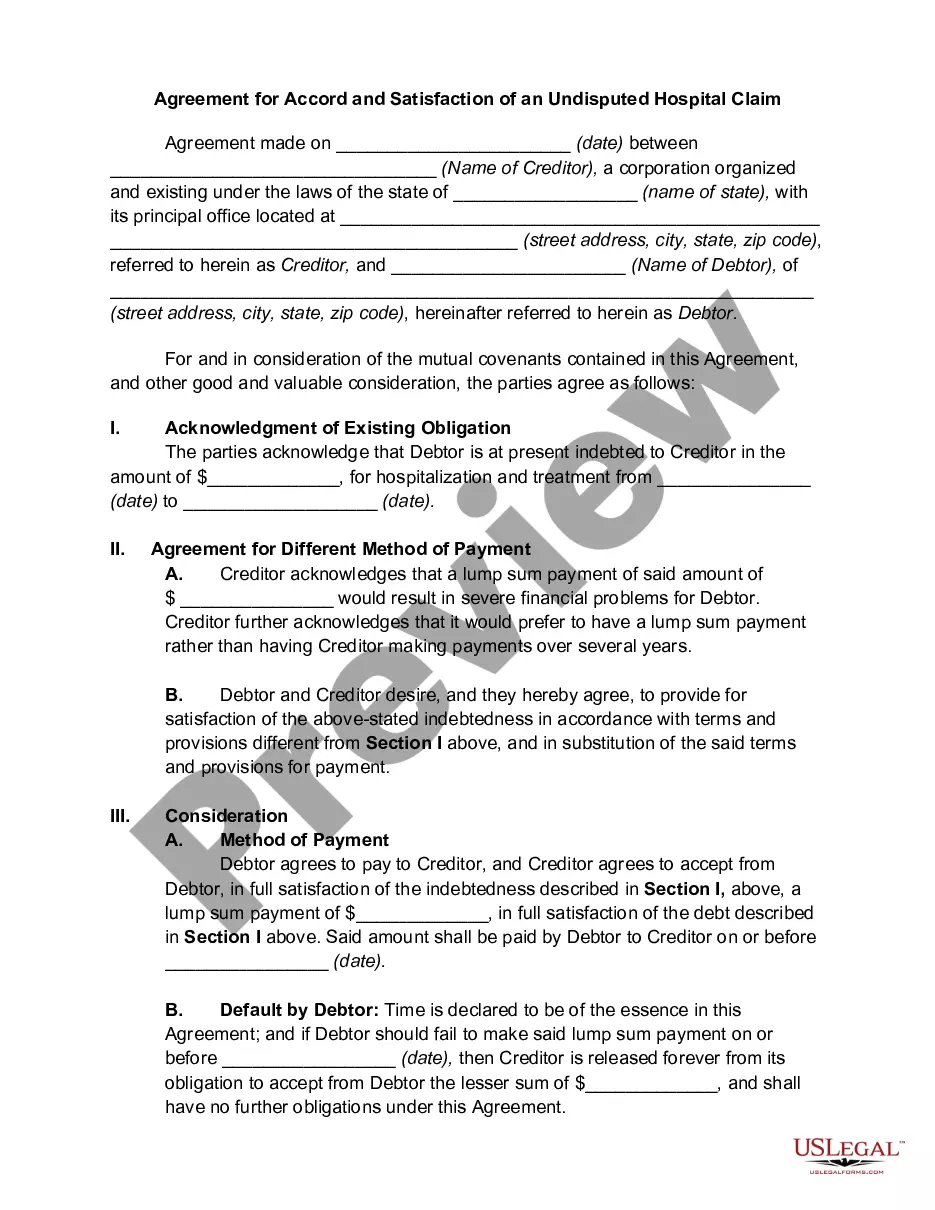
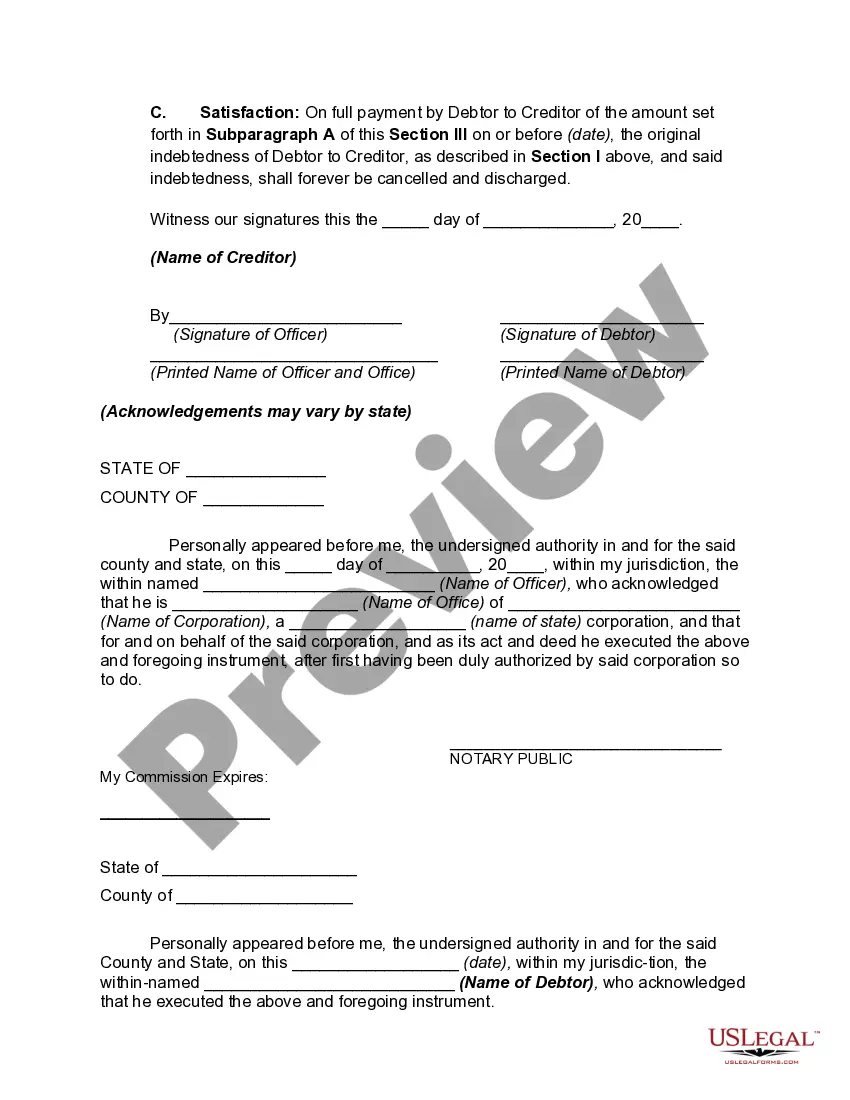
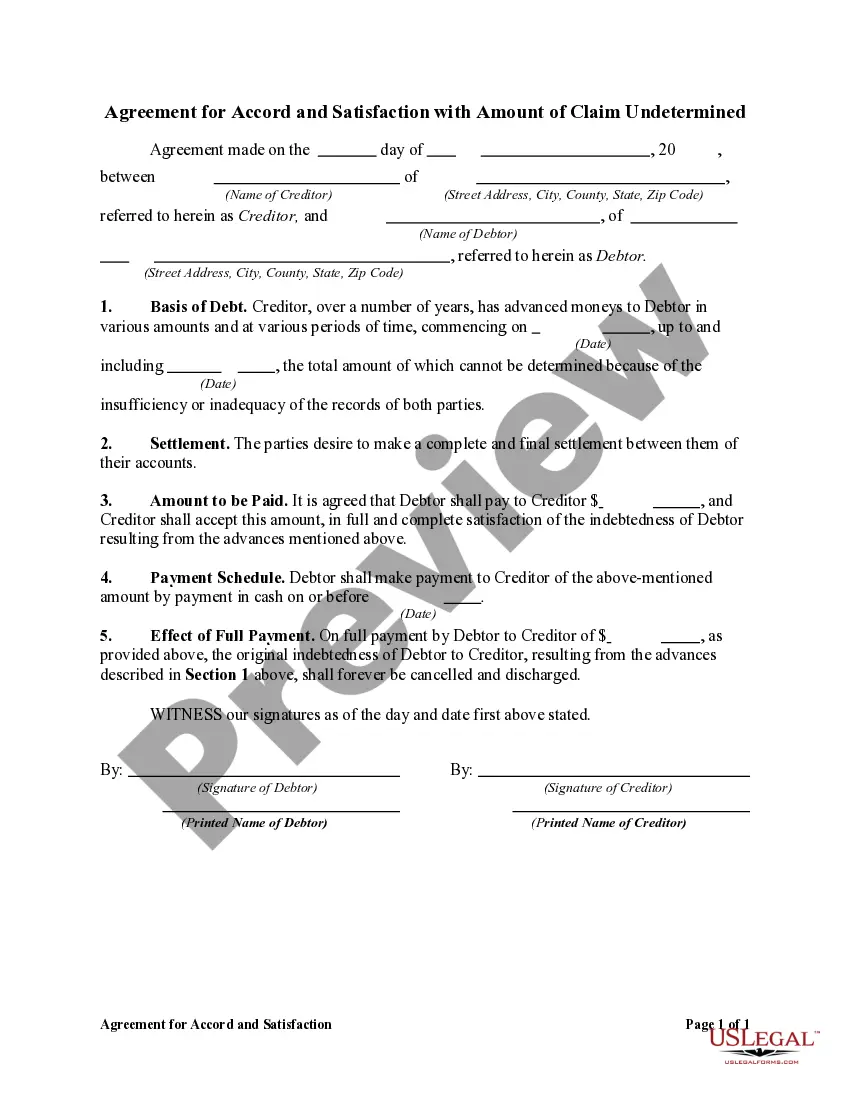
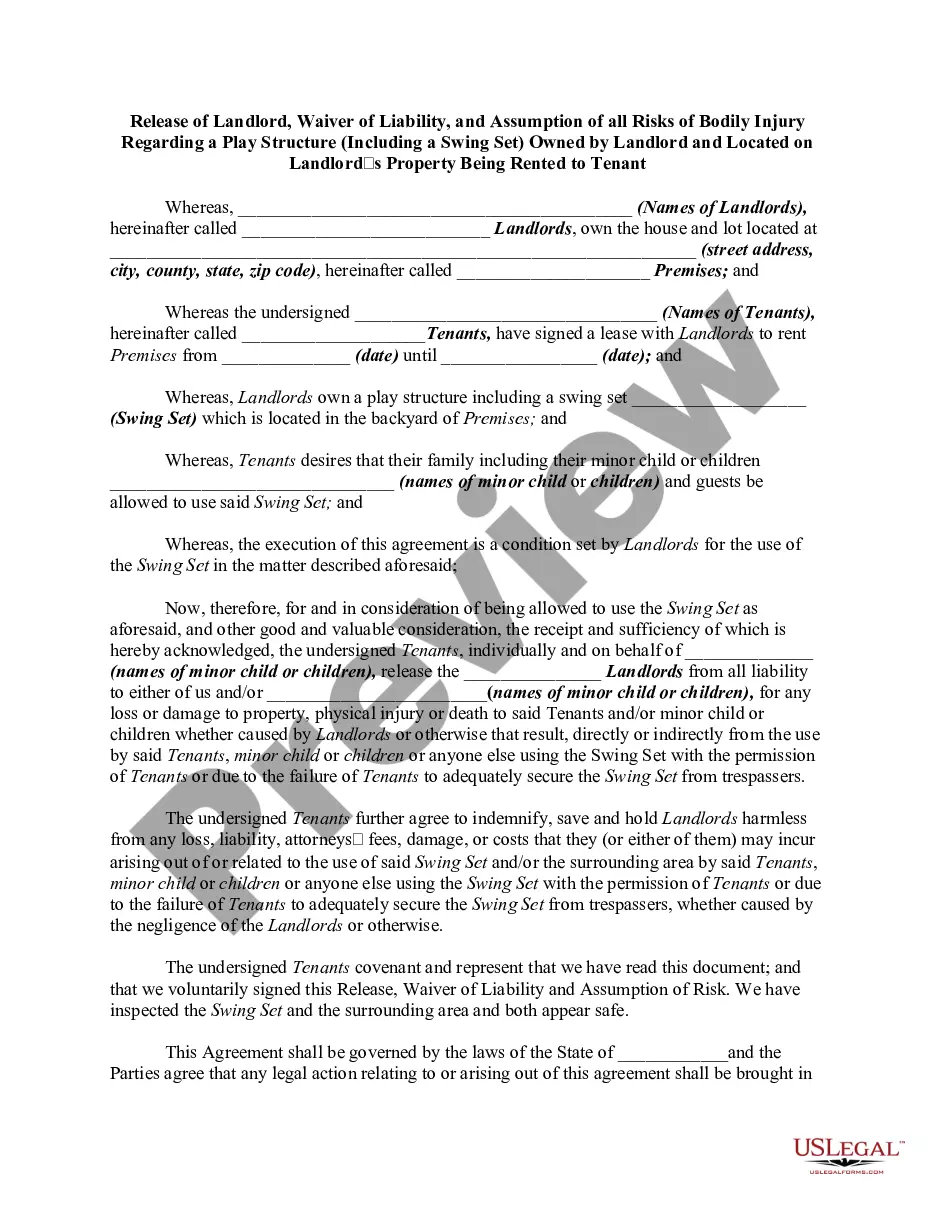
Agreement Satisfaction With Judgment In Houston
Description


Get your form ready online
Our built-in tools help you complete, sign, share, and store your documents in one place.
Make edits, fill in missing information, and update formatting in US Legal Forms—just like you would in MS Word.
Download a copy, print it, send it by email, or mail it via USPS—whatever works best for your next step.
Sign and collect signatures with our SignNow integration. Send to multiple recipients, set reminders, and more. Go Premium to unlock E-Sign.
If this form requires notarization, complete it online through a secure video call—no need to meet a notary in person or wait for an appointment.
We protect your documents and personal data by following strict security and privacy standards.

Make edits, fill in missing information, and update formatting in US Legal Forms—just like you would in MS Word.

Download a copy, print it, send it by email, or mail it via USPS—whatever works best for your next step.

Sign and collect signatures with our SignNow integration. Send to multiple recipients, set reminders, and more. Go Premium to unlock E-Sign.

If this form requires notarization, complete it online through a secure video call—no need to meet a notary in person or wait for an appointment.

We protect your documents and personal data by following strict security and privacy standards.
Looking for another form?







Form popularity
FAQ
Once a court judgment is entered against you, creditors can access powerful debt collection tools they weren't previously able to use, like wage garnishment. In many cases, this means they can begin collection efforts right away. This could include garnishing your wages, freezing your bank account, or seizing property.
You are judgment proof if: You do not own anything of great value aside from exempt property like your homestead, a vehicle, household items and tools of your trade. Your income is from a protected (exempt) source.
Do judgments expire in Texas? Judgments awarded in Texas to a non-government creditor are generally valid for ten years but can be renewed for longer. If a judgment is not renewed, it will become dormant. A creditor can request to revive a dormant judgment to continue to try and collect the debt.
Short Answer, 10 Years. If handled properly, a Texas judgment can exist indefinitely. But the creditor must be vigilant.
You must file a Motion to Set Aside Default Judgment and Notice of Hearing within 30 days of the date the default judgment was signed by the judge. See Texas Rule of Civil Procedure 329(b). In Justice Court, the deadline is 14 days.
Satisfaction is the fulfillment of an obligation . The term is often used in the context of contract law when one performs their duties under the contract. The term is also often found in the context of judgments in determining whether a party discharged their liability from a judgment. For example, in Lovejoy v.
Under the common-law one-satisfaction rule, a plaintiff is entitled to only one recovery for any damages suffered.
This means that, after you “win” part or all of your case and you obtain a judgment, you and your attorney will want to make sure that the judge signed the judgment or order, and that the clerk enters the order or judgment on the register of actions. This is the only way to ensure you can perfect the judgment.
Satisfied judgments make it easier to get loans. They still hurt your credit score under the FICO formulas used for home loans, car loans, and credit card applications.
Judgments may be classified as in personam, in rem, or quasi in rem. An in personam, or personal, judgment, the type most commonly rendered by courts, imposes a personal liability or obligation upon a person or group to some other person or group.
