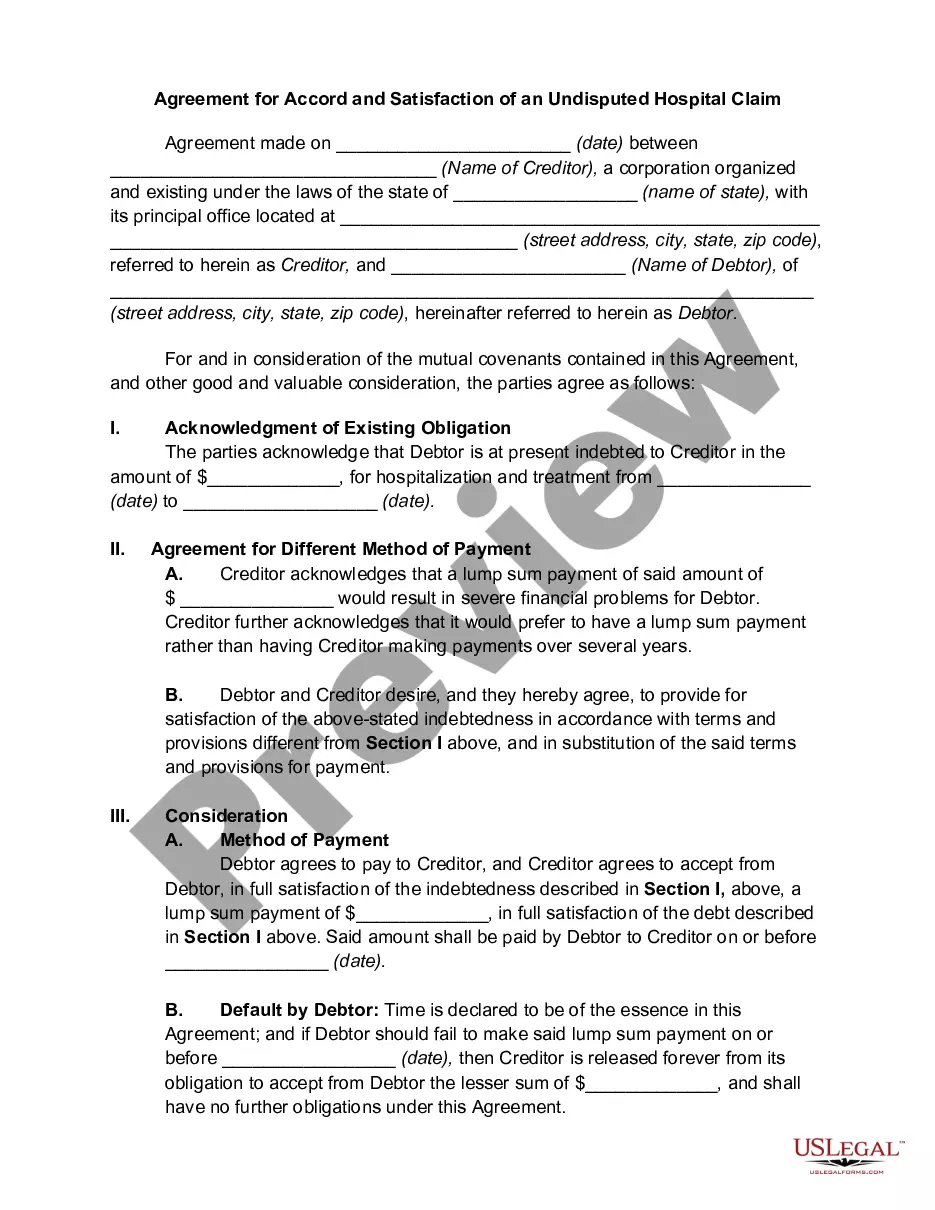
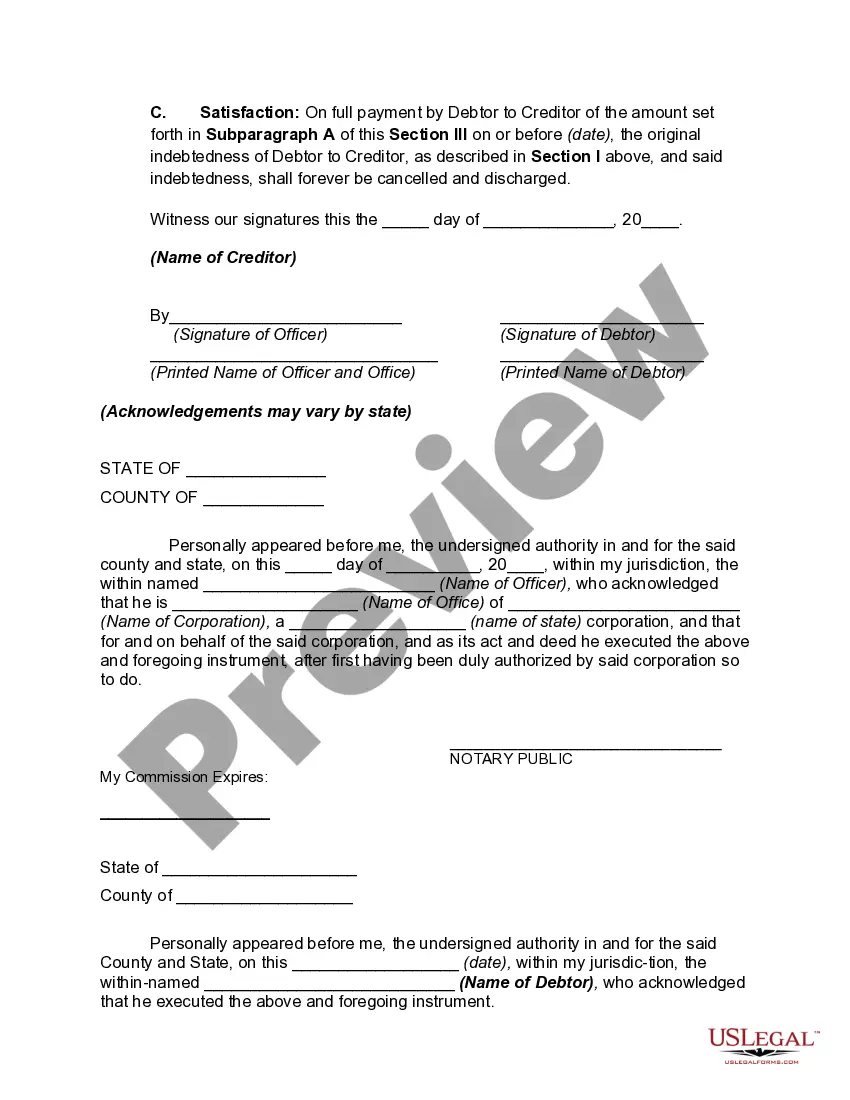
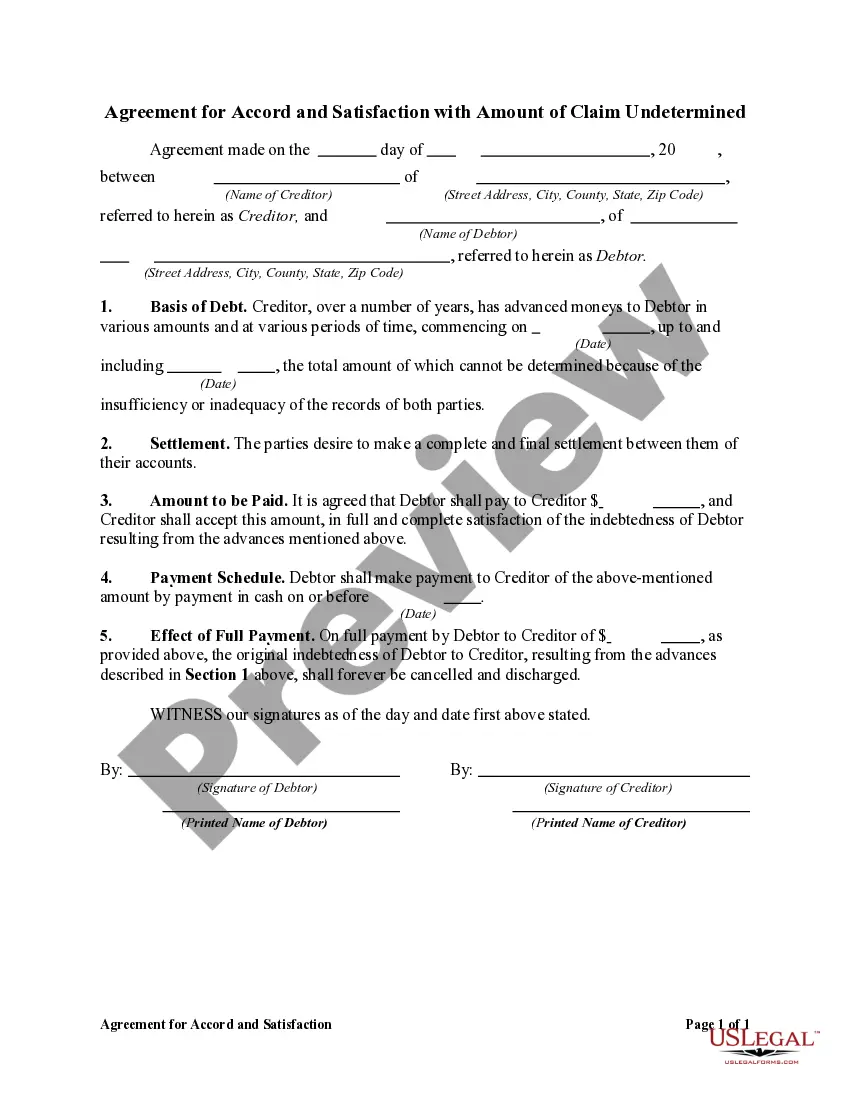
Agreement Satisfaction With Judgment In Fairfax
Description


Get your form ready online
Our built-in tools help you complete, sign, share, and store your documents in one place.
Make edits, fill in missing information, and update formatting in US Legal Forms—just like you would in MS Word.
Download a copy, print it, send it by email, or mail it via USPS—whatever works best for your next step.
Sign and collect signatures with our SignNow integration. Send to multiple recipients, set reminders, and more. Go Premium to unlock E-Sign.
If this form requires notarization, complete it online through a secure video call—no need to meet a notary in person or wait for an appointment.
We protect your documents and personal data by following strict security and privacy standards.

Make edits, fill in missing information, and update formatting in US Legal Forms—just like you would in MS Word.

Download a copy, print it, send it by email, or mail it via USPS—whatever works best for your next step.

Sign and collect signatures with our SignNow integration. Send to multiple recipients, set reminders, and more. Go Premium to unlock E-Sign.

If this form requires notarization, complete it online through a secure video call—no need to meet a notary in person or wait for an appointment.

We protect your documents and personal data by following strict security and privacy standards.
Looking for another form?









Form popularity
FAQ
Property Liens and Seizure If a judgment is entered against you in Virginia, creditors may use various legal tools to collect the debt, including placing liens on your property or seizing your assets. Understanding how liens work and your rights regarding potential seizure is crucial for protecting your interests.
In Virginia, a judgment is good for 20 years. During that 20 year period, the judgment can be renewed for another 20 years. This means a judgment can stay on record and be good for up to 40 years.
In Virginia, the validity of a judgment depends on the court that issued it: General District Court (GDC) Judgments: Valid for 10 years and can be extended once for another 10 years. These are typically the result of a creditor filing a warrant in debt in the court.
2. In civil actions that result in a judgment, all documents in the possession of the general district court shall be retained for 10 years and, unless sooner satisfied, the judgment shall remain in force for a period of 10 years; 3.
How Do I Collect on a Judgment: The Debt Collection Process in... Locate the debtor's assets (as many as possible) Attach the judgment to the assets by placing a lien on the assets (called a “judgment lien”) Obtain the assets to satisfy the judgment (the process of liquidation or foreclosure).
If a judgment has been entered against you, there are a few options available to you. These include paying the judgment, appealing the case, or filing a motion to rehear. If you fail to act, a number of other actions initiated by the Judgment Creditor may occur.
