Denied Claim Agreement With Mexico In San Antonio
Description
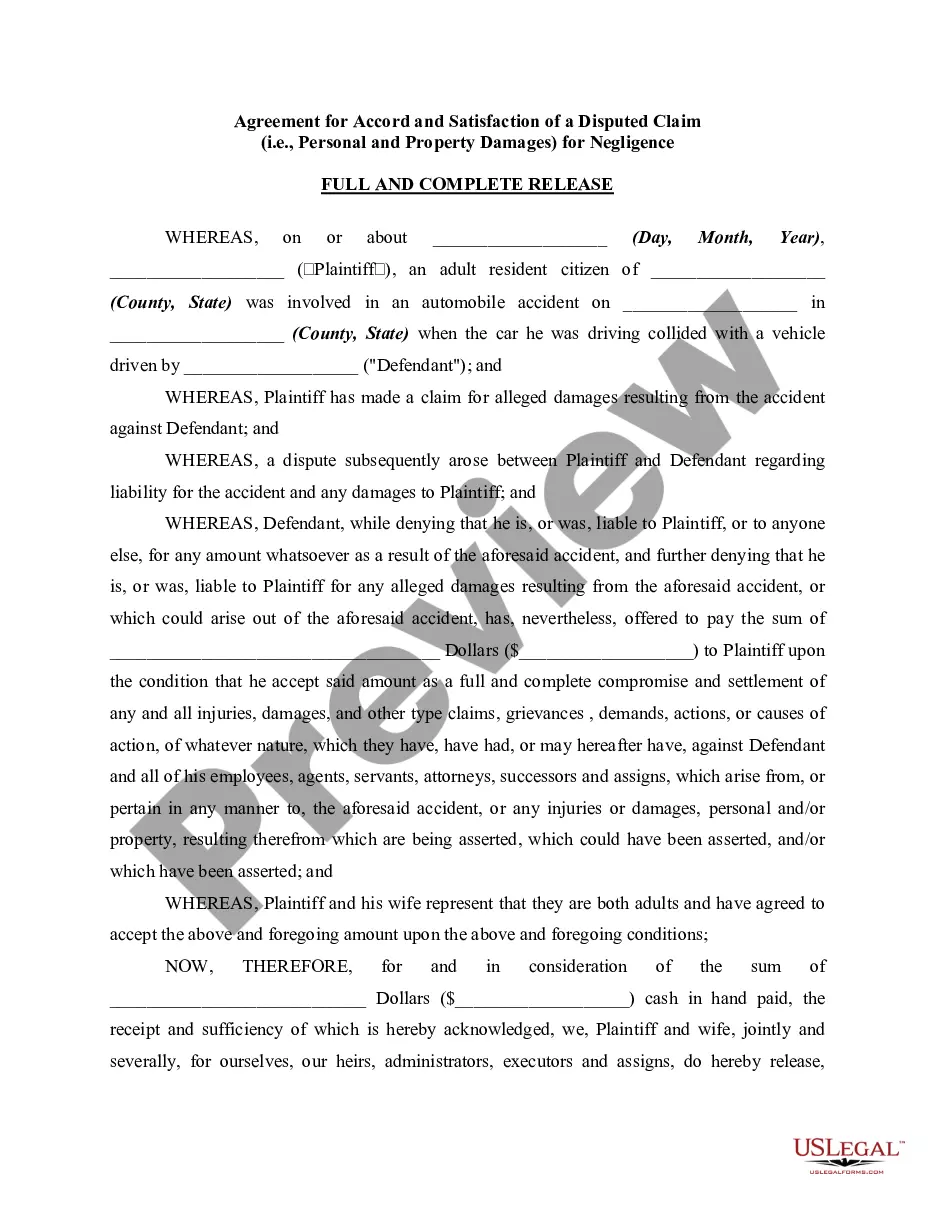
Get your form ready online
Our built-in tools help you complete, sign, share, and store your documents in one place.
Make edits, fill in missing information, and update formatting in US Legal Forms—just like you would in MS Word.
Download a copy, print it, send it by email, or mail it via USPS—whatever works best for your next step.
Sign and collect signatures with our SignNow integration. Send to multiple recipients, set reminders, and more. Go Premium to unlock E-Sign.
If this form requires notarization, complete it online through a secure video call—no need to meet a notary in person or wait for an appointment.
We protect your documents and personal data by following strict security and privacy standards.

Make edits, fill in missing information, and update formatting in US Legal Forms—just like you would in MS Word.

Download a copy, print it, send it by email, or mail it via USPS—whatever works best for your next step.

Sign and collect signatures with our SignNow integration. Send to multiple recipients, set reminders, and more. Go Premium to unlock E-Sign.

If this form requires notarization, complete it online through a secure video call—no need to meet a notary in person or wait for an appointment.

We protect your documents and personal data by following strict security and privacy standards.
Looking for another form?
Form popularity
FAQ
Feeling threatened by the native groups, and worried that the United States would try to take Texas, the Mexican government moved to enact policies to move more settlers into the area to help implement control over the region.
Expert-Verified⬈(opens in a new tab) Mexico offered land in Texas to promote settlement and economic development after gaining independence from Spain. They believed American settlers could boost the population, agriculture, and integrate culture in the region.
Under the 1944 treaty that outlines water sharing between the two countries through a network of interconnected dams and reservoirs, Mexico must send 1.75m acre-feet of water to the US from the Rio Grande every five years. An acre-foot of water is enough to fill about half an Olympic swimming pool.
Protestantism came to Texas with the first American settlers Mexico allowed into the state in 1821. Although these immigrants were required to adopt Catholicism as Mexican citizens, Mexico tolerated their Protestantism, and by 1833 Methodists, Presbyterians, and Baptists had established churches.
Mexico's policy to encourage American settlement in Texas was a mistake because it failed to integrate the settlers due to cultural differences, political tensions, and economic conflicts. These issues ultimately fueled a desire for independence among Texans, leading to their secession from Mexico in 1836.
Lands along the Rio Grande had been owned by Mexican families for centuries when the Treaty of Guadalupe Hidalgo moved the border over them. In the decades that followed, Mexican land owners were slowly pushed out as Anglo farmers and ranchers came to dominate the region.
The execution of the treaty was generally satisfactory to both sides, except for its requirement that the United States prevent Indian raids into Mexico, an almost impossible task on a long, unsettled frontier.
This was known as the Mexican Cession and included present-day Arizona and New Mexico and parts of Utah, Nevada, and Colorado (see Article V of the treaty). Mexico also relinquished all claims to Texas and recognized the Rio Grande as the southern boundary with the United States (see Article V).
The Treaty of Guadalupe Hidalgo, which brought an official end to the Mexican-American War (1846-48), was signed on February 2, 1848, at Guadalupe Hidalgo, a city to which the Mexican government had fled with the advance of U.S. forces.
Under the terms of the treaty, Mexico ceded to the United States approximately 525,000 square miles (55% of its prewar territory) in exchange for a $15 million lump sum payment, and the assumption by the U.S. Government of up to $3.25 million worth of debts owed by Mexico to U.S. citizens.
