Denied Claim Agreement With Canada In Pima
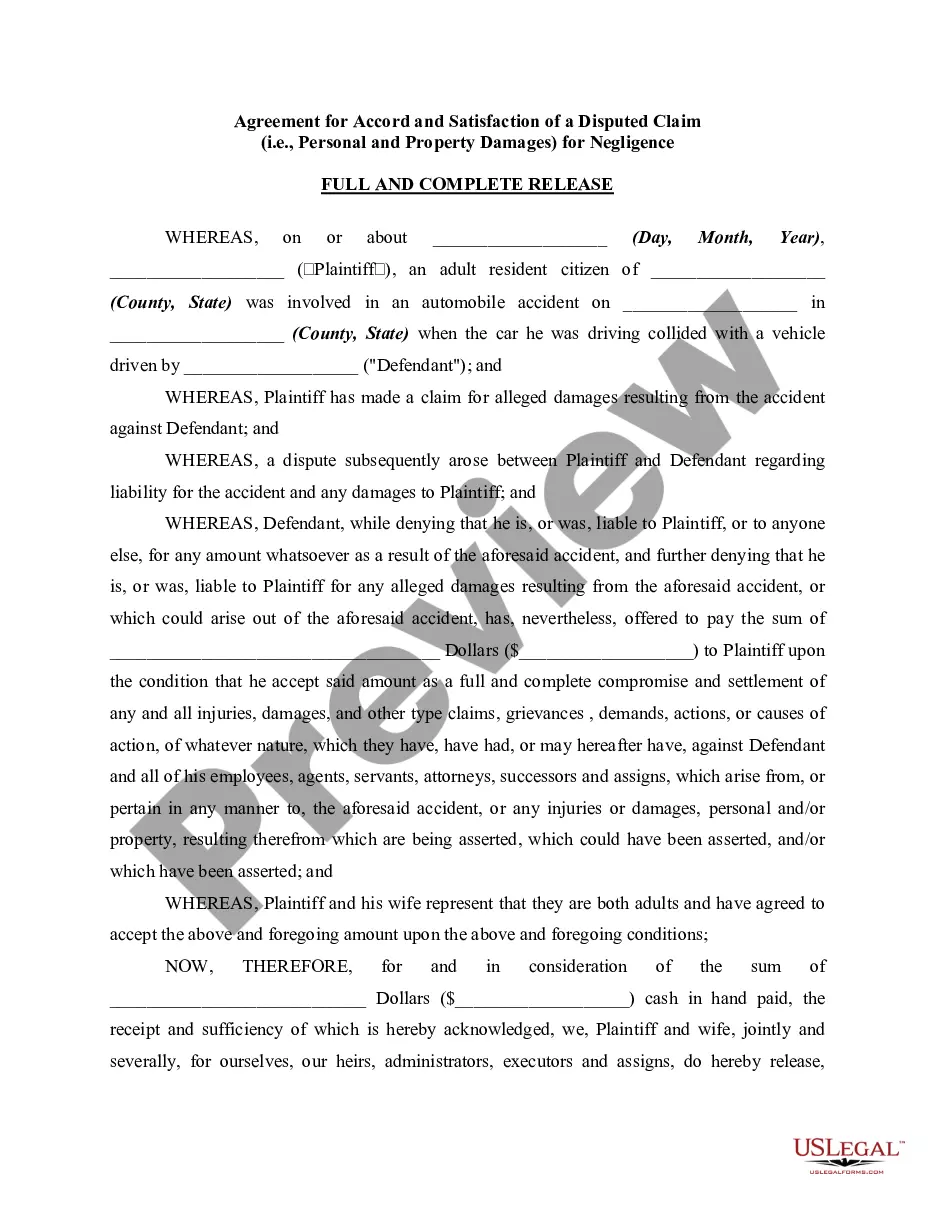
Description
Get your form ready online
Our built-in tools help you complete, sign, share, and store your documents in one place.
Make edits, fill in missing information, and update formatting in US Legal Forms—just like you would in MS Word.
Download a copy, print it, send it by email, or mail it via USPS—whatever works best for your next step.
Sign and collect signatures with our SignNow integration. Send to multiple recipients, set reminders, and more. Go Premium to unlock E-Sign.
If this form requires notarization, complete it online through a secure video call—no need to meet a notary in person or wait for an appointment.
We protect your documents and personal data by following strict security and privacy standards.

Make edits, fill in missing information, and update formatting in US Legal Forms—just like you would in MS Word.

Download a copy, print it, send it by email, or mail it via USPS—whatever works best for your next step.

Sign and collect signatures with our SignNow integration. Send to multiple recipients, set reminders, and more. Go Premium to unlock E-Sign.

If this form requires notarization, complete it online through a secure video call—no need to meet a notary in person or wait for an appointment.

We protect your documents and personal data by following strict security and privacy standards.
Looking for another form?









Form popularity
FAQ
The specific claims process commences when a First Nation claimant presents a claim to the Minister of Crown-Indigenous Relations, for a determination on whether the claim will be accepted for negotiation. The claim is reviewed by the Specific Claims Branch of the Ministry.
The Dominion Lands Act imposed a standard measure for surveying, subdividing and settling the prairies: land had to be located through cadastral surveys; individuals had to show that their land was improved upon and had increased in value or use by constructing a dwelling or cultivating the land; letters patent would ...
If we refuse your application to come to Canada, you can apply again at any time, unless your decision letter says you can't. You should only apply again if you can include information that you didn't include before.
The Government of Canada started recognizing Indigenous land claims in 1973. Federal policy divided the claims in two categories: comprehensive claims and specific claims.
Claims are resolved once and for all through negotiated settlements or by a decision of the Specific Claims Tribunal. Claims that are not accepted for negotiation, for example, could be referred to the Specific Claims Tribunal or reassessed at some later point by Canada in the context of evolving case law.

