Loan Corporate Resolution Without Dissent In Oakland
Description

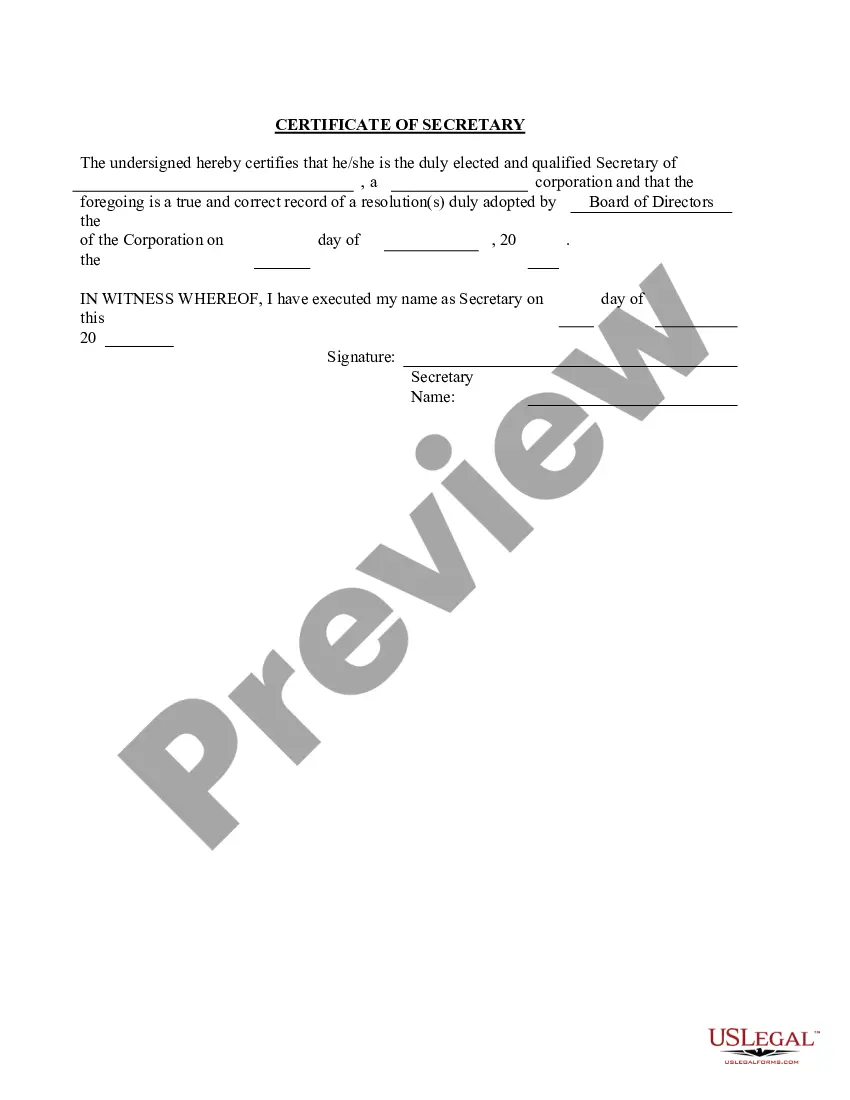
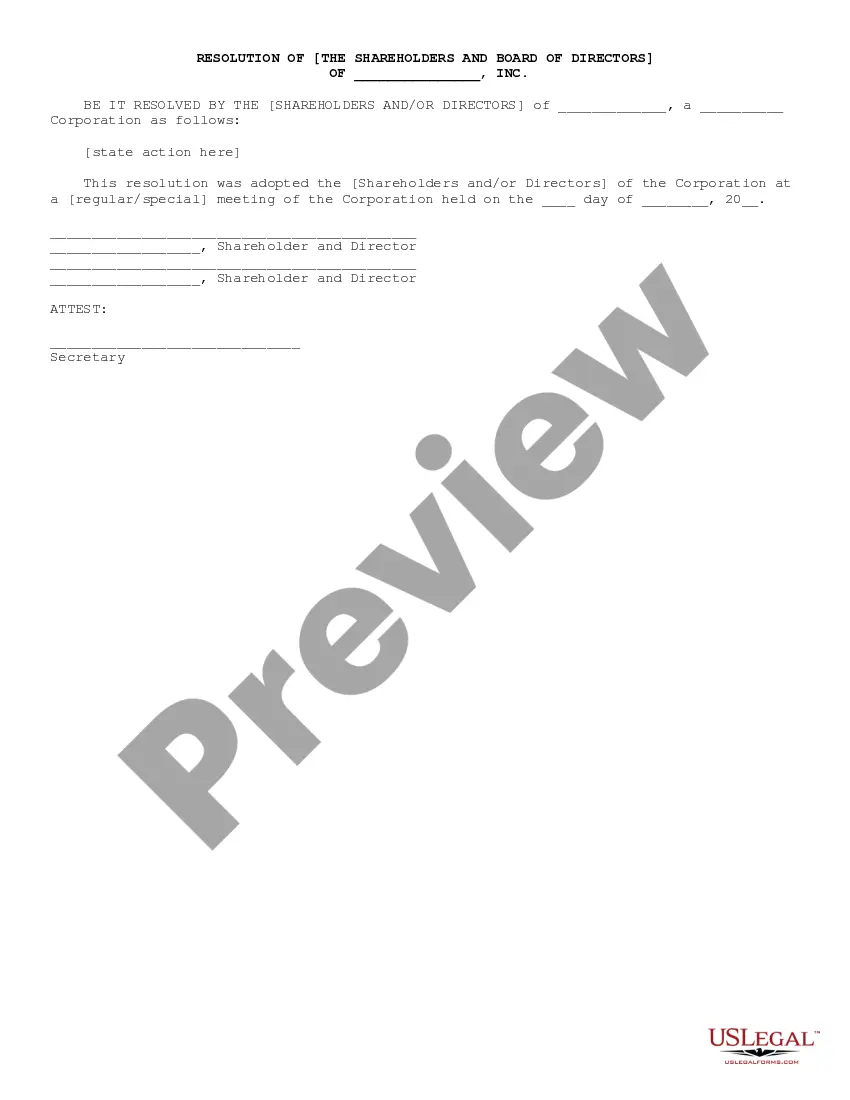
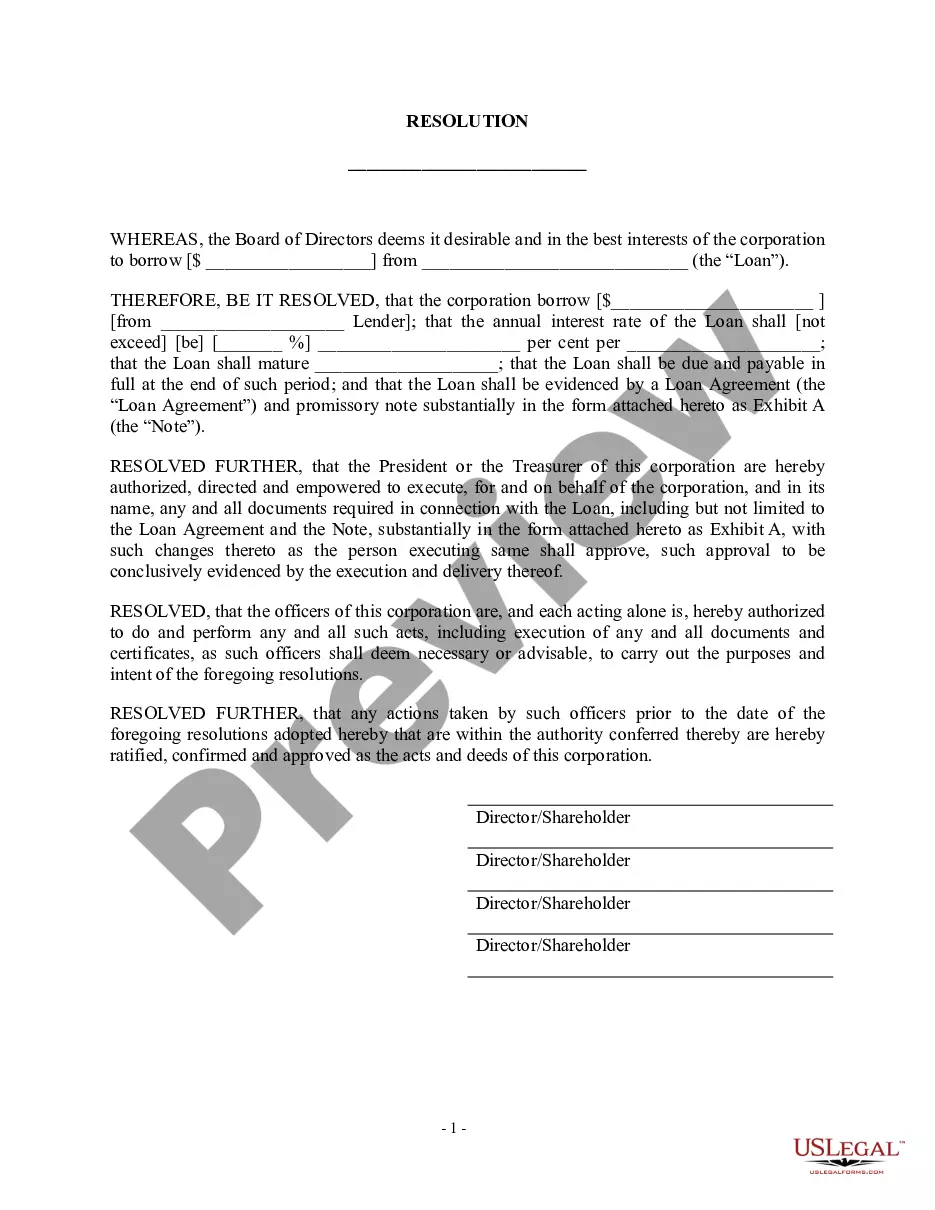

Get your form ready online
Our built-in tools help you complete, sign, share, and store your documents in one place.
Make edits, fill in missing information, and update formatting in US Legal Forms—just like you would in MS Word.
Download a copy, print it, send it by email, or mail it via USPS—whatever works best for your next step.
Sign and collect signatures with our SignNow integration. Send to multiple recipients, set reminders, and more. Go Premium to unlock E-Sign.
If this form requires notarization, complete it online through a secure video call—no need to meet a notary in person or wait for an appointment.
We protect your documents and personal data by following strict security and privacy standards.

Make edits, fill in missing information, and update formatting in US Legal Forms—just like you would in MS Word.

Download a copy, print it, send it by email, or mail it via USPS—whatever works best for your next step.

Sign and collect signatures with our SignNow integration. Send to multiple recipients, set reminders, and more. Go Premium to unlock E-Sign.

If this form requires notarization, complete it online through a secure video call—no need to meet a notary in person or wait for an appointment.

We protect your documents and personal data by following strict security and privacy standards.
Looking for another form?









Form popularity
FAQ
A resolution is a formal decision passed by the association in ance with its constitution, usually made at a general meeting or in a postal, electronic or combined ballot. There are two types of resolutions, ordinary and special.
A motion is passed by resolution without dissent only if there are no votes against the motion (i.e. there are no, “no” votes). If a voter abstains from voting, that is not included in the count of votes.
All decisions by members at a sectional title scheme are taken by means of resolutions. For this purpose, the Sectional Title Schemes Management Act (STSMA) defines three types of resolutions, i.e., ordinary resolutions, special resolutions and unanimous resolutions.
Required Agreements The Authorizing Resolutions for Borrowers evidences an institution's authorization to borrow from and pledge assets to a Reserve Bank.
A corporate resolution to open a business bank account is a document that clearly shows the bank who has the authority to start an account on behalf of your corporation. If this information isn't specifically covered in your Articles of Incorporation or bylaws, your bank may require a resolution.
In order for a special resolution to be passed at a General Meeting, a supermajority is required in favor of it. Supermajority refers to at least 75 percent of the members voting in favor of the resolution. The votes of the members eligible to vote will be the ones considered for the count.
A special resolution is a method of passing a company decision that requires at least 75% of the votes cast by shareholders to be in favour of it. The more 'ordinary' company decisions require an ordinary resolution to be passed.
A "special resolution" usually involves more important questions affecting the company as a whole or the rights of some or all of its shareholders. There are 2 ways that shareholders may pass a resolution: • at a meeting; or. • by having all of the shareholders record and sign their decision.
Ordinary resolution requires a simple majority vote (50% +1) while Special resolution requires a higher majority vote (typically 75% or more) Ordinary resolution is used for routine or regular matters while Special resolution is used for important or significant matters.
What is a resolution? A resolution is a formal decision passed by the association in ance with its constitution, usually made at a general meeting or in a postal, electronic or combined ballot. There are two types of resolutions, ordinary and special.
