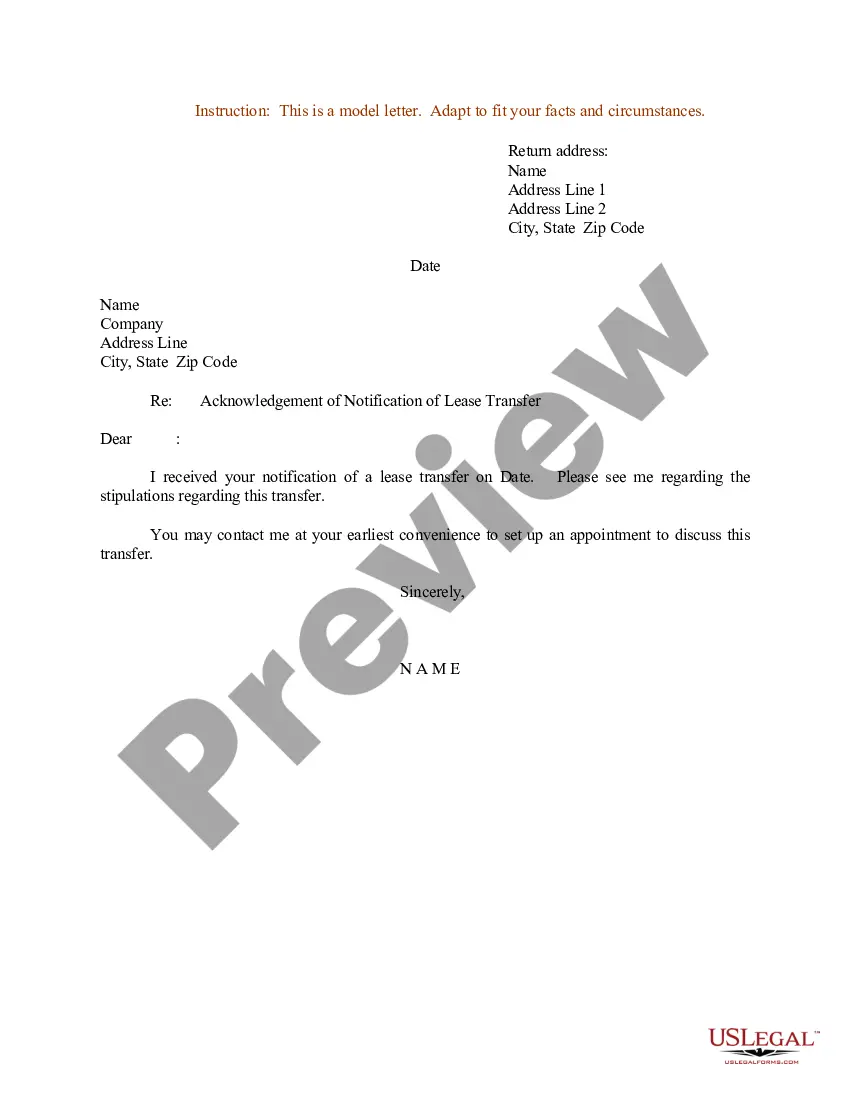
Letter Of Acknowledgement Format In Los Angeles
Description

Get your form ready online
Our built-in tools help you complete, sign, share, and store your documents in one place.
Make edits, fill in missing information, and update formatting in US Legal Forms—just like you would in MS Word.
Download a copy, print it, send it by email, or mail it via USPS—whatever works best for your next step.
Sign and collect signatures with our SignNow integration. Send to multiple recipients, set reminders, and more. Go Premium to unlock E-Sign.
If this form requires notarization, complete it online through a secure video call—no need to meet a notary in person or wait for an appointment.
We protect your documents and personal data by following strict security and privacy standards.

Make edits, fill in missing information, and update formatting in US Legal Forms—just like you would in MS Word.

Download a copy, print it, send it by email, or mail it via USPS—whatever works best for your next step.

Sign and collect signatures with our SignNow integration. Send to multiple recipients, set reminders, and more. Go Premium to unlock E-Sign.

If this form requires notarization, complete it online through a secure video call—no need to meet a notary in person or wait for an appointment.

We protect your documents and personal data by following strict security and privacy standards.
Looking for another form?



Form popularity
FAQ
The purpose of an acknowledgment is for a signer, whose identity has been verified, to declare to a Notary or notarial officer that he or she willingly signed the document. This acknowledgment wording is mandatory for all acknowledgments taken in the state. Pad of 100 certificates includes helpful how-to instructions.
The purpose of an acknowledgment is for a signer, whose identity has been verified, to declare to a Notary or notarial officer that he or she willingly signed the document. This acknowledgment wording is mandatory for all acknowledgments taken in the state. Pad of 100 certificates includes helpful how-to instructions.
Types of Acknowledgment Certificates Notary Acknowledgement. This type of acknowledgement is used to verify the identity of the signer and confirm that they have willingly signed the document. Jurat. A jurat is a type of notarization that requires the signer to swear or affirm the truthfulness of the document's contents.
A notary public may complete a certificate of acknowledgment required in another state or jurisdiction of the United States on documents to be filed in that other state or jurisdiction, provided the form does not require the notary public to determine or certify that the signer holds a particular representative ...
A notary acknowledgement ensures that the signer of the document is indeed the person named in the document. The function of the notary in this case is to verify the identity of the signer. On the other hand, a notary is asked to perform a Jurat, when the signer takes an oath or makes an affirmation.
An acknowledging receipt, also called an acknowledgment receipt, is a document that managers and supervisors primarily use to confirm that they've received a document, payment or another business-related item.
One of the most common mistakes that notaries make is not printing or signing their name exactly as it appears on their notary commission.
Acknowledgement forms help companies to keep track of the employees who have received and understood policies, both when they are first hired and as policies evolve over time. They're useful for policies in any area, but are particularly important where privacy, confidentiality, and information security are concerned.
Acknowledgement Form means the acknowledgement form provided by the Customer to the Supplier prior to the delivery of Products and/or Services, duly signed by the Supplier pursuant to which the Supplier acknowledges that it has received, read and understood the Health and Safety Requirements.
Acknowledgement forms help companies to keep track of the employees who have received and understood policies, both when they are first hired and as policies evolve over time. They're useful for policies in any area, but are particularly important where privacy, confidentiality, and information security are concerned.

