Domicile Meaning Law In Washington
Description
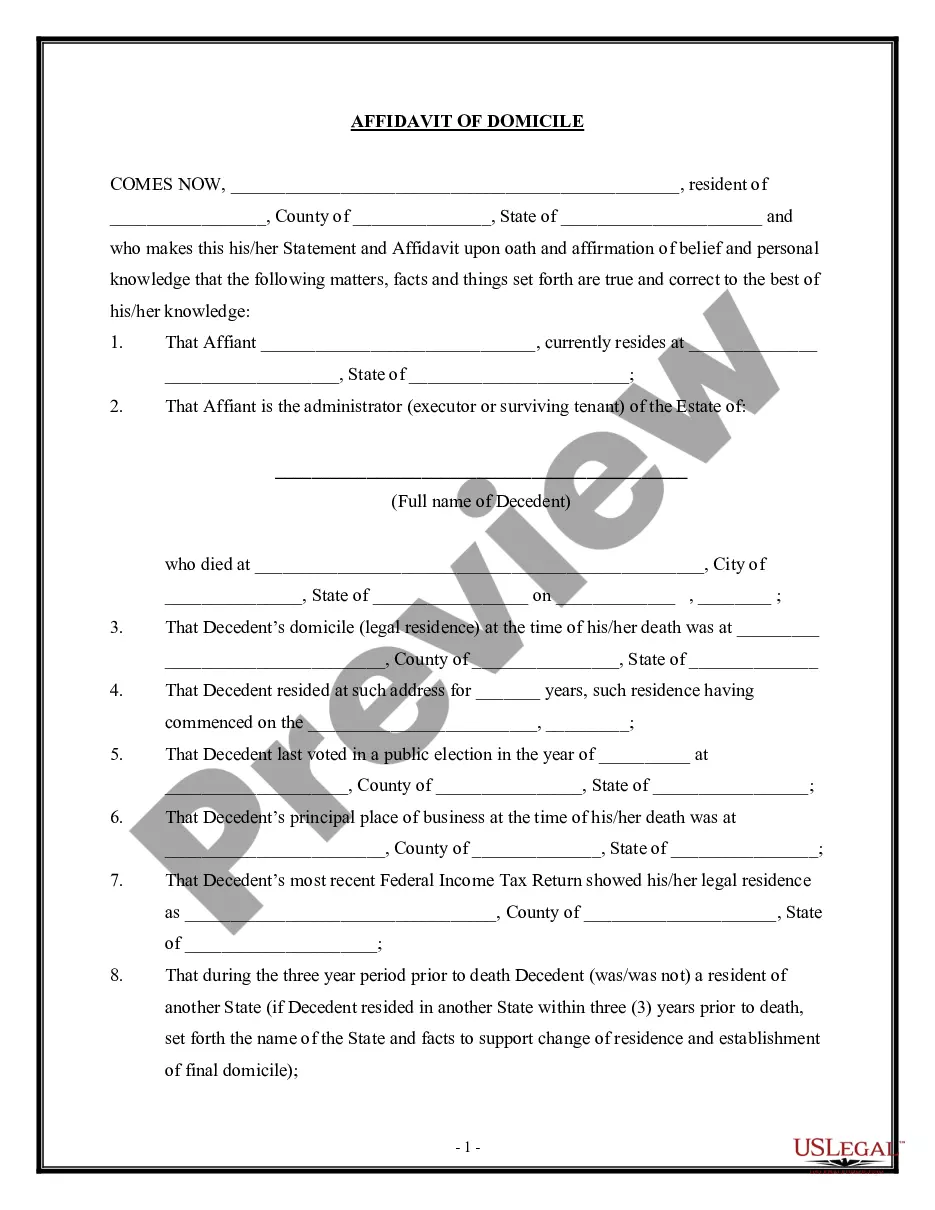
Get your form ready online
Our built-in tools help you complete, sign, share, and store your documents in one place.
Make edits, fill in missing information, and update formatting in US Legal Forms—just like you would in MS Word.
Download a copy, print it, send it by email, or mail it via USPS—whatever works best for your next step.
Sign and collect signatures with our SignNow integration. Send to multiple recipients, set reminders, and more. Go Premium to unlock E-Sign.
If this form requires notarization, complete it online through a secure video call—no need to meet a notary in person or wait for an appointment.
We protect your documents and personal data by following strict security and privacy standards.

Make edits, fill in missing information, and update formatting in US Legal Forms—just like you would in MS Word.

Download a copy, print it, send it by email, or mail it via USPS—whatever works best for your next step.

Sign and collect signatures with our SignNow integration. Send to multiple recipients, set reminders, and more. Go Premium to unlock E-Sign.

If this form requires notarization, complete it online through a secure video call—no need to meet a notary in person or wait for an appointment.

We protect your documents and personal data by following strict security and privacy standards.
Looking for another form?




Form popularity
FAQ
Check what documents you can use council tax bills. mortgage statements for a house or flat. your tenancy agreement and evidence you've made payments - for example a bank statement or receipt. annual bank statements or account summaries. payslips. water, gas or electricity bills.
An individual who is physically present and resides in Washington for at least 183 days and does not commute back to their state of residence will generally be considered to “reside” in Washington and is a Washington resident for WFTC residency purposes.
A legal resident is an individual who has relinquished all valid legal ties (e.g., driver's license, voter registration, vehicle registration, etc.) with their former state of residence and established such ties in Washington.
Domicile: If Washington is your primary, permanent home, you are considered a resident. Domicile means you live in the state with no intention of making another state your primary residence. Physical presence: Spending significant time in Washington, even without official documents, may establish residency.
If you take any of the following actions, you can fit the Washington definition of residency. Register to vote in the state of Washington. Get a Washington State driver's license. Maintain a residence for personal use. Buy property in the state for personal use.
If you take any of the following actions, you can fit the Washington definition of residency. Register to vote in the state of Washington. Get a Washington State driver's license. Maintain a residence for personal use. Buy property in the state for personal use.
Home utility or service document for a Washington address (e.g. bill, statement, hook-up order) Proof of home ownership (e.g. mortgage documents, property tax documents, deed, title) Homeowner's or renter's insurance policy. Washington voter card.
A domicile is a very formal/old-fashioned word for home: The structure where one lives. One's address is the index to the location of one's domicile: A description of where it is in terms of community, street name, and street number.
Your domicile is the state of your permanent home, or the state you consider your home whenever you are elsewhere. Your domicile is an important place. It is, for example, the place that usually has the power to tax your income or dissolve your marriage or distribute your property upon your death.
Domicile refers to the place you call home permanently. Your domicile is important for legal purposes such as paying taxes, voting, and claiming benefits. Residence and domicile have different legal definitions and are differentiated primarily by the length of time you plan to live in a specific location.

