Proof Of U.s. Domicile Sample In Cuyahoga
Description
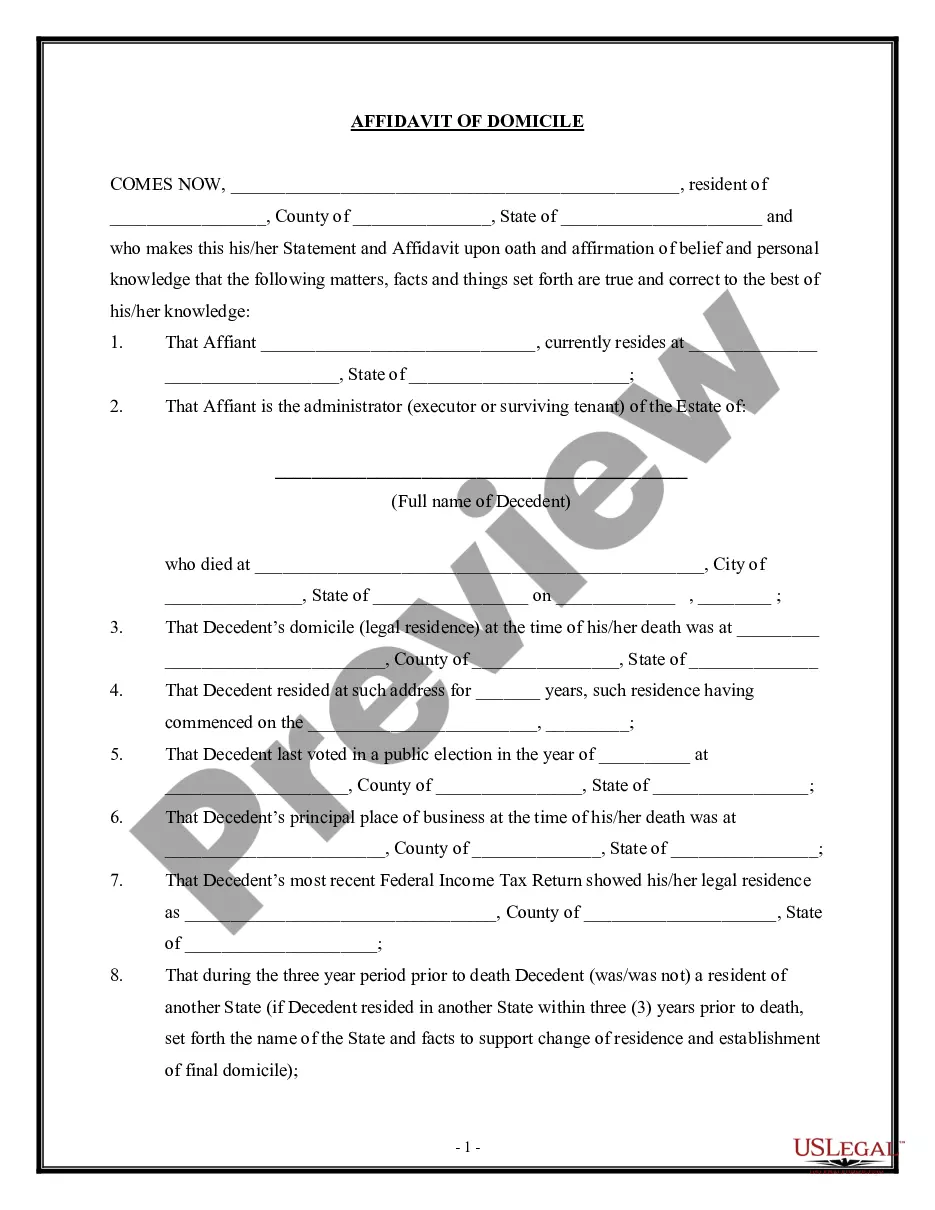
Get your form ready online
Our built-in tools help you complete, sign, share, and store your documents in one place.
Make edits, fill in missing information, and update formatting in US Legal Forms—just like you would in MS Word.
Download a copy, print it, send it by email, or mail it via USPS—whatever works best for your next step.
Sign and collect signatures with our SignNow integration. Send to multiple recipients, set reminders, and more. Go Premium to unlock E-Sign.
If this form requires notarization, complete it online through a secure video call—no need to meet a notary in person or wait for an appointment.
We protect your documents and personal data by following strict security and privacy standards.

Make edits, fill in missing information, and update formatting in US Legal Forms—just like you would in MS Word.

Download a copy, print it, send it by email, or mail it via USPS—whatever works best for your next step.

Sign and collect signatures with our SignNow integration. Send to multiple recipients, set reminders, and more. Go Premium to unlock E-Sign.

If this form requires notarization, complete it online through a secure video call—no need to meet a notary in person or wait for an appointment.

We protect your documents and personal data by following strict security and privacy standards.
Looking for another form?
Form popularity
FAQ
Key elements for a standard Affidavit of Support include the sponsor's personal and employment information, financial details, and the beneficiary's details. Be aware of common mistakes, like forgetting to sign the document or presenting outdated financial records that can lead to rejection.
The following are six critical sections that must be included: Title. This is either your name (“Affidavit of Jane Doe”) or the specific case information. Statement of identity. The next paragraph tells the court about yourself. Statement of truth. Statement of facts. Closing statement of truth. Sign and notarize.
Your domicile is the state of your permanent home, or the state you consider your home whenever you are. elsewhere. Your domicile is an important place.
If you are living outside the United States, you will need to prove that you have significant ties to the U.S., or that you plan to re-establish domicile. Under some circumstances, if you've been living abroad but have been working for certain U.S. organizations, you may still be eligible to claim U.S. domicile.
How to: Write a Relationship Affidavit Your name and your contact information (address, phone number); An explanation about how you know the people that you're writing about; A story or two that shows that you've personally witnessed the relationship in action; A notarized stamp with your signature and the date.
In your Affidavit, you'll want to cover information like: the name of the affiant (that is, the person making the affidavit); a list of all sources of income; the name of the affiant's employer, and if unemployed, what efforts the affiant has made to find employment; the monthly deductions from the affiant's salary or ...
Key elements for a standard Affidavit of Support include the sponsor's personal and employment information, financial details, and the beneficiary's details. Be aware of common mistakes, like forgetting to sign the document or presenting outdated financial records that can lead to rejection.
A voting record in the United States. Records of paying U.S. state or local taxes. Having property in the United States. Maintaining bank or investment accounts in the United States.
Domicile of choice can be achieved by intention and residence. This means that if an individual is living in a country and leaves it with the intention to return, then they will not have a domicile in the country they went to; instead, their domicile of origin will remain.

