Domicile For Meaning In Cuyahoga
Description
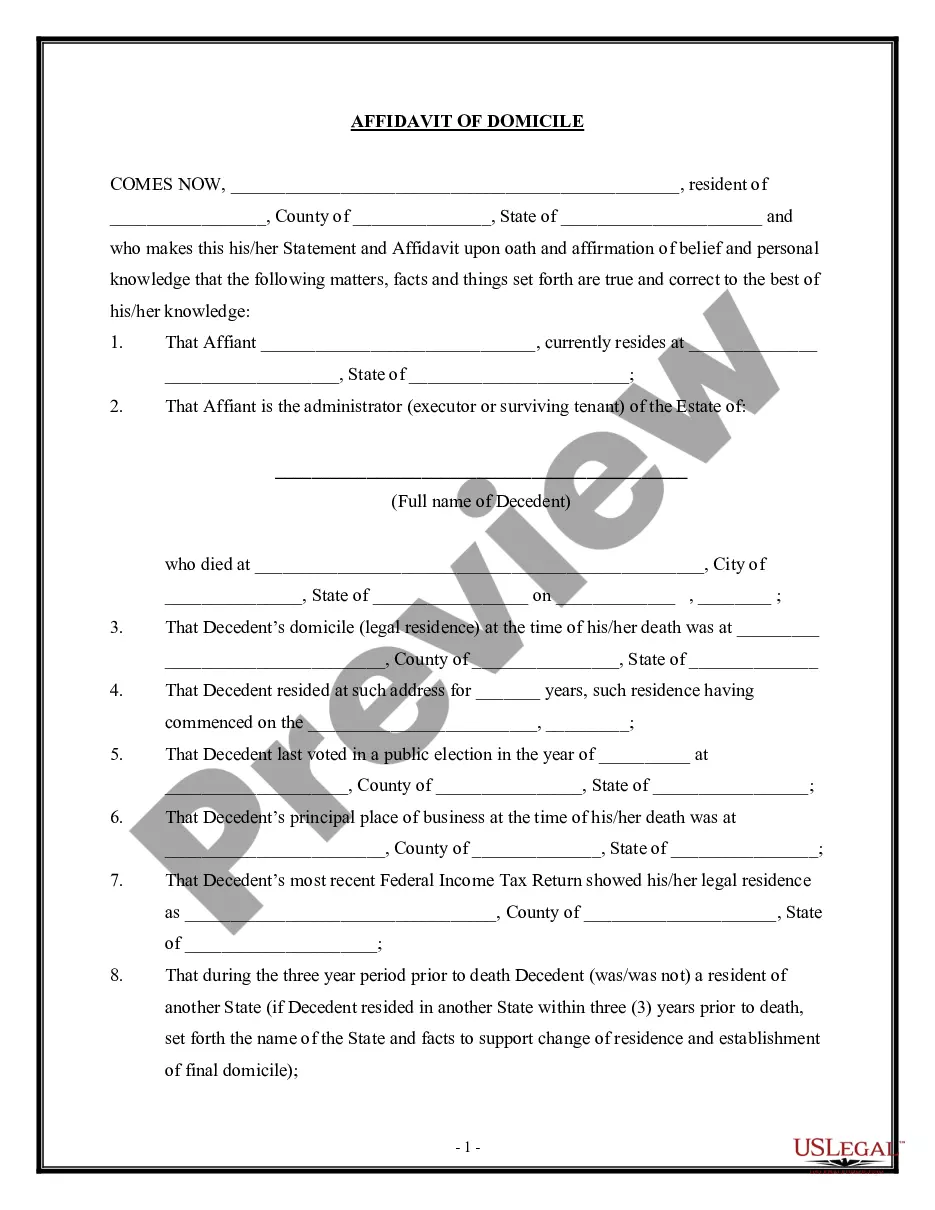
Get your form ready online
Our built-in tools help you complete, sign, share, and store your documents in one place.
Make edits, fill in missing information, and update formatting in US Legal Forms—just like you would in MS Word.
Download a copy, print it, send it by email, or mail it via USPS—whatever works best for your next step.
Sign and collect signatures with our SignNow integration. Send to multiple recipients, set reminders, and more. Go Premium to unlock E-Sign.
If this form requires notarization, complete it online through a secure video call—no need to meet a notary in person or wait for an appointment.
We protect your documents and personal data by following strict security and privacy standards.

Make edits, fill in missing information, and update formatting in US Legal Forms—just like you would in MS Word.

Download a copy, print it, send it by email, or mail it via USPS—whatever works best for your next step.

Sign and collect signatures with our SignNow integration. Send to multiple recipients, set reminders, and more. Go Premium to unlock E-Sign.

If this form requires notarization, complete it online through a secure video call—no need to meet a notary in person or wait for an appointment.

We protect your documents and personal data by following strict security and privacy standards.
Looking for another form?







Form popularity
FAQ
Your domicile is the state of your permanent home, or the state you consider your home whenever you are elsewhere. Your domicile is an important place. It is, for example, the place that usually has the power to tax your income or dissolve your marriage or distribute your property upon your death.
WHAT'S THE DIFFERENCE BETWEEN RESIDENCY AND DOMICILE? Residency is where one chooses to live. Domicile is more permanent and is essentially somebody's home base.
1. : the place where an individual has a fixed and permanent home for legal purposes. called also legal residence.
Residency refers to where you currently live, while domicile refers to the place you intend to return to after a temporary absence.
Basically the terms “domicile” and “legal residence” refer to the same place – the state you consider your permanent home. On the other hand, your “residence” is simply where you are living at a particular time.
However, domicile is meant to refer to a place of intended permanent residence and a residence could be another place of dwelling where you might live, and even live with some frequency, but do not intend to make your permanent residence.
Ohio law permits an adult parent of a minor, a guardian of a minor, or guardian ad litem for a minor to apply to the Probate Court for a name change for the minor by filing an Application with the Court. The filing must be made in person.
Rule 71.1 – Attorney Fees in Decedent's Estates. Attorney fees are governed by the Rules of Professional Conduct and the Rules of Superintendence adopted by the Supreme Court of Ohio. The Court has the ultimate responsibility and authority to review attorney fees in decedent's estates as required by such rules.
You must be a resident of the county where you are requesting your name change for at least 60 days. Reason. You must have a valid reason to change your name (this can include personal preference). If your reason is to avoid debt or other obligations, you cannot change your name.
To change the name of a minor child in India, the process involves: Submitting a notarized affidavit stating the current and new name, reason for the change. Publishing a notice regarding the name change in local newspapers. Filing a petition with the court requesting a name change. Attending a court hearing.

