Promissory Note With Balloon Payment Formula
Description

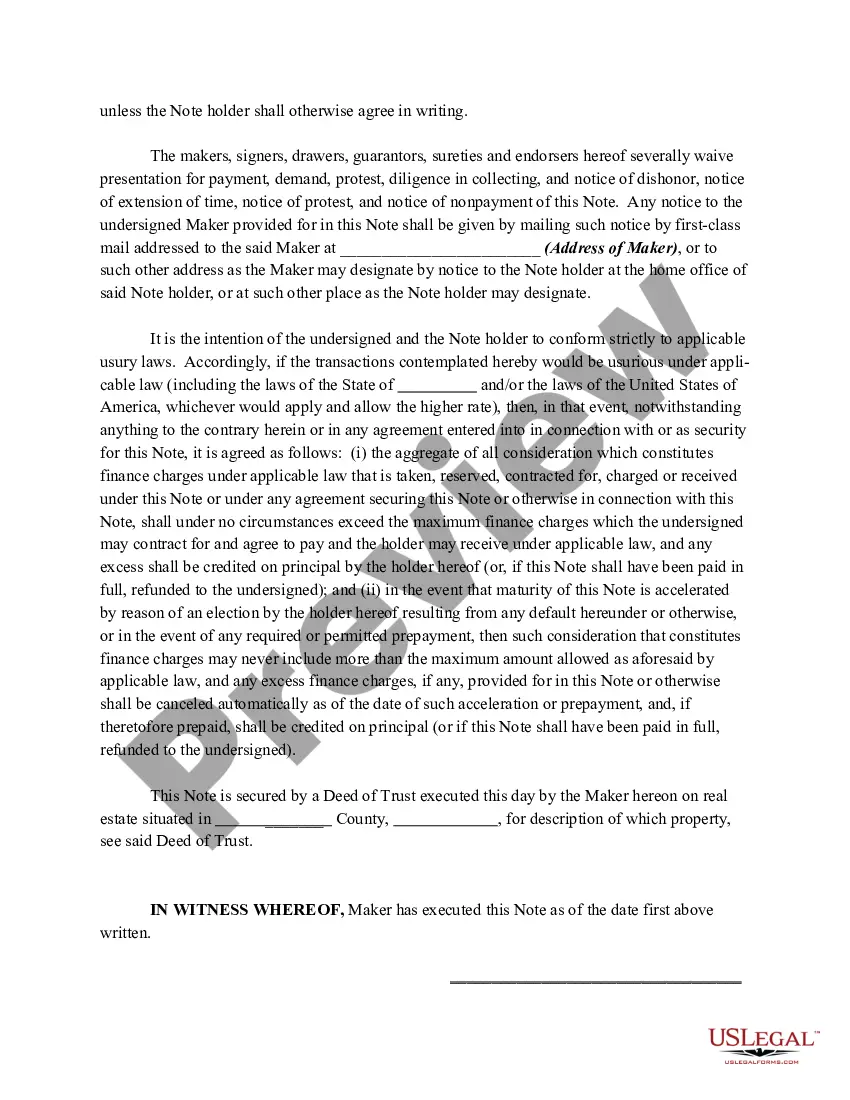
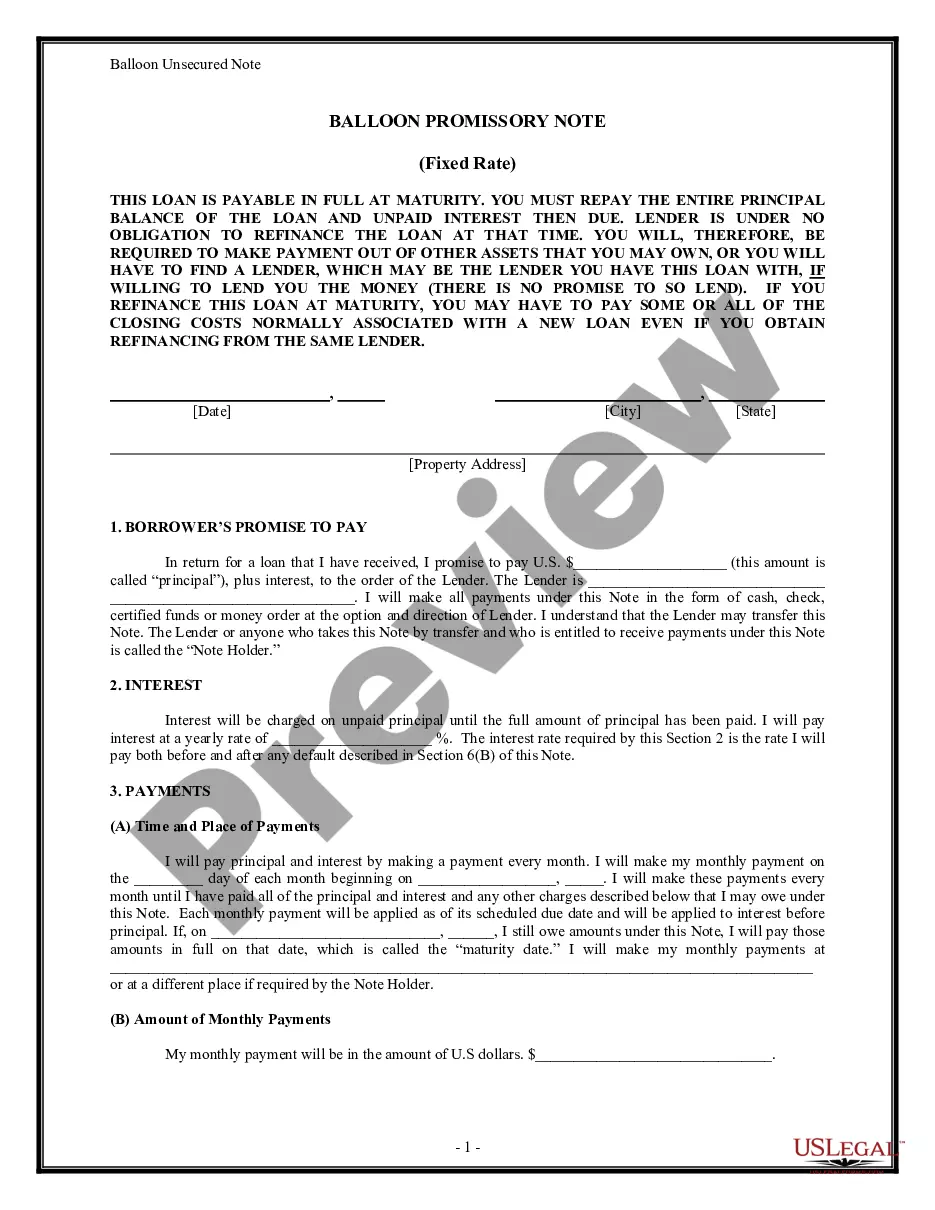
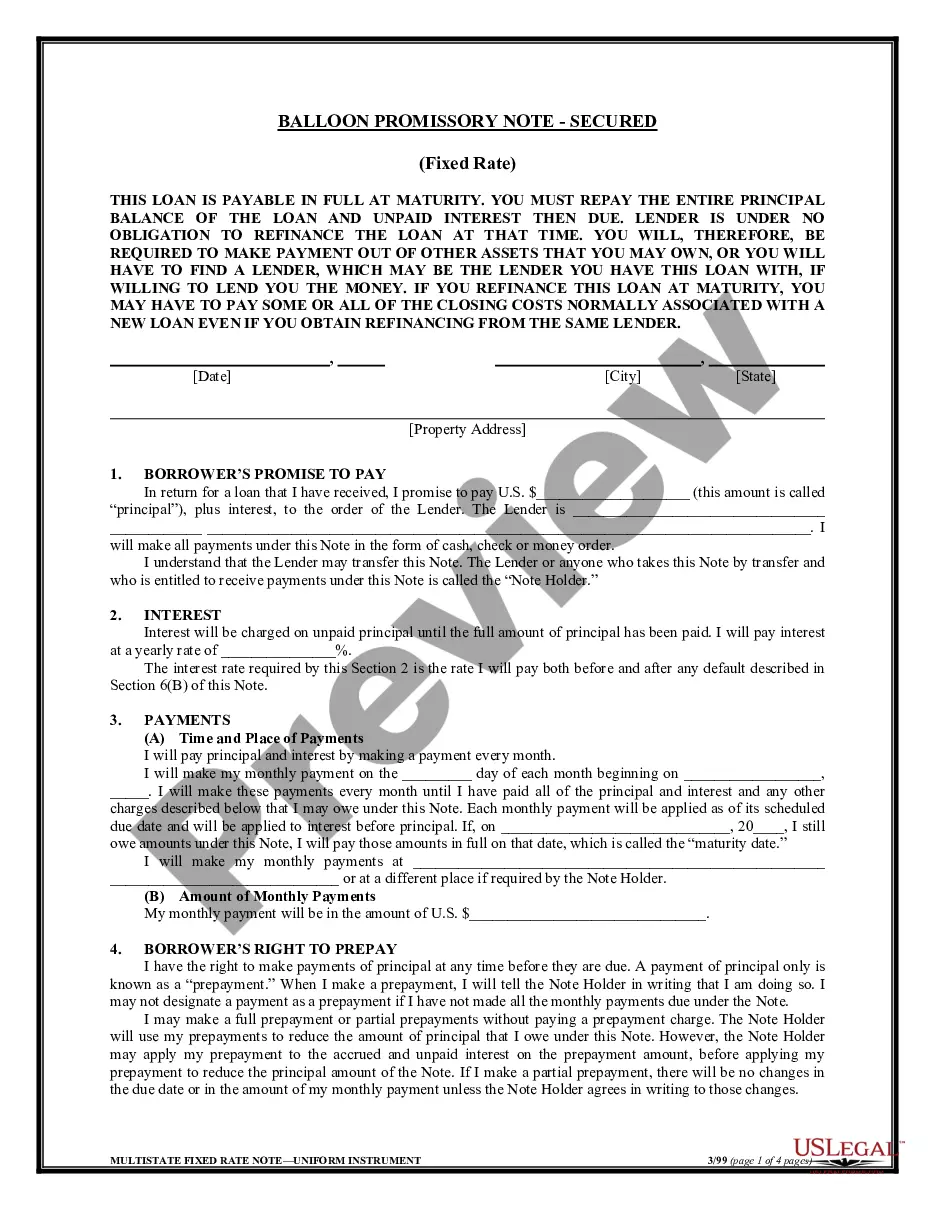


How to fill out Promissory Note - Balloon Note?
Dealing with legal documents and processes can be a lengthy addition to your whole day.
Promissory Note With Balloon Payment Formula and similar forms usually necessitate you to locate them and comprehend how to fill them out correctly.
Thus, whether you are managing financial, legal, or personal issues, utilizing a comprehensive and user-friendly online repository of forms at your disposal will be immensely helpful.
US Legal Forms is the premier online platform for legal templates, featuring over 85,000 state-specific documents and a variety of resources to assist you in completing your paperwork promptly.
Just Log In to your account, locate Promissory Note With Balloon Payment Formula, and retrieve it immediately from the My documents section. You can also access previously saved documents.
- Explore the library of relevant documents available to you with a single click.
- US Legal Forms provides you with state- and county-specific documents accessible for download at any time.
- Protect your document management workflows with a reliable service that enables you to create any document within minutes without additional or hidden fees.
Form popularity
FAQ
The formula for calculating a balloon payment typically involves the principal amount, the interest rate, and the number of payments made. The remaining balance after regular payments are deducted will equal your balloon payment. By utilizing the promissory note with balloon payment formula, you can easily derive this amount and plan your finances accordingly.
A balloon payment is the final amount due on a loan that is structured as a series of small monthly payments followed by a single much larger sum at the end of the loan period.
We can use the below formula to calculate the future value of the balloon payment to be made at the end of 10 years: FV = PV*(1+r)n?P*[(1+r)n?1/r] The rate of interest per annum is 7.5%, and monthly it shall be 7.5%/12, which is 0.50%.
Example of a Balloon Loan Let's say a person takes out a $200,000 mortgage with a seven-year term and a 4.5% interest rate. Their monthly payment for seven years is $1,013. At the end of the seven-year term, they owe a $175,066 balloon payment.
At its most basic, a promissory note should include the following things: Date. Name of the lender and borrower. Loan amount. Whether the loan is secured or unsecured. If it's secured with collateral: What is the collateral? ... Payment amount and frequency. Payment due date. Whether the loan has a cosigner, and if so, who.
Balloon Loan Your loan has a balloon payment. At the end of the loan term, any balance remaining will have to be paid. In the case of a balloon loan, often very little, if any, of the loan balance is paid down, therefore, the last payment, the balloon payment can be most of the initial loan balance.