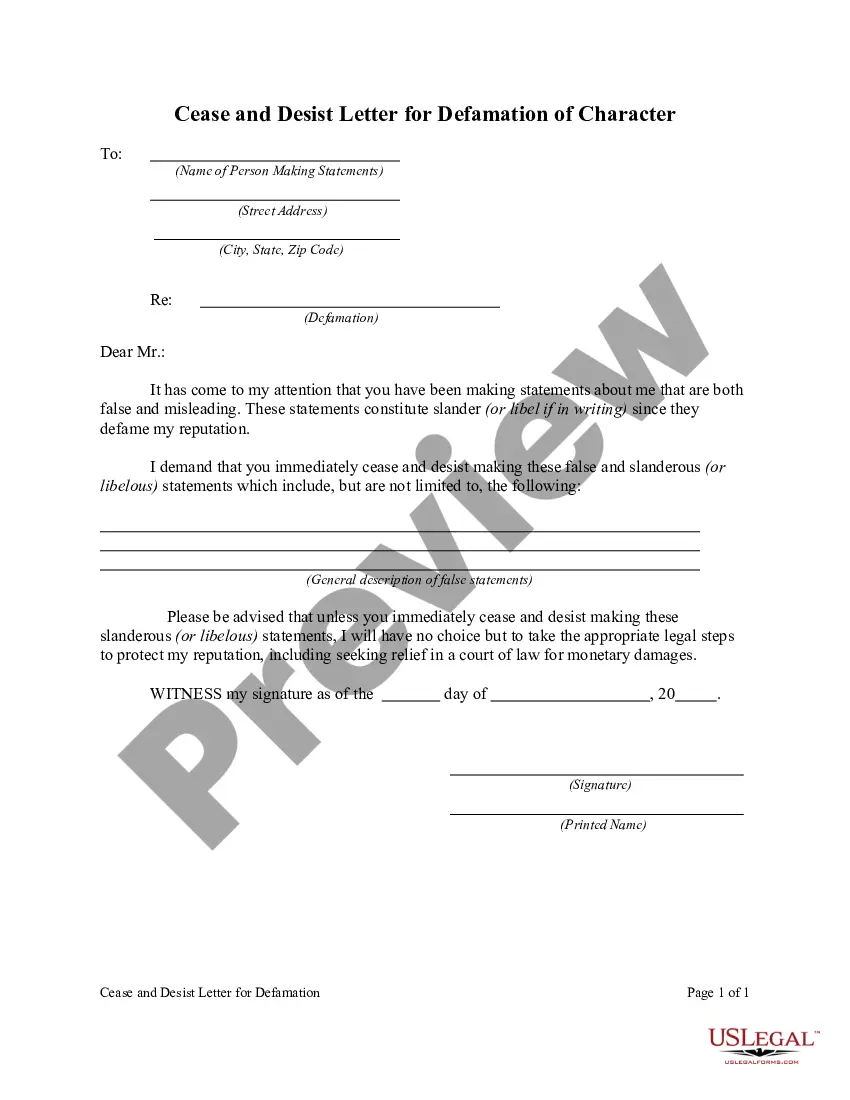
Character Letter For Court For Child Custody In Virginia
Description
Get your form ready online
Our built-in tools help you complete, sign, share, and store your documents in one place.
Make edits, fill in missing information, and update formatting in US Legal Forms—just like you would in MS Word.
Download a copy, print it, send it by email, or mail it via USPS—whatever works best for your next step.
Sign and collect signatures with our SignNow integration. Send to multiple recipients, set reminders, and more. Go Premium to unlock E-Sign.
If this form requires notarization, complete it online through a secure video call—no need to meet a notary in person or wait for an appointment.
We protect your documents and personal data by following strict security and privacy standards.

Make edits, fill in missing information, and update formatting in US Legal Forms—just like you would in MS Word.

Download a copy, print it, send it by email, or mail it via USPS—whatever works best for your next step.

Sign and collect signatures with our SignNow integration. Send to multiple recipients, set reminders, and more. Go Premium to unlock E-Sign.

If this form requires notarization, complete it online through a secure video call—no need to meet a notary in person or wait for an appointment.

We protect your documents and personal data by following strict security and privacy standards.
Looking for another form?
Form popularity
FAQ
Mothers historically have won more custody battles due to traditional roles and perceptions of mothers as the primary caregivers.
Character witnesses are not generally relevant in a custody proceeding, and most of the time the court will not hear from them. The court has a specific list of factors to consider that all relate to the child's best interests, and the court must consider those facts that can be proven.
Character Letter Template Dear Judge Name or Honorable Name, I am writing to you in my capacity as Your Relationship to the Person, to advocate for Name of the Person, whom I have known for Number of Years years. It is an honor to vouch for their character and integrity in my time knowing them.
Virginia Code § 20-124.3 instructs the court to consider the child's “reasonable preference” as to custody and visitation, “if the court deems the child to be of reasonable intelligence, understanding, age and experience.” Whether the court will consider the child's preference, and if so how much weight the court will ...
Introduction: - Introduce yourself (your name and age). - Briefly state the purpose of your letter (to request a change in custody). Body: - Explain Your Situation: Describe your current living situation and why you feel a change is necessary. Be honest about your feelings and experiences. Reasons for Change:
How to prove the best interest of the child Keep a log of child-related expenses. Get reliable child care. Ask others to testify on your behalf. Show that you're willing to work with the other parent. Know your child's interests. Have a safe place for your child to live. Behave in court.
Character witnesses should be individuals who are familar with your family and have observed your interactions with your children. They can be family members, but non-family is best as they will not have a bias.
Style of the Letter Whoever is writing the letter should explain in their own words why they believe the parent is the right guardian for the child. The opening paragraph should describe the author's relationship with the parent they are supporting, as well as the parent's relationship with the child.
In the first paragraph, state how you know the person and attest to their character. Second paragraph show how loving and caring they are with their child. Third paragraph show how bonded the child is to the parents and give examples.
The letter should highlight your good qualities and achievements. The writer should give specific examples of how you have demonstrated these qualities in your personal, professional, or social life. For example, they could mention your work ethic, your family values, your charity work, your hobbies, or your awards.