Slander And Libel Laws For Businesses In Chicago
Description

Get your form ready online
Our built-in tools help you complete, sign, share, and store your documents in one place.
Make edits, fill in missing information, and update formatting in US Legal Forms—just like you would in MS Word.
Download a copy, print it, send it by email, or mail it via USPS—whatever works best for your next step.
Sign and collect signatures with our SignNow integration. Send to multiple recipients, set reminders, and more. Go Premium to unlock E-Sign.
If this form requires notarization, complete it online through a secure video call—no need to meet a notary in person or wait for an appointment.
We protect your documents and personal data by following strict security and privacy standards.
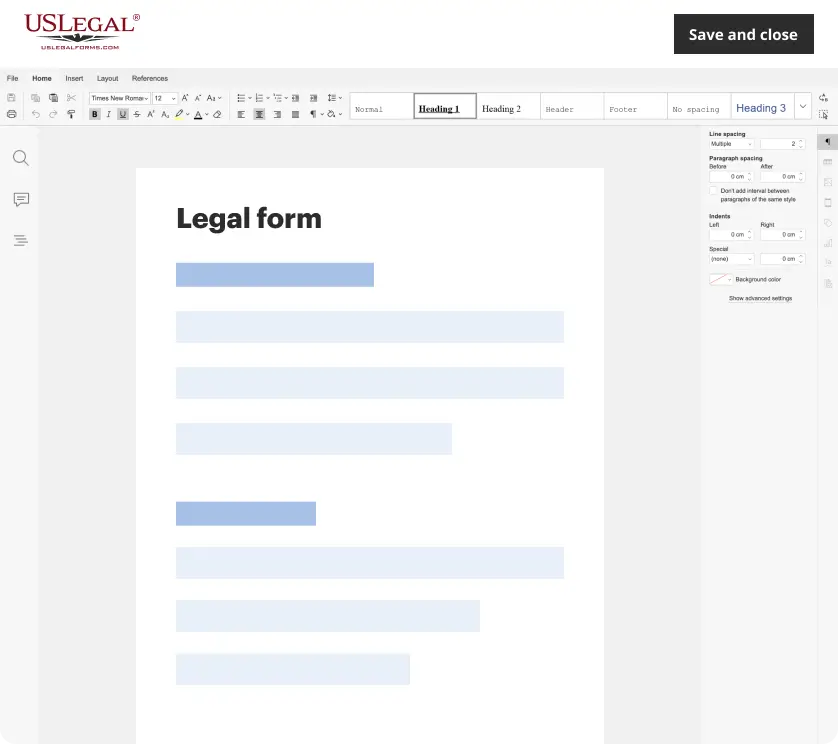
Make edits, fill in missing information, and update formatting in US Legal Forms—just like you would in MS Word.
Download a copy, print it, send it by email, or mail it via USPS—whatever works best for your next step.
Sign and collect signatures with our SignNow integration. Send to multiple recipients, set reminders, and more. Go Premium to unlock E-Sign.
If this form requires notarization, complete it online through a secure video call—no need to meet a notary in person or wait for an appointment.
We protect your documents and personal data by following strict security and privacy standards.
Looking for another form?




Form popularity
FAQ
Under Illinois law, you may have a claim for defamation if you can prove that someone made a false statement about you. If you win, you may be entitled to economic and punitive damages. The law of defamation, however, is complicated and there are numerous defenses to defamation claims.
Under Illinois law, to prove a claim for defamation, a person needs evidence to show that: The defendant made a false statement about the plaintiff, The false statement was made to a third party, The defendant was at least negligent in making the false statement, and.
This legal issue involves false statements or defamatory remarks about a business, its products, or its services. Commercial disparagement can tarnish a business's reputation. Further, it may lead to financial harm or legal action. Commercial disparagement is also known as: Slander of goods.
Generally, to prove defamation, you must show that a false statement was made, about you, to third parties, and which caused you damage. Once you have evaluated your case, and determined that you can satisfy these elements, you can then proceed with pursuing your matter.
Illinois defines defamation as a false statement of fact about the plaintiff “published,” which means shared with another person, that harms the plaintiff's reputation (i.e. lowers the plaintiff in the eyes of the community). There are two categories of defamation in Illinois: defamation per se and defamation per quod.
In Illinois, a defamation claim generally has three elements that the plaintiff the must prove in order to recover: (1) a false statement about the plaintiff; (2) made to a third party (also known as publication); (3) that harms the plaintiff's reputation.
In Illinois the following are the element of a libel or defamation cause of action: the defendant made a false statement regarding the plaintiff; the statement was published to a third-party and it wasn't done so in a privileged context or setting;
The plaintiff must prove that the defendant was negligent if the plaintiff is a private individual. On the other hand, if the plaintiff is a public figure or official, the plaintiff must demonstrate that the defendant acted with actual malice.
Written defamation is called "libel," and spoken defamation is considered "slander," and they both fall under "defamation." In the US, defamation is not usually a crime. Instead, it is a "tort" or civil wrong. Under the law, a person who has been defamed can seek damages from the perpetrator.
How to Write a Cease and Desist Defamation Letter Identify the false statements: Clearly outline the defamatory remarks and where they were made. Describe the harm: Explain how the statements have affected your reputation or career. Request retraction: Demand the removal of defamatory content or a formal apology.

