Forgery For Meaning In Chicago
Description

Get your form ready online
Our built-in tools help you complete, sign, share, and store your documents in one place.
Make edits, fill in missing information, and update formatting in US Legal Forms—just like you would in MS Word.
Download a copy, print it, send it by email, or mail it via USPS—whatever works best for your next step.
Sign and collect signatures with our SignNow integration. Send to multiple recipients, set reminders, and more. Go Premium to unlock E-Sign.
If this form requires notarization, complete it online through a secure video call—no need to meet a notary in person or wait for an appointment.
We protect your documents and personal data by following strict security and privacy standards.

Make edits, fill in missing information, and update formatting in US Legal Forms—just like you would in MS Word.

Download a copy, print it, send it by email, or mail it via USPS—whatever works best for your next step.

Sign and collect signatures with our SignNow integration. Send to multiple recipients, set reminders, and more. Go Premium to unlock E-Sign.

If this form requires notarization, complete it online through a secure video call—no need to meet a notary in person or wait for an appointment.

We protect your documents and personal data by following strict security and privacy standards.
Looking for another form?







Form popularity
FAQ
Any person who forges any document or electronic record is guilty of an offence which, unless otherwise stated, is a felony and he is liable, unless owing to the circumstances of the forgery or the nature of the thing forged some other punishment is provided, to imprisonment for three years.
Simple Forgery: The act of imitating someone else's signature for fraudulent or deceptive purposes. Simulated Forgery: A more sophisticated form where technology is used to duplicate the signature. Traced Forgery: Involves using a genuine signature as a template to create a forged one.
The punishment for forgery varies from place to place. In most states, a person convicted of misdemeanor must face a jail sentence of at least one year. However, a conviction for felony must face an imprisonment more than one year.
One example of forgery is when someone signs another person's name to a document without their permission or knowledge. Another example of forgery is when someone creates a false government document, such as a driver's license.
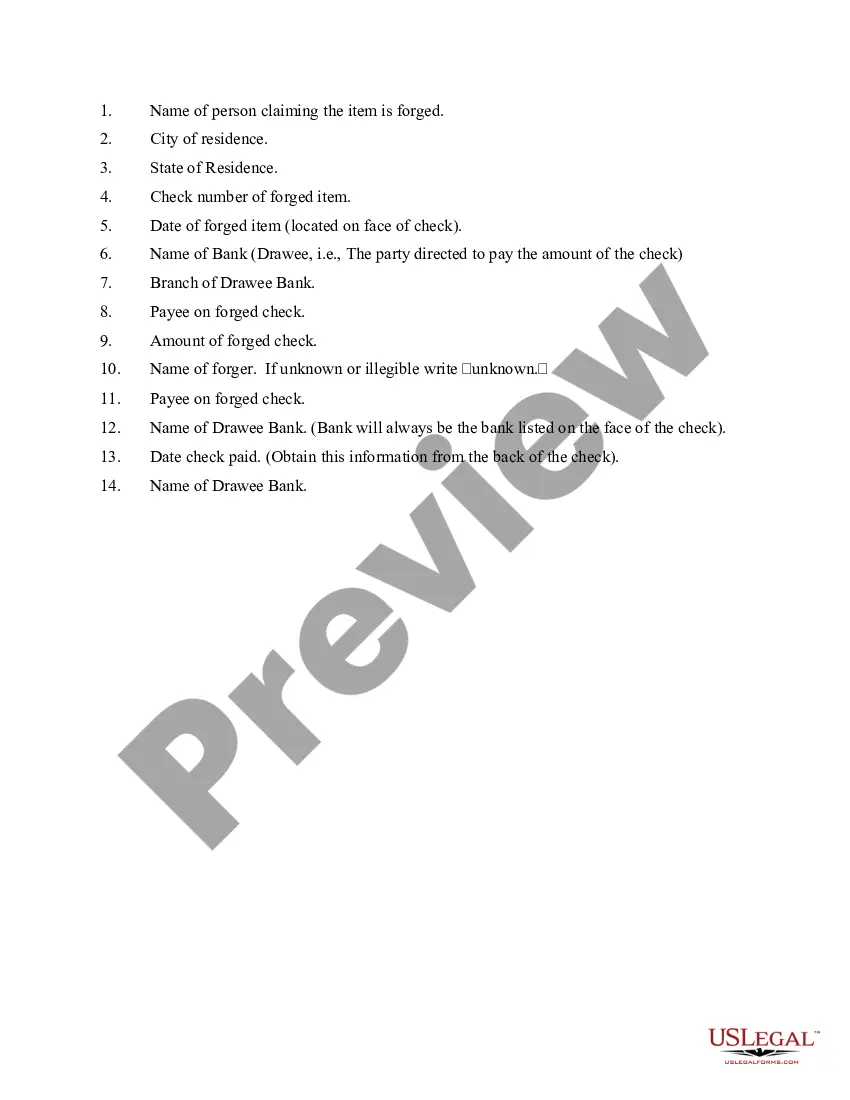
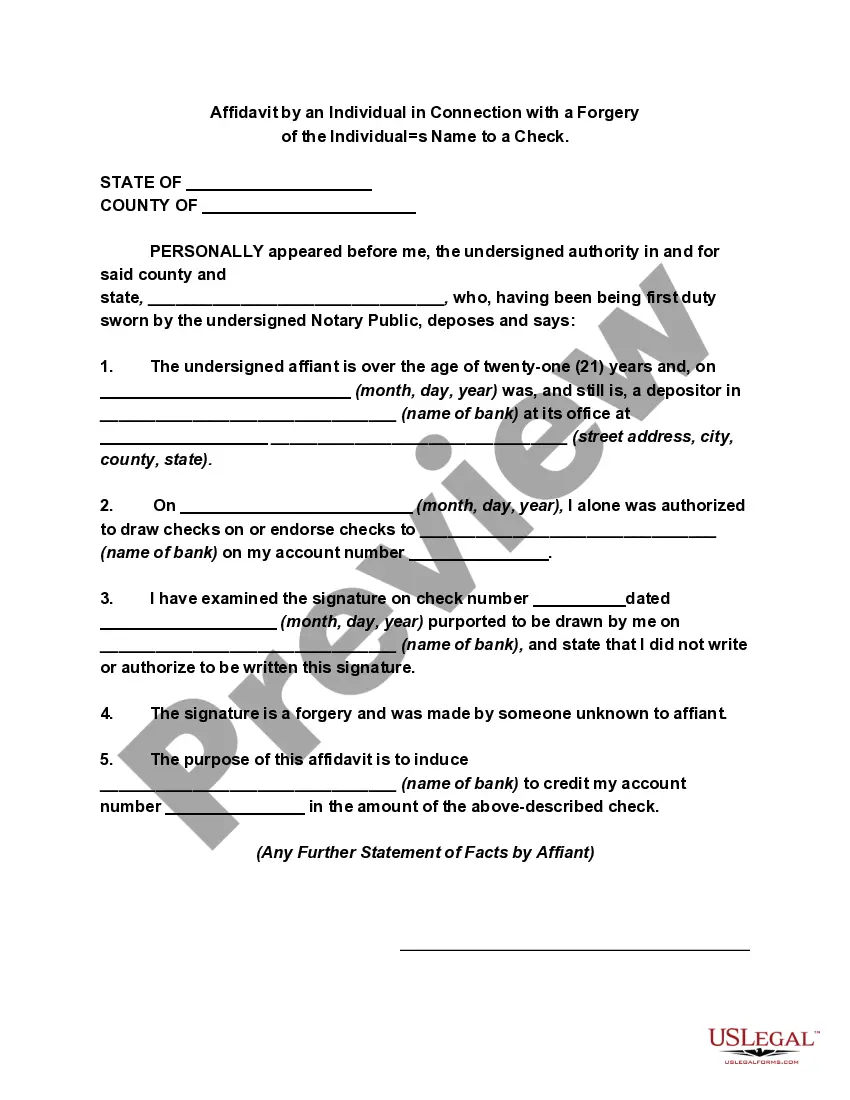
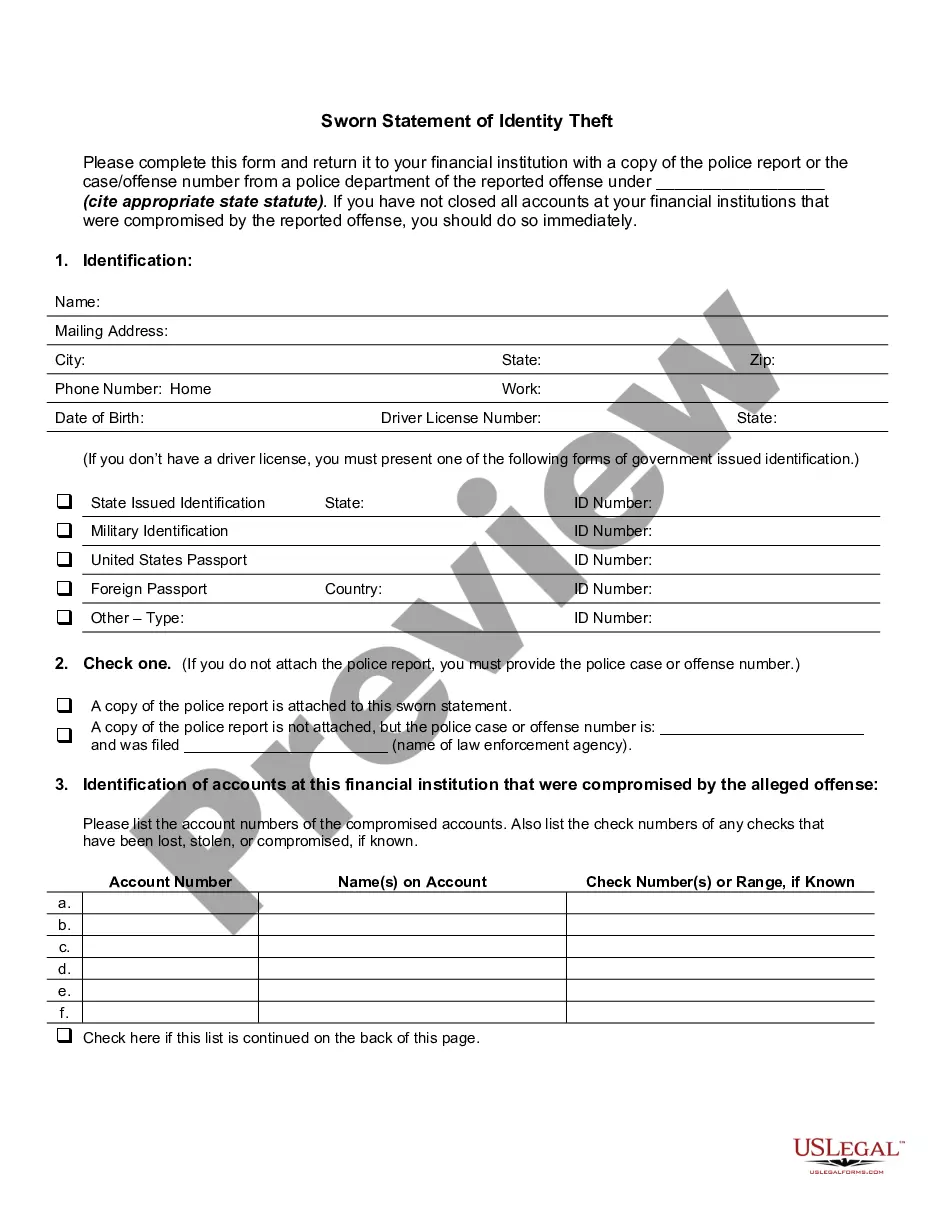
An “Affidavit of Forgery" is a notarized, sworn statement, attesting that the signature appearing on it is indeed a forgery. The account holder MUST provide an Affidavit of Forgery before any criminal charges can be filed! An affidavit must accompany each forged or counterfeited item.
Forgery is a white-collar crime that generally consists of the false making or material alteration of a legal instrument with the specific intent to defraud.
One example of forgery is when someone signs another person's name to a document without their permission or knowledge. Another example of forgery is when someone creates a false government document, such as a driver's license.
What are the three types of forgery? Three common types of forgery are signature forgery, art forgery, and document forgery. Each of these types of forgery involves different methods of creating or altering documents, signifiers, and objects with the intent to deceive.
Forgery, in law, making of a false writing with an intent to defraud. Writing, to be forgery, must either have legal significance or be commonly relied upon in business transactions. It need not be handwriting; the law of forgery covers printing, engraving, and typewriting as well.
Forgery, in law, making of a false writing with an intent to defraud. Writing, to be forgery, must either have legal significance or be commonly relied upon in business transactions. It need not be handwriting; the law of forgery covers printing, engraving, and typewriting as well.
